Showing posts with label tyranny. Show all posts

June 14, 2008

Survival Toolkit: MUST READ: How scarcity, crime, overpopulation, tribalism, and disease are rapidly destroying the social fabric of our planet

Because Wolfy and I care about YOU, we want to repost this article.

It is a classic that's been posted here before.

It's an article from a 1994 Atlantic Monthly with indispensible synthesis.

Excerpt:  It is time to understand The Environment for what it is: the national-security issue of the early twenty-first century. The political and strategic impact of surging populations, spreading disease, deforestation and soil erosion, water depletion, air pollution, and, possibly, rising sea levels in critical, overcrowded regions like the Nile Delta and Bangladesh—developments that will prompt mass migrations and, in turn, incite group conflicts—will be the core foreign-policy challenge from which most others will ultimately emanate, arousing the public and uniting assorted interests left over from the Cold War. 

The Coming Anarchy


The Minister's eyes were like egg yolks, an aftereffect of some of the many illnesses, malaria especially, endemic in his country. There was also an irrefutable sadness in his eyes. He spoke in a slow and creaking voice, the voice of hope about to expire. Flame trees, coconut palms, and a ballpoint-blue Atlantic composed the background. None of it seemed beautiful, though. "In forty-five years I have never seen things so bad. We did not manage ourselves well after the British departed. But what we have now is something worse—the revenge of the poor, of the social failures, of the people least able to bring up children in a modern society." Then he referred to the recent coup in the West African country Sierra Leone. "The boys who took power in Sierra Leone come from houses like this." The Minister jabbed his finger at a corrugated metal shack teeming with children. "In three months these boys confiscated all the official Mercedes, Volvos, and BMWs and willfully wrecked them on the road." The Minister mentioned one of the coup's leaders, Solomon Anthony Joseph Musa, who shot the people who had paid for his schooling, "in order to erase the humiliation and mitigate the power his middle-class sponsors held over him." 

Tyranny is nothing new in Sierra Leone or in the rest of West Africa. But it is now part and parcel of an increasing lawlessness that is far more significant than any coup, rebel incursion, or episodic experiment in democracy. Crime was what my friend—a top-ranking African official whose life would be threatened were I to identify him more precisely—really wanted to talk about. Crime is what makes West Africa a natural point of departure for my report on what the political character of our planet is likely to be in the twenty-first century.


the rest can be read here

<<>MUST READ > >

May 08, 2008

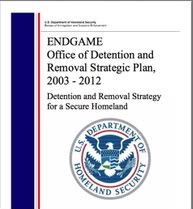
books of note: ENDGAME

ENDGAME: US Govt plans to enslave the population

This document is not just relative to immigrants. They plan to use it to confine political dissidents, troublemakers and anyone who is against their illegal government policies.

http://cryptogon.com/docs/endgame.pdf


Photobucket

February 04, 2008


"Find out just what the people will submit to and you have found out the exact amount of injustice and wrong which will be imposed upon them; and these will continue until they are resisted with either words or blows, or with both. The limits of tyrants are prescribed by the endurance of those whom they oppress."


- Frederick Douglass

http://sunsite3.berkeley.edu/Literature/Douglass/Autobiography/01.html


Frederick Douglass

Narrative of the Life of Frederick Douglass, An American Slave


Narrative of the Life of Frederick Douglass, An American Slave
Frederick Douglass
Houston A. Baker
William Lloyd Garrison
$8.95
add to cart

Narrative of the Life of Frederick Douglass
Frederick Douglass
Peter J. Gomes
Gregory Stephens
$4.95
add to cart

INTRODUCTION

The compelling autobiography of an extraordinary man born into slavery, Narrative of the Life of Frederick Douglass, an American Slave is also a powerful inquiry into the question of what it means to be human. From the opening sentences of the narrative, Douglass delineates the context from which this question emergesthe fact that slave owners typically thought of slaves as animals. Douglass does not know how old he is, and he quickly asserts that this is not unusual, since most slaves "know as little of their ages as horses know of theirs" (p. 47). It is instructive that this initial comparison of slaves to animals does not serve to express something about the minds of the slave owners; instead, it expresses something about the minds of the slaves that is the consequence of being born into an environment constructed and carefully maintained by their owners. In an environment that does not permit the idea that slaves are human, the only perspective available to them is that of their owners. Their own perspective therefore becomes an additional barrier to thinking of themselves as human.

Learning to read and write is essential to the process whereby Douglass comes to see himself as human. As he describes it, the acquisition of these skills is inseparable from the dawning of self-consciousness. Reading gives Douglass access to a new world that opens before him, but the strongest effect of his literacy is the light it casts on the world he already knows. His anguish is so great that he "would at times feel that learning to read had been a curse rather than a blessing" (p. 84). It allows him to see his "wretched condition, without the remedy" (p. 84). Self-consciousness, the trait that most distinguishes humans from animals, produces such despair in Douglass that he confesses he often wished himself a beast.

Douglass portrays the breadth of slavery's ability to dehumanize through his insights into the mentality of slave owners. Douglass suggests that if slaves are made rather than born, the same is sometimes true of slave owners. The mistress who began teaching him to read and write "at first lacked the depravity indispensable to shutting [him] up in mental darkness" (p. 81). Under the influence of her husband and, more generally, the institution of slavery, "the tender heart became stone, and the lamblike disposition gave way to one of tiger-like fierceness" (p. 82). The mistress not only stops teaching Douglass to read and write, but she is even more vigilant than her husband in preventing him from learning. The transformation of his mistress raises the question of how much of the behavior of slave owners toward their slaves was learned and how much was internally motivated. Douglass would have us believe that the mistress was the victim of her circumstances, yet the brutality other slave owners seemed to come by so easily makes it difficult to determine whether the behavior was learned or inherent.

Edward Covey undoubtedly counts among the slave owners who play the role as if born for it; his harsh treatment breaks Douglass "in body, soul, and spirit" (p. 105). Following his eloquent lament for the freedom he cannot have, represented by the ships sailing on Chesapeake Bay, Douglass writes, "You have seen how a man was made a slave; you shall see how a slave was made a man" (p. 107). The first part of this statement could refer to the methods employed by Covey, if not to all the owners at whose hands Douglass suffered. The second part refers to the story that follows, in which Douglass resists the whipping Covey intends to give him for disobeying. They fight for two hours, with Covey "getting entirely the worst end of the bargain" (p. 113). Douglass is never whipped again, and he describes this incident as "the turning-point in [his] career as a slave" and says that it "revived within [him] a sense of [his] own manhood" (p. 113). Douglass emphasizes the importance of literacy in developing his sense of himself as human. Is he suggesting, though, that his refusal to submit to Covey's punishment was ultimately more important than his ability to read and write in shaping his sense of self?

In a letter that prefaces the narrative, Wendell Phillips, social activist and friend of Douglass's, recalls "the old fable of 'The Man and the Lion,' where the lion complained that he should not be so misrepresented 'when the lions wrote history'" (p. 43). As Phillips observes, Douglass's narrative is history written from the perspective of those who previously had no voice. The very existence of the narrative makes it a testament to its author's humanity and, therefore, a document of revisionist history. However, what gives Douglass's narrative its universal relevance is his acute awareness of the complexities of human psychology. He observes that slaves usually spoke of themselves as content and of their masters as kind, concluding that slaves "suppress the truth rather than take the consequences of telling it, and in so doing prove themselves a part of the human family" (p. 62). Douglass is ever mindful that our humanity encompasses our failings no less than our capacity for nobility.

DISCUSSION QUESTIONS

  1. Why does Douglass believe "Slavery proved as injurious to [his master's wife] as it did to [him]" (p. 81)?
  2. After his confrontation with Mr. Covey, what does Douglass mean when he writes "however long I might remain a slave in form, the day had passed forever when I could be a slave in fact" (p. 113)?
  3. Why is Douglass able to "understand the deep meaning of those rude and apparently incoherent songs" (p. 57) sung by slaves only when he no longer is a slave himself?
  4. When Douglass writes, "You have seen how a man was made a slave; you shall see how a slave was made a man" (p. 107), what does he understand a man to be?
  5. Douglass describes knowledge as "valuable bread" (p. 83) and the Liberator, an anti-slavery paper, as his "meat and drink" (p. 151). How does literacy sustain him?
  6. How is Douglass able to maintain his religious faith when that of his owners is used to justify their treatment of him?
  7. Why does Douglass consider holiday celebrations as part of the "inhumanity of slavery" (p. 115)?
  8. Why does Douglass describe the sails on Chesapeake Bay as "so many shrouded ghosts" (p. 106)?

For Further Reflection
  1. To what extent should a piece of autobiographical writing be regarded as "factual"?
  2. Can literacy be a curse as well as a blessing?


January 28, 2008

Last words by Salvador Allende


Surely, this will be the last opportunity for me to address you. The Air Force has bombed the antennas of Radio Magallanes. My words do not have bitterness but disappointment. May they be a moral punishment for those who have betrayed their oath: soldiers of Chile, titular commanders in chief, Admiral Merino, who has designated himself Commander of the Navy, and Mr. Mendoza, the despicable general who only yesterday pledged his fidelity and loyalty to the Government, and who also has appointed himself Chief of the Carabineros [paramilitary police]. Given these facts, the only thing left for me is to say to workers: I am not going to resign!

Placed in a historic transition, I will pay for loyalty to the people with my life. And I say to them that I am certain that the seeds which we have planted in the good conscience of thousands and thousands of Chileans will not be shriveled forever. They have force and will be able to dominate us, but social processes can be arrested by neither crime nor force. History is ours, and people make history.

Workers of my country: I want to thank you for the loyalty that you always had, the confidence that you deposited in a man who was only an interpreter of great yearnings for justice, who gave his word that he would respect the Constitution and the law and did just that. At this definitive moment, the last moment when I can address you, I wish you to take advantage of the lesson: foreign capital, imperialism, together with the reaction, created the climate in which the Armed Forces broke their tradition, the tradition taught by General Schneider and reaffirmed by Commander Araya, victims of the same social sector who today are hoping, with foreign assistance, to re-conquer the power to continue defending their profits and their privileges.

I address you, above all, the modest woman of our land, the campesina who believed in us, the mother who knew our concern for children. I address professionals of Chile, patriotic professionals who continued working against the sedition that was supported by professional associations, classist associations that also defended the advantages of capitalist society.

I address the youth, those who sang and gave us their joy and their spirit of struggle. I address the man of Chile, the worker, the farmer, the intellectual, those who will be persecuted, because in our country fascism has been already present for many hours -- in terrorist attacks, blowing up the bridges, cutting the railroad tracks, destroying the oil and gas pipelines, in the face of the silence of those who had the obligation to act.

They were committed. History will judge them.

Surely, Radio Magallanes will be silenced, and the calm metal instrument of my voice will no longer reach you. It does not matter. You will continue hearing it. I will always be next to you. At least my memory will be that of a man of dignity who was loyal to his country.

The people must defend themselves, but they must not sacrifice themselves. The people must not let themselves be destroyed or riddled with bullets, but they cannot be humiliated either.

Workers of my country, I have faith in Chile and its destiny. Other men will overcome this dark and bitter moment when treason seeks to prevail. Keep in mind that, much sooner than later, great avenues will again be opened, through which will pass the free man, to construct a better society.

Long live Chile! Long live the people! Long live the workers!

These are my last words, and I am certain that my sacrifice will not be in vain, I am certain that, at the very least, it will be a moral lesson that will punish felony, cowardice, and treason.

Santiago de Chile,
11 September 1973

As the U.S. recognized the unstoppable will of so many Chileans, they easily did what they do so often . Salvador Allende, the democratically elected president of Chile,


died at 9/11 1973.

This is kind of macabre. Wake up Canada. Help us indict the Bush cabal and the rule of the planet by the CIA.


ShareThis