Showing posts with label Isreal. Show all posts

February 03, 2009


Leila Khaled with Fight Back! editor Mick Kelly

This is a quick little audio interview with Leila Khaled, a leader of the Popular Front for the Liberation of Palestine.

The interview was conducted by Mick Kelly, editor of Fight Back!

(Fight Back! is the newspaper of one of the two Freedom Road Socialist Organizations that emerged from the FRSO split in 1999.)

This audio interview and the associated article in Fighting Back! can be viewed here.

May 05, 2008

Court Approves Anti-Israel Independence Day Ceremony


by Hillel Fendel
Published: 05/01/08, 7:03 PM

(IsraelNN.com) A court in Nazareth has approved a ceremony to be held this coming Independence Day that will commemorate the "catastrophic" nature of the day for Israel's Arabs.

The Nazareth District Court has allowed the radical anti-Israel Islamic Movement to conduct a Naqba (Catastrophe) ceremony on Israel's Independence Day, next Thursday. Many Arabs believe Independence Day actually marks their own Naqba, and commemorate it as such.

The ruling was handed down today (Thursday) after the authorities of the Arab town of Kfar Kana refused to allow the ceremony, claiming it was political in nature. The court rejected this claim, and the anti-Israel ceremony will be held on Independence Day in the Kfar Kana stadium.

MKs Saar, Orlev, Livnat
"Such a decision on the day we remember the Holocaust," said MK Gideon Saar (Likud), "is shameful, and it shows total Zionism and moral bankruptcy."

MK Zevulun Orlev, chairman of the National Religious Party, agreed, saying, "The court's decision makes a mockery of the Declaration of Independence, and of Israel as a Jewish and democratic state."

Likud MK Limor Livnat, a former Minister of Education, demands that the government file a request for an appeal of the court ruling. "The brain refuses to accept that on Holocaust Day, a court in Israel could come to such an incredible ruling," she said. "Now, more than ever, we must remember that the State of Israel is primarily the State of the Jews."

Saar added, "The Naqba ceremony will most definitely be a stage for incitement against Israel. It shows that our national authorities have no national respect or self-respect."

April 14, 2008


http://www.weroy.org/

The documentary of the human race. arundhati roy award winning author, poet and humanitarian talks about everything from the meaning of septembers to people around the world to imperial Britain's gifts of Palestine and Kashmir to the Muslim world.
Category: News & Politics
Tags:

April 01, 2008

Books of Note: Overcoming Zionism

I got this off the fantastic Sabbah's blog ..


Overcoming Zionism

Posted in: Israel, One State, Palestine, Zionism

Creating a Single Democratic State in Israel/Palestine

Joel Kovel is both a scholar and an activist. In the former capacity he has published nine books and over a hundred articles and reviews. His books include White Racism, which was nominated for a National Book Award in 1972; A Complete Guide to Therapy; The Age of Desire (in which his work in the psychiatric-psychoanalytic system is detailed); Against the State of Nuclear Terror; In Nicaragua; The Radical Spirit; History and Spirit (1991); Red Hunting in the Promised Land (1994), a study of anticommunist repression in America; and The Enemy of Nature: The End of Capitalism or the End of the World (Zed, 2002). Since 2003 he has been Editor-in-Chief of the quarterly journal Capitalism Nature Socialism. His most recent book, Overcoming Zionism, created a censorship struggle when the University of Michigan Press temporarily banned its distribution.

This is a special feature interview with Joel Kovel by Revolution

*******

Overcoming ZionismRevolution: Many people today are familiar with the state of Israel. They are also acquainted with Jewish people and know something about the Jewish religion. But what is Zionism?

Joel Kovel: The word has a very long history, Zion being the land promised to the Israelites in the Bible by their god. Once the Jews lost their temple in the first century and scattered over the earth, the idea of returning to some sort of homeland was always present. The modern history of Zionism begins late in the 19th century when it took the form given to it by Theodore Herzl: that the destiny of the Jewish people could only be fulfilled in a nation-state, which, as it turned out, had to be in historic Palestine. So Zionism is an ideology that supposes that notion, and ties it to the well-being and fulfillment of Jews everywhere. It caused the Jews who believe in it to embark upon state-building in historic Palestine. It still is the organizing ideology of the state of Israel and of great portions of the Jewish community in our country and elsewhere.

Revolution: In your book you make a major point that Zionism is a racist ideology. Could you explain that?

Kovel: It is necessarily a racist ideology if you think about it, but most people aren’t allowed to think about it thanks to powerful Zionist repression. If you are building a state on land that is not yours, and the land is habitable, then it’s going to have inhabitants, and these people are not going to enjoy your presence and are not going to turn over their land voluntarily to you. So the state-building for the Zionists is a question of conquest of indigenous peoples, which parallels in many ways the entire imperial-colonial movement of Western civilization. And typically, when you gain such a state through violence and illegal means, you then have to make it seem legitimate. And the best way of doing that is to claim that you are conquering an inferior people who weren’t entitled to full human rights, or who are barbarians, who are not civilized, or who are terrorists by nature. In any event, it involves imposing a kind of degraded human nature to the people you are displacing and conquering, and that’s the essence of racism. Racism plays out in the entire history of the state of Israel, which entails a continuous project of ethic cleansing and the racist reaction to that, which seeps throughout Israeli society as a whole.

Revolution: What about critics who say that criticism of the state of Israel is anti-Jewish or anti-Semitic?

Kovel: There is no a priori reason for equating the two. I’m by no means the only person of Jewish extraction who dislikes the state of Israel. In fact, it’s been odious to many, many Jews, including many highly religious Jews. I’m not one of them, of course; nevertheless many orthodox Jews feel the state of Israel is an abomination for various reasons that I don’t necessarily share. The point is that you don’t have to be non-Jewish to be against Israel. The charge of anti-Semitism derives from the Zionist belief that Israel is the only real fulfillment of being Jewish; yet that’s a very dubious proposition, and to go against it is has nothing to do with the existential hatred of Jewishness (”Judaeophobia”) which underlies real anti-Semitism.

Anti-Semitism, like all racisms, removes people from their history. Yet real criticism of Israel is a method of adding history, of looking at Israel historically, of looking at the Jewish people historically. So it’s non-racist at the core to criticize Israel if you do so in the spirit of open inquiry. Of course, anti-Semites will criticize Israel also, but not in the spirit of an open, historically grounded critique.

Revolution: What do you say to people who say that because of their own history of persecution, Jews need a state to which they can go and live in safety?

Kovel: Well, I think it’s a terrible idea. Even if it was a reasonable idea at one time, sixty years of the state of Israel have certainly demolished it. You just have to look at the history of Israel and the sixty years of blood and fire it has brought about. It’s the only part of the earth where Jews are actually in danger now–a direct result of the necessity of conquest and ethnic cleansing and the reaction on the part of those conquered. Zionism can never have any moral legitimacy, simply because it requires taking somebody else’s country for the purposes of your so-called “god-given space.” Jews have indeed often been traumatized, and the trauma reached a crescendo in the great Holocaust, but there is no moral justification for treating somebody else badly just because you yourself have been treated badly, especially when the party you are treating badly is innocent of any history of hurting you, which has certainly been the case with the Palestinians. It may be understandable, especially after the Holocaust, that the Jewish people would arrive at the idea about needing a state for security purposes and a haven against persecution. It’s understandable, but that doesn’t mean that it’s right, intellectually, historically, or morally. It’s not.

Revolution: You have made the charge that Israel treats Holocaust survivors living there worse than almost any other country in the world. Can you amplify on that?

Kovel: It’s not in Overcoming Zionism because I only learned of it since publication. Last summer charges were made by Holocaust survivors, almost 250,000 of them in Israel, that they have been treated abominably by the Jewish state. This despite the fact that the state of Israel legitimates itself on the grounds that it is a place where Jewish victims of persecution can live safely and happily in their later years. But one of the things that marks Israel is an increasing neo-liberalization, which translates into a widening of the gap between rich and poor, with an accompanying increased heartlessness. The Holocaust survivors do not contribute to what Israel needs, which is military power and technical prowess: they are just useless old people. Israeli society is deeply indicted by the neglect of these people, whose survival was the occasion for the establishment of Jewish state in the first place.

Another level of irony is that as Israeli Holocaust survivors protest their own government, they find reason to praise Germany. Many have stated that they prefer to go back to Germany to finish their years in a country that would at least recognize their human rights. Furthermore, Germany gave Israel about $80 billion to take care of its Holocaust survivors—guilt money—and apparently Israel has siphoned off a lot of that and used it for military purposes. They took the money that was supposed to be for Auschwitz survivors and built their weapons systems. It’s a phenomenally corrupt place.

Revolution: Do you see any relationship between Zionism and the rise of Islamic fundamentalism?

Kovel: If you take those two phenomena, you can see that Zionism preceded Islamic fundamentalism, but it doesn’t explain Islamic fundamentalism. There is no doubt that it is a major contributing factor in the growth of Islamic Fundamentalism, probably the leading factor in that it generated widespread hatred and distrust across the great swath of people who comprise the Islamic world—over a billion people in all of whose countries—there is this burning resentment first at Israel and second at the United States for being Israel’s patron. People like Osama bin Laden, he is very explicit in saying that what he is doing is to punish the U.S. and Israel for what they have done to the Arab world. It’s a very abiding emotion, quite understandable, and the emotion itself is quite legitimate, although it doesn’t excuse violent behavior, but it’s perfectly understandable to feel this way. Understandable to try to build your own purified society, Islamic fundamentalist society, since the Western model has been proven to be treacherous and destructive to their form of life. Yes, it’s not that Zionism caused Islamic fundamentalism, but of the factors that did cause it, I would give Zionism primary place.

Revolution: The United States government has taken enormous interest in the development and protection of Israel and spent enormous amounts of money in its support. How do you see that? Is this something that is caused fundamentally by what’s known as the Zionist lobby in the United States? Or is it also something that relates to the fundamental interests of the United States in the Middle East? How do those things fit together in your view?

Kovel: It’s a very difficult, complex question. It’s a complex question that has no clear-cut, clean answer. It’s the interaction of many factors, including mistakes that were made. In the early years of the state of Israel, there was a certain amount of sympathy for it, to be sure, but also great opposition to the state as a cat’s paw of the U.S. because it’s made American imperialism’s job in that part of the world with its great oil wells very, very difficult. We just discussed how Israel inflamed the Arab masses and the Arab nation states.

This also was a component of the cold war, where the U.S. and Russia were vying for favor in that part of the world. It should be pointed out that the Soviet bloc was also a supporter of Israel in its first years, so there was some competition on that ground. Later Israel was seen as a counterpoise to Soviet power in the region and began to achieve legitimacy on that account. Also, when the war of 1967 revealed Israel to be by far the dominant military power in the region, U.S. security elites decided that this would a very useful partnership on many different levels.

Throughout all of this, you had the operations of what is roughly called the Israeli lobby or the Zionist lobby, but it’s no simple organization. It is a network of organizations with very powerful currents flowing through the base of U.S. society, which consider the Jews and Israel to be one of the “us,” because the U.S. was actually founded on the same Old Testament mode. At the same time there was very little sympathy for the Arab world. The antagonisms between Europe and the Arab world that go back at least to the Crusades had by no means diminished and Israel became a rallying point for going that antagonism yet further.

And throughout all this you find these extremely powerful Zionist groups that are growing by leaps and bounds in this country, taking a tremendous role in manipulation and invasion of the U.S. state apparatus, and many levels of civil society including the media and entertainment industry, academia, and the like. It’s highly, highly organized, but it’s not the case that they are determining U.S. foreign policy. That kind of policy is determined by the basic strategic interests of the U.S. ruling class. But it is the case that they are a very important component in the mixture that determines that foreign policy, including in the composition of the U.S. ruling class, which over the last 15 years, and certainly during the second Bush administration, has itself become increasingly Zionist.

So you have a very intricate issue. There is no question that there is a huge interpenetration of the security elites of both Israel and the United States—people who serve across the lines. The actual formulation of foreign policy is made at a level where geo-strategic necessities are very much subject to patterns of belief and ideology. A ruling class doesn’t simply act on a materialist foundation, they also believe in certain things. And the things they belief in in this case are highly determined by the affinity between Zionism in general and Zionism in Israel, and also the fundamental ethos of the United States.

Revolution: You referred to the growing Zionism of the Bush administration. One phenomenon we have seen recently is the development of Christian Zionism in this country. Can you comment on the relationship between Zionism and the whole Christian fascist movement in the U.S.?

Kovel: The right has become increasingly driven by religious themes. This was not the case with the traditional “paleo-conservatives,” who were hostile to evangelical movements and often anti-Semitic. But for complex socio-political reasons, this has become greatly changed. There is no question that the Bush II administration rests on a political basis of hard-core Christian fundamentalists, exemplified by Mike Huckabee, prancing around the country talking about creationism and the literal truth of the Bible. Fundamentalists have played a major role in U.S. politics since 1980. And they play a huge role in the George W. Bush administration partly because the second Bush shares fundamentalist beliefs. He himself is very sympathetic to that point of view and has surrounded himself with people of like mind.

As the present Bush regime embarked upon its policy of aggressive preventive wars, it needed a cadre within the administration who saw things the same way. After all, Bush and Cheney can’t implement their policy if their immediate underlings don’t have the same opinion. So they recruited a network of so-called neo-conservatives, some of whom are Christians, many of whom are Jewish, and all of whom are ultra-Zionists. Zionism is the glue that holds together the infrastructure of the U.S. foreign policy elites, and has been a necessary factor in the planning and execution of the Iraq war. There is no question about it. Now we are seeing the coming decline of that Christian fundamentalist movement in the United States, and it will be interesting to see how and whether this reverberates within Jewish Zionism itself.

Revolution: The news around Israel and Palestine recently has been dominated by speculation over the creation of a Palestinian mini-state. Your book, Overcoming Zionism, opposes any two-state solution. Why?

Kovel: First of all, this is a matter that has ultimately to be resolved by the people on the ground, the Palestinians and Jewish Israelis themselves. But in my view, the two-state solution is politically wrong and morally wrong, and in any case, impossible. The alternative, which is the transformation of Israel along the lines of what befell apartheid South Africa, is extremely difficult, and not on the immediate horizon. But interest in a “single democratic state” is growing, and the goal is quite feasible if there is enough arousal around the world.

The two-state solution is unworkable in the first place because Israel has destroyed the physical and political possibilities of building a coherent state for the Palestinian people, thanks to its brutal occupation. This has entailed the invasion of Palestinian land by 450,000 Israeli settlers, along with putting up monstrous walls and Jews-only roads that simply reduce the ever-diminishing Palestinian lands to fragments. To build a viable Palestinian state on such a basis is impossible; or, from another angle, would require dismantling Israel.

In addition, the logic of the two-state solution proposed by ruling powers is not one in which the Palestinians get a genuine state with sovereignty and its own foreign policy. It is better seen along the lines of the “Bantustans” such as South Africa installed during its apartheid era, which were reservations where the indigenous people could live in relative quiet as a controllable labor force. This of course would be better than the present occupation; for all its awfulness, South African apartheid was less inhuman than Israeli Zionism, whose goal is the annihilation of the Palestinian people. Nevertheless, the indigenous would live a life of extreme poverty and powerlessness in the given two-state proposals. Israel is already very much in the category of apartheid South Africa; and if it gets its two-state solution, it will go even further in that direction. The two-state solution that is proposed is along the lines of a Bantustan solution that merely raises Israel to an approximation of the South African apartheid regime.

What’s basically wrong to my view is preserving the state of Israel in the Jewish-Zionist form that has evolved over the last 60 years. As I have tried to explore in my book, this is an inherently contradictory formation that can only survive by attacking its neighbors, and through an expanding racism. So a two-state solution which retains the Jewish state as it is now may well become a prelude to the transfer of the Palestinian Arabs out of Israel proper into the Palestinian state, a horrific situation.

The one-state solution poses many difficult problems, and nobody knows exactly how to bring it about. But it has one huge advantage over the two-state solution, namely, that it builds the notion of universal human rights and democracy into the foundation, so that you can place ends and means into a logical connection to each other. The one-state solution demands, however, that the state of Israel be transformed into a state that is no longer of, by, and for the Jewish people, but for all its citizens. And I think this is a very good thing. I think it would be good for the Jewish people themselves, who have been harmed by years of Zionist triumph. This has turned them into brutal conquerors who have lost a great deal of the civilizing values acquired over the centuries as a persecuted minority in Europe. At least there were great accomplishments and achievements among the European Jews, especially after emancipation in the early nineteenth century. The main accomplishments of the state of Israel, however, have been militarism, conquest, and racism. This is as bad for everyone.

I want to emphasize that for me the one-state solution should be a transition to a no-state solution. The example of apartheid South Africa’s transformation is a very cogent one and poses serious questions. South Africans overcame a racist form of society in good measure through a pact with transnational capital, especially the International Monetary Fund, with ruinous aftereffects. So the larger question I want to pose is this: In building a single state, we must work to make sure that state has a socialist content. It needs to be a state beyond capitalism, which means it will be a state beyond class, and therefore will ultimately cease to be a state. We understand that such a development is not around the corner, but it has to be the kind of thinking that animates us as we plan ahead for a society worthy of human beings in Palestine and Israel.

Revolution: What’s been the reception to your book, Overcoming Zionism? Both the positive and the attempts to censor it.

Kovel: The “official reception,” including that of the left press and left-liberal press, has been to ignore it. As of this date, Overcoming Zionism has not had any kind of review in any publication with a widespread circulation. This exclusion was aggravated last summer when the book was overtly attacked by the Zionist lobbies in Michigan, where it is distributed by the University of Michigan Press. As a result of that attack, the book was actually taken out of circulation, in other words, banned. This provoked a highly successful campaign from people on the left. Through pressure from the Committee for Open Discussion of Zionism [codz.org] we succeeded in getting the book restored, and also securing the contract with the actual publisher, Pluto Press of London, though this threat is ongoing. On the whole, this proved a good development. It meant my book was dangerous to people I wanted it to be dangerous to—namely Zionists and the Zionist lobby—and they took it seriously enough to try to ban it, most likely because they thought that simply ignoring it wouldn’t work.

It should be said also that the book has been widely read. People are constantly coming up to me saying that they like it, and that it has made a difference in their lives. It has appealed emotionally to them and it gives a chance to become conscious of certain thoughts that had been tabooed, namely, that Israel does not have the right to exist—because no state has an inherent right to exist—or that Zionism is a racist doctrine. These are two ideas that are not supposed to be thought, much less talked about. There are serious consequences to say that Zionism is racism or that Israel doesn’t have a right to exist. But now people are increasingly able to talk about that. To help bring these ideas forward is a big advance, and so I’m quite happy with the book’s reception.

Revolution: What further do you think needs to be done to put an end to this outlawing of any critique aimed at getting at the truth? How can people work together to break through this climate of repression?

Kovel: You need a widespread network of groups in civil society, local groups that challenge the local suppression, send speakers into high schools, and then, when as often happens when someone in the local Zionist, pro-Israeli community tries to stop, then you protest it. It’s a constant fight. It’s a very worthwhile fight that’s now getting to the point where we are beginning to win these issues. It’s a very widespread fight. I just learned the other day that at a school called McMaster University, the student union has banned the use the word apartheid in connection with Israel. It’s like the Middle Ages out there. You can’t talk about the devil. It’s fantastic, the extent to which repression is mobilized in the defense of the fundamentally illegitimate, in my view crumbling, Zionist consensus.

Each instance has to be met by resolute counterattacks. By protesting out in the streets, by writing letters, holding public meetings, using community radio stations, the Internet, a lot of powerful tools. There is a great deal that can be done, and it’s already having an effect. I spoke recently in Berkeley, California, to a really large audience that was extremely enthusiastic. There were no Zionist protesters anywhere. Of course, this was Berkeley, but they couldn’t have done that a couple years ago. So the more you do it, the more it can be done.

On top of that, we have to begin to introduce the suppressed question of boycotts, divestments, and sanctions against Israel, to make Israel suffer for its persecutions of Palestinians. Build a court of public opinion on an international basis that brings Israel to heel concerning injustices and criminal activities. This requires the internationalization of the struggle. So the first point is that the struggle should be done locally. Then there should be connection across national boundaries. There should be a growing movement that leaps across national boundaries and connects people, particularly with the UK and Canada, and increasingly elsewhere. There is a movement in India starting to form. The internationalization of a movement against Israel that takes the form of boycotts, divestments, and sanctions.

And the last thing you need, is you have to support UN Resolution 194, which is to insist on the right of Palestinian refugees to return to their homeland, which is a very basic principle of international law, something the powers-that-be, Israel and the United States, would never contemplate; the Zionists fight every inch of the way. But, again, it’s something that can be fought for. If you fight on all these fronts, you can begin to see a change

Revolution: Looking ahead now to the future, and from the standpoint of the liberation of all humankind, what do you think would actually need to happen in Israel in order to bring about the possibility of a secular democratic state?

Kovel: First of all, the situation at this moment is not favorable to that within Israel. The Israeli left is weaker than it has been. One reason is that increasing numbers of progressive people are emigrating from Israel, leaving behind a more backward section of the population. There are quite a few in-migrants from Russia, many of whom are not even Jewish, about 300,000 non-Jewish Russians, some of whom have started anti-Semitic activities. The basic point is that Israel has a very weak left. But I think links have to be kept to that left. There are still a lot of very good people, and very good movements among younger people in Israel, who are taking a great deal of action into their own hands in solidarity with the persecuted Palestinians in the territories, especially the West Bank.

There is a great deal of movement of Israeli youth. Not tightly organized, but nonetheless expressing a better human sympathy, going out there and helping Palestinians with their olive harvest—the settlers try to tear that down—helping Palestinian kids to school or setting up alternative schools, or building cultural organizations. That’s the saving remnant in Israel. I think that as the worldwide movement against Zionism grows and takes on an increasingly organized form, it will induce changes within Israel. It’s tough to say what these will be, because it’s a very, very right-wing militarized state. But one thing is for sure. There is a sense of tremendous crisis in Israeli society. They don’t really know where they are heading. They have all the power and strength in the world, but they are a spiritually barren, brutalized society, riddled with racism.

It’s an open question: can this very, very backward, confused people somehow be rallied to take on its own liberation? The situation in South Africa, for instance, featured a much more highly organized left during the anti-apartheid struggle than we see now in Israel. Nothing of the sort of the ANC, nothing of the sort of Communist Party, trade union movements which were very powerful. There is a peace movement, but it’s very weak. However, I think it is safe to say that there will be major changes ahead and if we work faithfully, we will induce those changes in a good direction.


February 18, 2008

OUTRAGE!! Israel's New Policy of Terrorism in the US

Remember the DEA report last year about hundreds of Israeli spies posing as art students and stalking federal agents that were deported by the U.S. government.

A while back I got interested in a conspiracy "theory" that suggest that Monica Lewinsky was actually a MOSSAD agent. It was alleged that she had set up William Clinton in order to get state secrets. This little investigation of Monica lead me to the information that you see quoted above. I was most curious as to how Mossad agents enter the country - and amazingly I found the report in a file that listed things that had been tracked by US Treasury Department as the money was located when they deposited the money in the bank. An amazing feat for the GWOT actually to uncover some real terrorists. But this terrorism (and they were stalking and threatening DEA agents, it was terror) went UNREPORTED, I had to dig it out.

Monica's indescretion with her older sugar daddy who just "happened" to have a TOPPEST HIGH SECURITY clearance made me wonder - how many other government agents have been targetted by MOSSAD? This question of mine made sense since having blow jobs by a foreign agent can certainly pose a national security threat. The grim inferences one can make when looking at some of our presidential misdeeds in the light of the seriousness of the consequences can be, to put it mildy, mind boggling.

America has seen many good GOP members go down in the past seven years due to sex scandals - and if you are new, only recently Larry Craig went "down" in the Senate Ethics Committee and censured. But although the hypocracy of Craig as well as Senator Vitter has been haunted by the shrill cresendo of "For Shame! They're hypocritics", the underlying critical issue of where that could have lead gets begged. Hey, under Protect America they swoop me up and let me languish in prison and no one know where I am for the rest of my days - the Senate and the President sure get a free ride, don't they and they are the ones with SECRETS.

Ole Bushikins has been free in the sexual scandal department, but some of those in the know are more than a little suspicious when it comes to America having its secrets exposed to foreign governments - or let me be a bit more explicit, it is concerning when some high level officials hold dual nationalities (in which Israel trumps the US in the loyalty department) and have TOP LEVEL SECURITY CLEARANCES. The Treasury's been looted, the Attorney General say "Whoops! Not gonna follow international law, can't make me!" and someone with dual nationality decrees that America is now as something grotesquely named The Homeland. All without so much as a vote.

WHAT IS BUZH THINKING!!

and what is CONgress doing letting this happen?

Now with that background I present YOU with the scariest item I have seen in a very very long time. The US appears to be allowing a foreign government to perform assassination on whomever it wishes, whenever it wishes, and wherever it wishes. I'm not saying that MOSSAD was not capable of all this before - they most certainly were, but you aren't going to hear much about that in the Zionist State of Israel's supporting mainstream newspapers. What is most frightening is the assumption that now OFFICIALLY Israeli's have been declared above the law by the US State Department and the United States Attorney General - I do not hear anyone in Congress {{{{{{screaming}}}}}}}}}} about this piece of "news"

If you think the so-called Global has not wrecked insanity and mayhem on the United States, then take the red pill. Is there ANY Rule of law left?

Why does this reporter state that terrorism is acceptable in "third world countries"? It most emphatically is not. Murder is murder.

I cannot believe I read this. I've read it over a dozen times and I just cannot believe I read what I read ..

Look at the histronics suggested as a solution below. Anyone EVER hear of the rule of law? This might be a right wing plant job - but who knows? It is not surprising that I would find this item highly highly troubling.

V


ISRAEL'S NEW POLICY OF TERRORISM
ON AMERICAN SOIL

By: Joe Sansone

A recent UPI report outlined Israel’s new policy of assassinating suspected terrorists on American soil. In other words, Israel is now going to officially carryout terrorism on U.S. soil.

Isn’t that what murder is? As an American citizen you cannot murder, why should agents of a foreign government have any such right in your country?


The UPI report read, “Israel is embarking upon a more aggressive approach to the war on terror that will include staging targeted killings in the United States and other friendly countries, former Israeli intelligence officials told United Press International.” UPI claims to have verified this information with a dozen informants. The report goes on to say that Israel will go forward with this policy,

even if it risks complications to Israel's bilateral relations."

Such a policy by Israel that has no regard for the national sovereignty of the United States requires a reevaluation of an existing allied relationship. It is a callous disregard for not only the laws of the United States, but also the security, safety, and rights of its citizens.

What Israel terms as targeted assassinations is really the commencement of a low-grade war against its enemies. By carrying out acts of war on American soil, Israel will be committing acts of war against the United States.

Bringing its war to America, Israel is endangering the lives of Americans, including American Jews. Surely, as Israel’s campaign of terror is carried out against its enemies, there will be retaliatory action in the United States by Islamic militants. Are synagogues and Jewish schools immune from such horror? They will likely be the first targets. While less than three percent of Americans are Jews, and respectively three percent are Muslims, do we want them battling it out in our streets?

By proclaiming its license to kill on American soil, Israel places itself on the list of rogue nations diametrically opposed to the United States. Terrorism may be acceptable in the third world. It is not acceptable in the United States. This policy by definition is state sponsored terrorism. Maybe there should be weapons inspectors taking a look at Israel’s nuclear program next?

How exactly do we determine the innocence of the murdered victims? Since Israel now has no regard for the nation where it murders perceived terrorists, it is safe to say that they would also have no regard for the nationality of the alleged terrorist. What if some of them are American citizens? Are we going to allow a foreign nation to murder U.S. citizens too?

The UPI report also says,

Israeli hit teams, which consist of units or squadrons of the Kidon, a sub-unit for Mossad's highly secret Metsada department, would stage the operations”.
If Israeli hit teams are in place in the United States, what will prevent them from targeting U.S. officials that aren’t willing to send billions of dollars in foreign aid to Israel? Far fetched, not really when we’re talking about a nation that is openly planning terrorism in the United States.

Yes, openly, because a story this sensitive would have never leaked unless it was meant to be leaked.

If Israel is going to have a policy of terrorism on U.S. soil then it is not only plausible that it will kill American citizens that it considers to be enemies, but it is also likely that they will attack American targets and try to blame it on the enemies of Israel.

It’s bad enough that according to a PBS Transcript Senator Graham of the Select Committee On Intelligence said that classified evidence reveals that foreign governments were involved in the September 11th attacks. Now another nation is threatening to expand its terrorism to America.

No ally of the United States can commit act on war on its soil. Theoretically Israeli hit teams could already be here. Remember the DEA report last year about hundreds of Israeli spies posing as art students and stalking federal agents that were deported by the U.S. government. If Islamic terrorist cells may already be here it is entirely possible that Israeli hit squads are in place.

The U.S. should immediately pull all foreign aid, both monetary and military assistance from Israel. Immigration should be halted across the board, but especially from Middle Eastern countries, including Israel. Israeli citizens must be deported immediately.

If the United States does not have the political will to protect and defend its sovereign territory, then it does not have a right to exist, and probably won’t.

Either UPI fabricated the report and manufactured the Israeli government informants quoted in it or Israel is an enemy of the United States.

The Bush administration should send a clear signal that if Israel carries out acts of terrorism in the United States then war will follow.

Mail this article to a friend(s) in two clicks!


Joe Sansone is the founder and president of USA Daily as well as a weekly columnist. Mr. Sansone is the co-founder and former vice-chairman of the American Reformation Project Joe has previously hosted a Central Jersey Talk Radio Show and is the former chairman of the Reform Party of New Jersey as well as the former chairman of Pat Buchanan's presidential campaign in New Jersey. He is a regular columnist for Ether Zone.

Published in the January 21, 2003 issue of Ether Zone.
Copyright � 1997 - 2003 Ether Zone.

February 05, 2008

What the Isrealis are saying about the cable cuts!! MORE INFO

A very interesting article on many fronts is posted below.

Primarily, it can be discerned that Israel is counting on its MURKAN pals to help them build a new, very pricey internet system. NIIIIIIIIIIICE.

Two, the poor victim Israel story continues, even as they are killing Palestinians, committing GENOCIDE shamelessly.

People who don't support the militarist State of Isreal are not necessarily anti-semites, in fact far from it. We think the State of Isreal does not serve its people well.

It is quite intereting to see that ONLY Isreal and Iraq have service. How bloody convenient.

By the time this was written it was clear five that had been cut (and this is supposedly up to date) and why is that not something "fishy".

Love the way they pick on globalism's outsourcing, as that solved some type of problem.

There have been NO ships in the area of the cuts, so say the traffick controllers (I've worked for a Portuguese shipping firm in NYC, know how the telexing actually works - this is a nonsense below) so they would be EASILY verifiable if there had been any.

The first tiny url given does not work - it is gone and I suspect he knows that. I use IC publications myself for sourcing - my ex-hubbie was the editor of Middle East Magazine for many years, so I know what information they get, how they get it and WHY they put out that magazine. It is reliable for many reasons - but what they are using is incredibly stale. What's interesting is that precious little (none) about the cable cuts is even on there.

The second tiny url is in Hebrew only so we will not know what that website says.

Gee, if Israel thinks there should be a back up cable, it would like to stump up the funds to pay for it, wouldn't ya think?? I mean, who's to pay for it, it was incredibly expensive to put in in the first instance.

Another refutation - WHAT HI TECH ISRAELI economy? It's one of the poorest countries. It has defense high tech, the population is not high tech!!

And to refute his last suggestions which are:

1) The importance of redundant systems for an an advanced hi-tech economy; 2) The importance of a strong navy to keep troublemakers bent on economic terrorism from cutting the cable; and 3) The importance for ship captains to make sure they don't drop anchor in the wrong place.
1. yes, but what is Israel going to do with the coming climate change - keep on depending on high tech militarization as the only solution, as the symbiotic partner America seems to think is The Answer - keep your dukes up and keep on a fighting forever? No country or empire has thrived with that attitude.

2. How does he know this is economic "terrorism" or there will be in the future. Why would anyone hurt their own cause by cutting these cables? What would that advantage be?!! For heaven's sake! This appears to not be hurting Isreal, only nations where the "terrorists" are!! Who does he think is footing the bill for the navy now? Is the US taxpayer supposed to buy them MORE warships??

3. Not supportable by evidence. What ships? Five idiot captains?

Oh, this one has been well thought out, the plans must have been conceived and planned for quite a while - that's why I have my eyes peeled on those who are monitoring the havoc and trying to figure out what they are learning from this (enormously expensive) escapade.

Can you spell

D I S I N F O R M A T I O N

and also

P R O P A G A N D A

and also

Whining to get American's to prop up Isreal's militarism

Veeger


Digital World: The underwater cable libel


Who stands to benefit? That's the latest pseudo-scientific/sociological/political watchword when anti-Semites seek to blame Israel for modern tragedies.

What about 9/11? Of course it was "the Jews" - who else stood to benefit from making al-Qaida look bad? The hijackers were Saudis, you say? Irrelevant - leave it to Israel to recruit authentic Arab double agents to hijack planes and fly them into American landmarks.

It seems there's nothing that can't be blamed on the Jews - whether its missing Christian children during the Middle Ages - in the classic take on the "Blood Libel" - or the massive Internet outage that hit the Arab world over the past week. Well, not just the Arabs - India has had a lot of Internet problems, and Iran may still be 100 percent without Internet access after several underwater, fiber-optic cables were damaged or cut.

The outages, which many in the Arab world and the far-Left, hate-Israel community are already blaming on you know who, began about a week ago. A pair of undersea communications cables between Egypt and Europe - the data "lifeline" for much of the Arab world - broke about 8 kilometers off Alexandria's harbor, which was closed most of the week due to the massive storm that hit the region. India, which also uses the FLAG Europe Asia and SEA-ME-WE 4 cables, was severely hampered, wreaking havoc with much of the world's back-office data-processing, and leaving frustrated Americans without the technical assistance that India does so well. Banks in the Gulf region were hurting, and officials said it could be a week, maybe two, until things get back to normal.

Besides being used for fast Internet communications, the cables also carry digital phone calls and TV signals. So even the many people in the region who don't use the Internet were affected, as the legions of guest workers in the Gulf and Saudi Arabia couldn't make phone calls to family or transfer their salaries home to places like the Philippines and Pakistan (which had its own Internet problems). Several African countries that use the cables, as well as Egypt and Syria, were all out of Internet luck too.

And then there was Iran. On Friday, a third cable - maybe a fourth, according to some accounts - got cut in the Persian Gulf, slowing the already bottle-necked traffic that could still get through, and cutting off Iran. Curiously, according to the anti-Israel crowd, there were only two countries left unscathed by the cable fiasco: Israel and Iraq. (I read contradictory reports on Lebanon.) Hmm.

According to the companies that own the Mediterranean cables, the outage was apparently caused by the anchor of a ship that spliced a cable when it fell overboard. (I haven't heard any explanation yet for the Gulf cable.) Although it seems a little too coincidental, it's not unreasonable for weather related mishaps to occur in the middle of a major winter storm on the high seas. As far as the Gulf is concerned, I wouldn't be surprised if this (http://tinyurl.com/yqf3ka) was the explanation.

Of course, logic never comes into play for these people; it's got to be Israel's fault. Well, I've got a theory of my own. Instead of saying that Israel and/or the CIA - which, as we all know, controls Iraq nowadays - deliberately cut the cables to isolate the Arab world, and especially Iran, and set it up for "something," I think it was the Arabs/Iran themselves that did the cutting to make Israel look bad by having something to blame on us. Or we could just call it a draw, and attribute the breakages to bad winter weather and infrastructure failure - not unheard of with underwater cables.

Why wasn't Israel affected? Simply because we use a different cable, with Egypt and company refusing to allow Israel to rent bandwidth on the same one it uses. Israel's cable is called MedNautilus (http://www.mednautilus.com), originally put together by a consortium that involved Israelis, but is now wholly owned by Spain's Telefonica.

"Our" cable travels under the Mediterranean Sea from Tel Aviv to Sicily, and looks on the map to be several dozen kilometers north of the broken Egyptian cable.

Considering how important these cables are for business and telecommunication, one would think there would be a backup system of some sort to avoid the outages and data-pipe shortages that have been affecting nearly a billion people over the past week.

Unfortunately for the Egyptians, Kuwaitis, Iranians and Indians, there was apparently no sufficient backup data communications system to keep their businesses going. And the same holds true for us.

Actually, we have it worse than others in our neighborhood. While some reports said Saudi Arabia was able to partially restore its service using "terrestrial routes" (overland cables, I guess), we don't have that option. For high-speed communications, MedNautilus is the only option.

There are two other cables available, the EMOS and CIOS systems, which have been around since the early 1990s (MedNautilus was set up in 2001). But according to one Internet expert I spoke to, they "couldn't hold the bandwidth of even one big Israeli ISP today, much less all of them." Not to mention that the price of access on MedNautilus has been rising in recent years, making things much more expensive for ISPs and keeping prices relatively high for many customers.

And what would happen to Israel's hi-tech economy if the line to the West was down for a couple of weeks?

The solution to both the redundancy problem and the high prices on MedNautilus would seem to be the construction of another high-speed underwater communications cable. Last month a number of Israeli ISPs got together to discuss doing just that (http://tinyurl.com/ypak5e). Unfortunately, given that the investment in such a project could reach tens of millions of dollars, it's unlikely to get off the ground, many experts believe, even if all the communications companies work together to lower risks.

If the mess in the Arab Internet world last week should teach us anything, it should teach us three things: 1) The importance of redundant systems for an an advanced hi-tech economy; 2) The importance of a strong navy to keep troublemakers bent on economic terrorism from cutting the cable; and 3) The importance for ship captains to make sure they don't drop anchor in the wrong place.

http://digital.newzgeek.com

January 24, 2008

A must read: This is why Israel wants to steal Gaza by making it impossible for Palestinians to live there

Related
Israel's right to be racist: The matter-of-factness with which the state of Israel claims the right to treat non-Jews as lesser animals is shocking and annuls any move towards peace...Anti-Semitism is no longer the hatred of and discrimination against Jews; rather, it consists of any attempt to take away and to refuse to uphold the right of Israel to be a racist Jewish state.

The following two artciles tell the story:

No more Gaza

Tue Jan 22, 2008

One hour before it's dark

Israeli military establishment decided to stop power supply and fuel to Gaza. Since Thursday, food and huminitarian aid are not allowed in. Very soon life will come to a standstill. Water will not be pumped for a even drink. My step son is on ventilator for asthma every night. What will happen to him when our generator is not running any more? What will happen to hospitals, vaccines and blood banks? What will happen to patients on dialysis machines, and to babies in incubators?

Before it is dark and when there is no communication with the world, I want to tell you that current Israeli policy of squeezing on has the aim of pushing Egypt to open its borders with Gaza and bring the situation to prior 1967. Israel will then close its borders with Gaza, separates the Strip from the West bank and destroys the peace proposals of one state or two states. In short Israel is fulfilling the Sharon unilateral withdrawal strategy. If Egypt fails to open its borders with Gaza, Israel will push us through Rafah towards the Sinai desert. Wait for the exodus.
Eyad El Sarraj

Medical Director
Gaza Community Mental Health Programme


Commentary

Dr. Sarraj has unlocked Israel's agenda. It is not to stop the Qassam rockets. If Israel were serious about that, it would have agreed to the ceasefire that Hamas has always offered. Rather, it is to rid itself once and for all of the Palestinians in Gaza. The preferred method would be, as he says, to push them through Rafah towards the Sinai desert.

However, an acceptable alternative has always been to place them under a repressive quisling regime that could take responsibility for ending Palestinian resistance. Having failed at installing the Fayyad administration in Gaza, Israel sees Egypt as inheritor of the mantle. The Jan. 22 Jerusalem Post quotes a senior Israeli defense official as saying, "
We will not allow a humanitarian crisis to develop [in Gaza]. In the meantime, if the Palestinians want food or medicine, they can turn to Egypt and start to take care of themselves."

Despite its prowess at repression, Egypt will not accept this role willingly. There is near universal sympathy for Palestinians in Egypt, and becoming their policeman will make Egypt's internal politics even more volatile than it is now. Furthermore, it is bound to strain relations with Israel, whenever Egypt fails to restrain Palestinians to Israeli satisfaction. Egypt's decision to allow thousands of stranded Palestinian pilgrims through the Rafah crossing without Israeli concurrence was a taste of the potential disputes that could arise.

However, Egypt may find itself with few choices, given the pressures to provide Gaza with basic humanitarian needs that Israel is withholding. In that case, Egypt will find itself as the executor of the principle that underlies all Israeli policy from immigration, land use, building permits and humanitarian measures:

Reduce Palestinian existence to the minimum possible in areas coveted by Israel.

There is no better definition of genocide.

Paul Larudee
The above was the set up. Now for the knockout punch:

Intensified Gaza siege tied to collapse of natural gas deal

Gaza siege intensified after collapse of natural gas deal

Mark Turner, The Electronic Intifada, 23 January 2008

Palestinian Authority President Mahmoud Abbas and appointed Prime Minister Salam Fayyad attend a signing ceremony between OPEC and the Palestinian Investment Fund in the West Bank city of Ramallah, July 2007. (Omar Rashidi/ MaanImages/POOL)

Israel has dramatically intensified its military campaign in the Gaza Strip, stepping up air strikes and shelling of the beleaguered coastal strip. UN officials and human rights advocates warn that Gazans now face a humanitarian disaster of unprecedented magnitude with widespread disease and famine rapidly becoming reality as electricity generation, water supply, sewage treatment, food supplies and medical services grind to a halt as a consequence of the ever tighter Israeli blockade.

Israel claims its recent moves are retaliation for continued rocket attacks originating in Gaza that despite their consistency cause scant damage and few actual casualties. But the reasons may include motivations with roots back in 2000, when the British firm British Gas Group (BG) discovered proven natural gas reserves of at least 1.3 trillion cubic meters beneath Gazan territorial waters worth nearly $4 billion.

The Palestinian Investment Fund (PIF), a financial holdings company owned primarily by independent Palestinian shareholders, is investing in the project and heads the negotiations in coordination with Mahmoud Abbas' government in the West Bank. BG won a majority stake in the concession to develop the Gaza Marine Field and originally targeted Egypt for the sale of the natural gas. But pressure from then-British Prime Minister Tony Blair led the company to redirect its efforts toward Israel and develop plans for an underwater pipeline that would transport the gas to an Israeli refinery at Ashkelon. That deal could have eventually provided Israel with approximately 10 percent of its annual energy requirement, and would have generated approximately $1 billion for the PIF. The Hamas election victory in 2006 put all that in jeopardy.

The Palestine Investment Fund was set up by Salam Fayyad, a World Bank veteran lauded by the United States as a practical thinker and fiscal reformist who would deliver transparency to the Palestinian Authority's financial dealings. In 2003, then PA Finance Minister Fayyad consolidated a varied collection of Palestinian Authority holdings into the fund audited by Standard & Poor's and now valued at an estimated $1.3 billion. The fund's portfolio includes Palestine's most profitable company, Paltel, and serves as the primary vehicle for private investment in Palestinian sustainable infrastructure.

The PIF is ostensibly overseen by the Palestinian Authority; revenue generated by the fund could potentially be available to a Hamas-led government. Through the deal structured with the PIF, BG owns 90 percent of the Gaza Marine license. Consolidated Contractors Company, a Palestinian owned construction firm, owns the remaining 10 percent. The Palestinian Authority retains an option to take a stake in the concession once production is sanctioned. After the 2006 Palestinian election results, Israel began stalling in its negotiations with BG. Any deal that could result in funds reaching Gaza would seriously undermine official Israeli policy toward Hamas. For its part, Hamas assured it would not interrupt development of the project, but reserved its right to restructure parts of the deal it deemed harmful to Palestinian interests. In an interview with Dow Jones Newswires, Minister of Economy Ziad al-Zaza reiterated Hamas opposition to any sale of fuel to Israel.

After the Hamas election victory, Israel embarked on an intense campaign to eliminate the movement as a viable political entity in Gaza while at the same time attempting to rehabilitate the defeated Fatah as the dominant political player in the West Bank. By leveraging political tensions between the two parties, arming forces loyal to Abbas and the selective resumption of financial aid, Israel and the United States effectively re-installed Fatah in the West Bank, projected the party back onto the international stage and revived the possibility of concluding the energy deal.

With Hamas isolated geographically in Gaza, Israeli policy focused on isolating it politically as well. Israel has made significant progress toward this goal. Fayyad was appointed Prime Minister of the new unelected West Bank government recognized by the West, and by April 2007 the Israeli Cabinet had reversed an earlier decision to prohibit the purchase of natural gas from the Palestinian Authority. But with 1.5 million people living in the Gaza Strip, Hamas retains significant influence in the Palestinian political arena. Israel will have to eliminate the party completely in order to create a political climate suited to accommodate the BG deal. Time is running out.

In January, BG announced it was pulling the plug on negotiations with Israel due to the long impasse, and was again considering Egypt as a buyer. The Egyptian option includes liquefying up to a third of the gas for export to the US and Europe. BG announced plans to close its office near Tel Aviv at the end of January and sell its share in Israel's offshore Med Yavne natural gas field. Since the announcement, Israel has radically expanded its sanctions, cut fuel shipments entirely and stepped up its military campaign. Increased air strikes and use of internationally proscribed tank shell ammunition has led to a drastic increase in civilian deaths and injuries in hopes of eroding support for Hamas in Gaza. Combined with dangerous shortages of food, water and basic supplies, the coastal region has fallen into catastrophe. Israel and the United States refuse to acknowledge the growing chorus of international condemnation. Appeals from Ramallah lack the popular mobilization needed to effectively advocate an end to the Israeli siege. Regardless of the future of the Gaza Marine Field, Gazans can be sure they will be denied any relief it might once have afforded them.

International human rights activist Mark Turner recently returned from a nine-month stay in Balata Refugee Camp in the northern West Bank city of Nablus. Turner is currently touring the US, presenting his experiences and analysis of the developing situation in occupied Palestine and can be reached at Mark.Turner[@]ResearchJournalismInitiative.net.
ResearchJournalismInitiative.net

Related Links

January 17, 2008

NSA: 1972 CIA NIA showed Isreal had nuclear stockpile


National Security Archive Update, January 14, 2008


In 1974 Estimate, CIA Found that Israel Already Had a Nuclear

Stockpile and that

"Many Countries" Would Soon Have Nuclear Capabilities


http://www.nsarchive.org


Washington DC, January 14, 2008 - In the wake of the Indian "peaceful nuclear

explosion" on May 17, 1974 and growing concern about the spread of nuclear

weapons capabilities, the U.S. intelligence community prepared a Special National

Intelligence Assessment, "Prospects for Further Proliferation of Nuclear

Weapons," published today by the National Security Archive.


The 1974 Indian test created shock waves in the U.S. government, not only because

of its broader implications, but because the intelligence community had failed to

detect that it was imminent (This failure led to an intelligence post-mortem.)

The possibility that the Indian test might lead to a nuclear arms race in South Asia

and create new pressures for nuclear proliferation elsewhere induced the U.S.

government, which under Secretary of State Henry Kissinger had treated this problem

as a lower-level issue, to begin viewing developing policies to curb proliferation

as a higher priority.


That the SNIE estimated that "many countries" would have the economic and

technological capability to produce nuclear weapons by the 1980s underlined

the seriousness of the problem, as did another statement:

"Terrorists might attempt theft of either weapons or fissionable materials."

Noting that there were over 50,000 nuclear weapons in the world, the report

observed that

"absolute assurance about future security is impossible."


The CIA released the 1974 SNIE in response to a FOIA request by National Security

Archive senior fellow Jeffrey Richelson, author of Spying on the Bomb: American

Nuclear Intelligence from Nazi Germany to Iran and North Korea

(New York: W.W. Norton,2006). Quicker than usual, the CIA posted the SNIE on

its Web site before the National Security Archive published the document.

In response to the CIA posting, the estimate has already received some play

in the U.S. and Israeli press, as well as on www.armscontrolwonk.com.


Interestingly, twenty years ago, the CIA released an excised version of the

"Summary and Conclusions" of this document in response to a FOIA request by

the Natural Resources Defense

September 28, 2007

US, NATO and Israel Deploy Nukes directed against Iran


Global Research, September 27, 2007


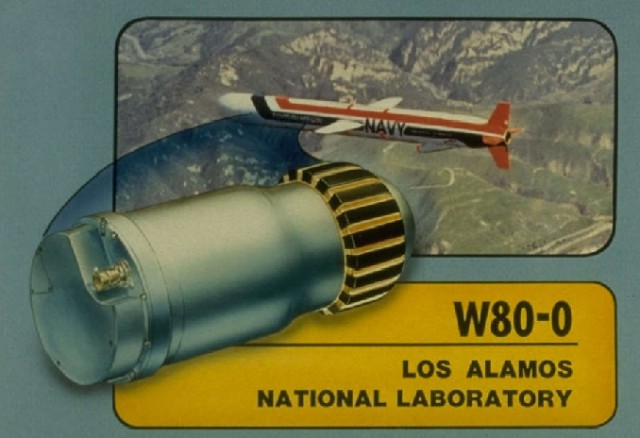
In late August, reported by the Military Times, a US Air Force B-52 bomber flew from Minot Air Force Base in North Dakota to Barksdale Air Force Base in Louisiana with six AGM advanced cruise missiles, each of which was armed with a W-80-1 nuclear warhead. "... Missiles were mounted on the pylons under its wings. Each of the warheads carried a yield of up to 150 kilotons, more than ten times as powerful as the US bomb that leveled Hiroshima at the close of the Second World War." (See Bill Van Auken, Global Research September 2007)

The Military Times byline was "B-52 mistakenly flies with nukes aboard". The issue was casually acknowledged by The Washington Post and the New York Times. The reports quoted a US Air force spokesman. The matter was offhandedly brushed aside. The incident represented “an isolated mistake” and that “at no time was there a threat to public safety.” (Ibid) :

"As far as is known, the incident marked the first time that a US plane has taken off armed with nuclear weapons in nearly 40 years. ...

... The transport of weapons from one base to another, however, is normally carried out in the holds of C-17 and C-130 cargo planes, not fixed to the wings of combat bombers.

Someone had to give the order to mount the missiles on the plane. The question is whether it was a local Air Force commander—either by mistake or deliberately—or whether the order came from higher up.

B-52s from Barksdale have been used repeatedly to strike targets in Iraq, firing cruise missiles at Iraqi targets in 1996 and 1998, and in the “shock and awe” campaign that preceded the 2003 invasion, carrying out some 150 bombing runs that devastated much of the southern half of the country.

Moreover, the weapon that was fixed to the wings of the B-52 flying from Minot air base was designed for use against hardened targets, such as underground bunkers.

Given the ratcheting up of the threats against Iran and the previous reports of plans for the use of “tactical” nuclear weapons against Iranian nuclear installations, there is a very real possibility that the flight to Barksdale was part of covert preparations for a nuclear strike against Iran.

If this is indeed the case, the claims about a “mistake” by a munitions officer and a few airmen in North Dakota may well be merely a cover story aimed at concealing the fact that the government in Washington is preparing a criminal act of world historic proportions by ordering—without provocation—the first use of nuclear weapons since the bombings of Hiroshima and Nagasaki more than sixty years ago. (Bill van Auken, op. cit).

In recent developments, Wayne Madsen (September 27) has suggested, based on US and foreign intelligence sources, that the B-52 carrying the advanced cruise missiles with bunker buster nuclear warheads was in fact destined for the Middle East.

Is the B-52 Barksdale incident in any way related to US plans to use nuclear weapons against Iran?

Madsen suggests, in this regard, that the operation of shipping the nuclear warheads was aborted "due to internal opposition within the Air Force and U.S. Intelligence Community", which was opposed to a planned US attack on Iran using nuclear warheads.

To grasp the seriousness of the "Barksdale incident", it is important to understand the broader context of nuclear weapons deployment respectively by the US, NATO and Israel.

We are not dealing with a single aborted operation of deployment of nuclear weapons to the Middle East.

There are indications that a large number of US made nuclear weapons are currently deployed in Western Europe and the Middle East including Israel.

This deployment pertains explicitly to targets in Iran.

Without downplaying the significance of the Barksdale incident, if Washington were to decide to use nuclear weapons against Iran, they could be launched at short notice from a number of military bases in Western Europe and the Middle East, from Diego Garcia in the Indian Ocean or from a US Aircraft carrier. Turkey has some 90 B61 tactical nuclear weapons which are fully deployed.(See details below).

We are dealing with a coordinated military operation in which US Strategic Command (USSTRATCOM) plays a central role. The main coalition partners are the US, NATO and Israel.

There are four interrelated "building blocks" pertaining to the preemptive use of nuclear weapons in the Middle East war theater:

1. CONPLAN 8022 formulated in 2004. CONPLAN integrates the use of conventional and nuclear weapons.

2. National Security Presidential Directive (NSPD) 35, entitled Nuclear Weapons Deployment Authorization issued in May 2004

3. The deployment of Israeli nuclear weapons directed against targets in the Middle East

4. Deployment of Nuclear Weapons by NATO/EU countries, directed against targets in the Middle East

1. CONPLAN 8022

CONPLAN 8022 under the jurisdiction of USSTRATCOM sets the stage. It envisages the integration of conventional and nuclear weapons and the use of nukes on a preemptive basis in the conventional war theater. It is described as "a concept plan for the quick use of nuclear, conventional, or information warfare capabilities to destroy--preemptively, if necessary--"time-urgent targets" anywhere in the world." CONPLAN became operational in early 2004. "As a result, the Bush administration's preemption policy is now operational on long-range bombers, strategic submarines on deterrent patrol, and presumably intercontinental ballistic missiles (ICBMs)." (Robert S. Norris and Hans M. Kristensen, Bulletin of Atomic Scientists)

CONCEPT PLAN (CONPLAN) 8022 now consists of "an actual plan that the Navy and the Air Force translate into strike package for their submarines and bombers,' (Japanese Economic Newswire, 30 December 2005, For further details see Michel Chossudovsky, Nuclear War against Iran, op. cit.).

"CONPLAN 8022 is 'the overall umbrella plan for sort of the pre-planned strategic scenarios involving nuclear weapons.'

2. Nuclear Weapons Deployment Authorization: NSPD 35 (2004)

National Security Presidential Directive (NSPD) 35, entitled Nuclear Weapons Deployment Authorization was issued in May 2004.

The contents of this highly sensitive document remains a carefully guarded State secret. There has been no mention of NSPD 35 by the media nor even in Congressional debates. While its contents remains classified, the presumption is that NSPD 35 pertains to the deployment of tactical nuclear weapons in the Middle East war theater in compliance with CONPLAN 8022.

There are indications that B61-type tactical nuclear weapons have been deployed to the Middle East following NSPD 35. The B-61s would be used against Iran, if Iran were to retaliate to a US or Israeli attack (See Ibrahim Karagul, "The US is Deploying Nuclear Weapons in Iraq Against Iran", Yeni Safak,. 20 December 2005, quoted in BBC Monitoring Europe).

3. Israeli Nukes

Israel is part of the military alliance and is slated to play a major role in case the planned attacks on Iran were to be carried out. (For details see Michel Chossudovsky, Nuclear War against Iran, Jan 2006 ).

Israel possesses 100-200 strategic nuclear warheads . In 2003, Washington and Tel Aviv confirmed that they were collaborating in "the deployment of US-supplied Harpoon cruise missiles armed with nuclear warheads in Israel's fleet of Dolphin-class submarines." (The Observer, 12 October 2003) . Coinciding with the 2005 preparations to wage air strikes against Iran, Israel took delivery of two new German produced submarines "that could launch nuclear-armed cruise missiles for a "second-strike" deterrent." (Newsweek, 13 February 2006. See also CDI Data Base)

The Israeli military and political circles had been making statements on the possibility of nuclear and missile strikes on Iran openly since October, 2006, when the idea was immediately supported by G. Bush. Currently it is touted in the form of a “necessity” of nuclear strikes. The public is taught to believe that there is nothing monstrous about such a possibility and that, on the contrary, a nuclear strike is quite feasible. Allegedly, there is no other way to “stop” Iran. (General Leonid Ivashov, Iran Must Get Ready to Repel a Nuclear Attack, Global Research, January 2007)

At the outset of Bush's second term, Vice President Dick Cheney dropped a bombshell. He hinted, in no uncertain terms, that Iran was "right at the top of the list" of the rogue enemies of America, and that Israel would, so to speak, "be doing the bombing for us", without US military involvement and without us putting pressure on them "to do it".

"Rather than a direct American nuclear strike against Iran’s hard targets, Israel has been given the assignment of launching a coordinated cluster of nuclear strikes aimed at targets that are the nuclear installations in the Iranian cities: Natanz, Isfahan and Arak.(Michael Carmichael, Global research, January 2007)

Israel is a Rottweiler on a leash: The US wants to "set Israel loose" to attack Iran. Commenting the Vice President's assertion, former National Security adviser Zbigniew Brzezinski in an interview on PBS, confirmed with some apprehension, yes: Cheney wants [former] Prime Ariel Sharon to act on America's behalf and "do it" for us:

..."And the vice president today in a kind of a strange parallel statement to this declaration of freedom hinted that the Israelis may do it and in fact used language which sounds like a justification or even an encouragement for the Israelis to do it."

Beneath the rhetoric, what we are dealing with is a joint US-NATO-Israeli military operation directed against Iran and Syria, which has been in the active planning stage since 2004. US advisers in the Pentagon have been working assiduously with their Israeli military and intelligence counterparts, carefully identifying targets inside Iran ( Seymour Hersh, http://www.globalresearch.ca/articles/HER501A.html )

In recent developments, at the September 2007 meetings of the Vienna based IAEA, a critical resolution, implicitly aimed at Israel, was put forth which would put Israel's nuclear program "under international purview." The resolution was adopted with the US and Israel voting against it.

4. NATO Nukes. Nuclear Weapons Deployment by Five Non-nuclear States

Several Western European countries, officially considered as "non-nuclear states", possess tactical nuclear weapons, supplied to them by Washington.

The US has supplied some 480 B61 thermonuclear bombs to five non-nuclear NATO countries including Belgium, Germany, Italy, the Netherlands and Turkey, and one nuclear country, the United Kingdom. These weapons are ready for delivery to "known military targets".


Source: http://www.nukestrat.com/us/afn/nato.htm

See Details and Map of Nuclear Facilities located in 5 European Non-Nuclear States


As part of this European stockpiling, Turkey, which is a partner of the US-led coalition against Iran along with Israel, possesses some 90 thermonuclear B61 bunker buster bombs at the Incirlik nuclear air base. (National Resources Defense Council, Nuclear Weapons in Europe , February 2005). These military facilities are part of the war plans directed against Iran.


B61-11 NEP Thermonuclear Bomb

Consistent with US nuclear policy, the stockpiling and deployment of B61 nuclear weapons in Western Europe are intended for targets in the Middle East. Confirmed by "NATO strike plans", these thermonuclear B61 bunker buster bombs (stockpiled by the "non-nuclear States") could be launched "against targets in Russia or countries in the Middle East such as Syria and Iran" ( quoted in National Resources Defense Council, Nuclear Weapons in Europe , February 2005)

Moreover, confirmed by (partially) declassified documents (released under the U.S. Freedom of Information Act):

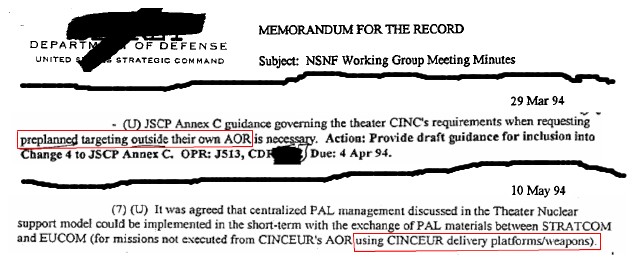
"arrangements were made in the mid-1990s to allow the use of U.S. nuclear forces in Europe outside the area of responsibility of U.S. European Command (EUCOM). As a result of these arrangements, EUCOM now supports CENTCOM nuclear missions in the Middle East, including, potentially, against Iran and Syria"

(quoted in http://www.nukestrat.com/us/afn/nato.htm italics added)

Moreover, the U.S. military made arrangements in the mid-1990s for the use of these nukes outside the area of jurisdiction of European Command (EURCOM).For EUCOM, this would mean responsibility for the the delivery of nukes within CENTCOM (Central Command) area of jurisdiction, meaning that nuclear attacks on Iran and Syria could be launched from military bases in non-nuclear EU/NATO countries.

.. It is unclear whether [the] parliaments [of EU/NATO countries] are aware of arrangements to target and potentially strike Middle Eastern countries with nuclear weapons based in Europe.(http://www.nukestrat.com/us/afn/nato.htm


Documents partially declassified and released under the U.S. Freedom of Information Act reveal that arrangements were made in the mid-1990s to allow the use of U.S. nuclear forces in Europe outside the area of responsibility of U.S. European Command (EUCOM). As a result of these arrangements, EUCOM now supports CENTCOM nuclear missions in the Middle East, including, potentially, against Iran and Syria.

Source: http://www.nukestrat.com/us/afn/nato.htm


Nuclear Weapons' Double Standards. Where is the Nuclear Threat?

While these "non-nuclear states" casually accuse Tehran of developing nuclear weapons, without documentary evidence, they themselves have capabilities of delivering nuclear warheads, which are targeted at Iran. To say that this is a clear case of "double standards" in the process of identifying the threat of nuclear weapons is a gross understatement.

France's President Nicolas Sarkozy Endorses Bush's Pre-emptive Nuclear War Doctrine

France accuses Tehran of developing nuclear weapons against mountains of evidence that Iran does not have a nuclear weapons program.

The Sarkozy government favors a military operation directed against Iran. Ironically, these threats by President Sarkozy and his Foreign Minister Bernard Kouchner were formulated immediately following the release of the IAEA Report. The latter confirms unequivocally the civilian nature of Iran's nuclear program.

According to President Sarkozy in his September 26, 2007 address to the UN General Assembly:

"There will be no peace in the world if the international community falters in the face of nuclear arms proliferation … Weakness and renunciation do not lead to peace. They lead to war,"

France has also confirmed that it could use its own nuclear warheads estimated at between 200 and 300, on a preemptive basis. In January 2006, (former) President Jacques Chirac announced a major shift in France's nuclear weapons policy.

Without mentioning Iran, Chirac intimated that France's nukes should be used in the form of "more focused attacks" against countries, which were "considering" the deployment of Weapons of Mass Destruction (WMD).

He also hinted to the possibility that tactical nuclear weapons could be used in conventional war theaters, very much in line with both US and NATO nuclear doctrine (See Chirac shifts French doctrine for use of nuclear weapons , Nucleonics Week January 26, 2006).

Chirac's successor, Nicolas Sarkozy has embraced the US sponsored "War on Terrorism".

France supports the preemptive use of nuclear weapons in the conventional war theater, broadly following the principles formulated in the Bush Administration's nuclear doctrine, which allows the use of nukes (against Iran or Syria) for "self-defense".


Michel Chossudovsky
is the author of the international best America’s "War on Terrorism" Global Research, 2005. He is Professor of Economics at the University of Ottawa and Director of the Center for Research on Globalization.

To order Chossudovsky's book America's "War on Terrorism", click here

ShareThis