October 30, 2007

Warning Is Sent to AIDS Vaccine Volunteers

S. Africans Among Recipients Who May Be at Higher Risk of Contracting Virus

Washington Post Foreign Service
Thursday, October 25, 2007; Page A20
http://www.washingtonpost.com/wp-dyn/content/article/2007/10/24/AR2007102402514.html

JOHANNESBURG, Oct. 24 -- South African AIDS researchers have begun warning hundreds of volunteers that a highly touted experimental vaccine they received in recent months might make them more, not less, likely to contract HIV in the midst of one of the world's most rampant epidemics.

The move stems from the discovery last month that an AIDS vaccine developed by Merck & Co. might have led to more infections than it averted among study subjects in the United States and other countries. Among those who received at least two doses of the vaccine, 19 contracted HIV compared with 11 of those given placebos.

Researchers shut down the trial on the grounds that the vaccine was proving ineffective, but the surge in infection among vaccinated volunteers prompted intense scientific debate and anxiety among researchers. The failure of the Merck vaccine is the latest in a series of disappointing results for research projects aimed at curbing AIDS.

"This is my worst nightmare," said Glenda Gray, the lead South Africa investigator for the vaccine study. "I haven't slept for days. I have a headache. I'm ready to resign from trials for the rest of my life."

Researchers in Soweto, Cape Town, Durban and two other sites began contacting South Africa's 801 trial participants on Tuesday, mainly by cellphone text message. The goal is to tell each one individually whether they had received a placebo or the vaccine, a process called "unblinding" the trial. Researchers are telling the roughly half who received the vaccine that it might have increased their risk of contracting HIV.

"It's quite shocking," said Nelly Nonoise, 26, who had received three injections of the vaccine in her left shoulder.

She added, "I probably wouldn't have joined the study knowing there's a risk."

Another participant, Nonhlanhla Nqakala, 22, said she thought the text message urging her to visit the vaccine test site meant she had tested positive for HIV. Her brother and a close friend had the disease and died, she said.

Nqakala said she was relieved when a doctor explained that she was not infected, but the news of a possible problem with the vaccine -- she had received three doses, not placebos -- left her distressed. "I thought the trial would help us find a cure for HIV," she said.

Merck developed the vaccine in conjunction with the U.S. National Institutes of Health , and until September's announcement, researchers worldwide considered it the most promising candidate yet in a multibillion-dollar quest for an AIDS vaccine dating to the 1980s.

Scientists crafted the vaccine by genetically altering a common virus to include elements of HIV. They hoped that it would trigger an immune response that would make recipients less likely to contract HIV, or at least delay the onset of full-blown AIDS.

The vaccine could not have caused infection, researchers say, but it could have caused immunological changes that made it easier for the virus to take hold during a later exposure.

The Merck vaccine trials took place in 15 cities in the United States, including Boston, Los Angeles and New York, and three in Canada. There also were sites in Peru, Brazil, Australia, Haiti, the Dominican Republic and Jamaica. Those trials began in December 2004 and included 3,000 participants, mostly gay men.

In South Africa -- where an estimated 5.5 million people are infected with HIV, more than in any other country -- the study used the same vaccine but was administered separately. The trial here started later, with the first injections this year, and had its own ethics oversight board. Most of the subjects were heterosexual.

The ethics oversight board in the United States, which monitored the trial everywhere but in South Africa, has not decided whether to tell participants if they received the placebo or the vaccine, said Mark Feinberg, vice president for medical affairs and policy for Merck.

Continuing research could be compromised, he said, if participants were told immediately whether they received the placebo or the vaccine. Vaccine researchers are scheduled to meet in Seattle on Nov. 7.

"Given the complexity of the issue, we feel the best conclusions will be reached when all the data are analyzed in their entirety," Feinberg said from Atlanta, where he was traveling.

He added that individual participants who want to know whether they received the vaccine will be told. Researchers also are counseling all study participants that the vaccine may have increased HIV risk for those who received it.

Other AIDS studies also have had unexpected results. Trials of two vaginal microbicide gels to prevent HIV led to more infections among those using the products instead of placebos. A massive study in Zimbabwe of the ability of HIV counseling and testing to prevent the spread of the epidemic found more infections among those with expanded access to testing.

on the B-52 incident

If you scroll down aways, you will find a very good news widgit that is update constantly and usually they and I cover the SAME GROUND. This on on the B52 incident is quite good but I do not understand why they are "in the know" that the Dick Cheney had himself made the head of the chain of command for moving nukes around only WEEKS before the incident. This makes me go 'hmmm ...' I've noticed it in many articles claiming to be "credible"? sources of late. I mean if there was EVER something that should get people to DEMAND impeachment of Cheney, this has to be it .. These articles are mainly under Bent Spear on this blog if you are looking for the link. Otherwise just inputting B52 into the search box should snag you a right lot of info. This is the SCARIEST thing I have EVER HEARD in my life and that's even counting having lived through the Cuban missile crisis which left an indelible stain on my soul.
Veeger

Missing Nukes: Treason of the Highest Order

Mahdi Darius Nazemroaya

According to a wide range of reports, several nuclear bombs were “lost” for 36 hours after taking off August 29/30, 2007 on a “cross-country journey” across the U.S., from U.S.A.F Base Minot in North Dakota to U.S.A.F. Base Barksdale, near New Orleans, in Louisiana. [1] Reportedly, in total there were six W80-1 nuclear warheads armed on AGM-129 Advanced Cruise Missiles (ACMs) that were “lost.” [2] The story was first reported by the Military Times, after military servicemen leaked the story.

It is also worth noting that on August 27, 2007, just days before, three B-52 Bombers were performing special missions under the direct authorization of General Moseley, the Chief of Staff of the U.S. Air Force. [3] The exercise was reported as being an aerial information and image gathering mission. The base at Minot is also home of the 91st Space Wings, a unit under the command of Air Force Space Command (AFSPC).

According to official reports, the U.S. Air Force pilots did not know that they were carrying weapons of mass destruction (WMDs). Once in Louisiana, they also left the nuclear weapons unsecured on the runway for several hours. [4]

U.S. Air Force Deputy Chief of Staff for Operations, Plans, and Requirements, Major-General Richard Y. Newton III commented on the incident, saying there was an “unprecedented” series of procedural errors, which revealed “an erosion of adherence to weapons-handling standards” [5]

These statements are misleading. The lax security was not the result of procedural negligence within the U.S. Air Force, but rather the consequence of a deliberate tampering of these procedures.

If a soldier, marine, airman, or sailor were even to be issued a rifle and rifle magazine — weaponry of a far lesser significance, danger, and cost — there is a strict signing and accountability process that involves a chain of command and paperwork. This is part of the set of military checks and balances used by all the services within the U.S. Armed Forces.

Military servicemen qualified to speak on the subject will confirm that there is a stringent nuclear weapons handling procedure. There is a rigorous, almost inflexible, chain of command in regards to the handling of nuclear weapons and not just any soldier, sailor, airman, or marine is allowed to handle nuclear weapons. Servicemen specialized in handling nuclear weapons and the loading procedures for nuclear weapons are only perm certified to handle, access, and load nuclear weapons.

Every service personnel that moves or even touches these weapons must sign a tracking paper and has total accountability for their movement. There is good reason for the paperwork behind moving these weapons. The military officers that order the movement of nuclear weapons, including base commanders, must also fill out paper forms.

In other words, unauthorized removal of nuclear weapons would be virtually impossible to accomplish unless the chain of command were bypassed, involving, in this case, the deliberate tampering of the paperwork and tracking procedures.

The strategic bombers that carried the nuclear weapons also could not fly with their loaded nuclear weaponry without the authorization of senior military officials and the base commander. The go-ahead authorization of senior military officials must be transmitted to the servicemen that upload the nuclear weapons. Without this authorization no flights can take place.

In the case of the missing nukes, orders were given and flight permission was granted. Once again, any competent and eligible U.S. Air Force member can certify that this is the standard procedure.

There are two important questions to be answered:

1. Who gave the order to arm the W80-1 thermonuclear warheads on the AGM-129 Advanced Cruise Missiles (ACMs)?

2. If this was not a procedural error, what was the underlying military-political objective sought by those who gave the orders?

The Impossibility of "Loosing" Nuclear Weapons

As Robert Stormer, a former U.S. lieutenant-commander in the U.S. Navy, has commented: “Press reports initially cited the Air Force mistake of flying nuclear weapons over the United States in violation of Air Force standing orders and international treaties, while completely missing the more important major issues, such as how six nuclear cruise missiles got loose to begin with.” [6]

Stormer also makes a key point, which is not exactly a secret: “There is a strict chain of custody for all such weapons. Nuclear weapons handling is spelled out in great detail in Air Force regulations, to the credit of that service. Every person who orders the movement of these weapons, handles them, breaks seals or moves any nuclear weapon must sign off for tracking purposes.” [7]

Stormer continues:

“Two armed munitions specialists are required to work as a team with all nuclear weapons. All individuals working with nuclear weapons must meet very strict security standards and be tested for loyalty — this is known as a ‘[Nuclear Weapons] Personnel Reliability Program [DoDD 5210 42].’ They work in restricted areas within eyeshot of one another and are reviewed constantly.”[8]

Stormer unwraps the whole Pentagon cover-up by pointing out some logical facts and military procedures. First he reveals that: “All security forces assigned [to handle and protect nuclear weapons] are authorized to use deadly force to protect the weapons from any threat [including would-be thieves].” [9]

He then points out a physical reality that can not be shrugged aside: “Nor does anyone quickly move a 1-ton cruise missile — or forget about six of them, as reported by some news outlets, especially cruise missiles loaded with high explosives.”

He further explains another physical and procedural reality about nuclear weapons assembly:

“The United States also does not transport nuclear weapons meant for elimination attached to their launch vehicles under the wings of a combat aircraft. The procedure is to separate the warhead from the missile, encase the warhead and transport it by military cargo aircraft to a repository — not an operational bomber base that just happens to be the staging area for Middle Eastern operations.” [10]

This last point raises the question of what were the nuclear weapons meant for? In this context, Stomrer puts forth the follwing list of important questions to which he demands an answer:

1. Why, and for what ostensible purpose, were these nuclear weapons taken to Barksdale?
2. How long was it before the error was discovered?
3. How many mistakes and errors were made, and how many needed to be made, for this to happen?
4. How many and which security protocols were overlooked?
5. How many and which safety procedures were bypassed or ignored?
6. How many other nuclear command and control non-observations of procedure have there been?
7. What is Congress going to do to better oversee U.S. nuclear command and control?
8. How does this incident relate to concern for reliability of control over nuclear weapons and nuclear materials in Russia, Pakistan and elsewhere?
9. Does the Bush administration, as some news reports suggest, have plans to attack Iran with nuclear weapons?

It is a matter of perception, whether it is “clear” or “unclear”, as to why the nuclear warheads had not been removed beforehand from the missiles.

For those who have been observing these series of “unclear” events it is becoming “clear” that a criminal government is at the helm of the United States. There was no way that the six nuclear missiles could have been “mistakenly” loaded, especially when their separate warheads had to be affixed to them by individuals specialized in such a momentous task.

It is also being claimed that military teams in both U.S.A.F. Base Minot and U.S.A.F. Base Barksdale made major procedural errors. What are the probabilities of this occurring simultaneously in two locations? It is also worth noting that original reports from military sources talked about only five of the six nuclear warheads from Minot being accounted for in Barksdale. [11] Nuclear warheads are also kept in specialized storage areas or bunkers. Moreover, nuclear weapons are not being decommissioned at Barksdale.

The Role of the Nuclear Weapons Surety Program: What happened to Electronic Monitoring?

The Nuclear Weapons Surety Program is a joint program between the U.S. Department of Defence and the U.S. Department of Energy. The National Security Agency (NSA) is also involved as well as other U.S. federal government agencies. The Nuclear Weapons System Safety Program is part of this program, which involves a monitoring and safeguards regime for the U.S. nuclear arsenal.

The Nuclear Weapons Security Standard falls under the Nuclear Weapons Surety Program and is in place to disallow any “unauthorized access to nuclear weapons; prevent damage or sabotage to nuclear weapons; prevent loss of custody; and prevent, to the maximum extent possible, radiological contamination caused by unauthorized acts.”


Under this or these safeguards system there also exists a rigorous control of use scheme, which is tied to the military chain of command and the White House.

“Command and Control (C2)” and “Use Control”

“Use control” is a set of security measures designed to prevent unauthorized access to nuclear weapons. These measures involve weapons design features, operational procedures, security, and system safety rules.

“Command and Control” or “C2” involves the Office of the President of the United States of America. C2 is an established line of command, which is tied to the White House. Without it, nuclear weapons cannot be deployed or armed as they were in U.S.A.F. Base Minot. It is these two control elements that establish the basis of authorization through which “absolute control of nuclear weapons” is maintained “at all times.”

In addition to the checks and balances in place in regards to handling nuclear weapons, the Defence Threat Reduction Agency (DTRA) and its partners manually and electronically inspect and monitor all U.S. nuclear weapons through the Nuclear Weapon Status Information Systems.

More Unanswered Questions: What Happened to the Computerized Tracking System?

The Nuclear Management Information Systems “interface with each other and provide [the U.S. Department of Defence] with the ability to track the location of nuclear weapons and components from cradle-to-grave [meaning from when they are made to when they are decommissioned].” [12]

Military Times also makes an omission that exposes the official narrative as false and indicates that the event was not just a mistake; “The Defense Department uses a computerized tracking program to keep tabs on each one of its nuclear warheads, said Hans Kristensen, director of the Nuclear Information Project at the Federation of American Scientists. For the six warheads to make it onto the B-52, each one would have had to be signed out of its storage bunker and transported to the bomber.” [13]

This is where the chain of command in regards to military officers falls into play. If any of the stocked inventories of nuclear weapons are moved to an authorized location they will be noticed and tracked by the DTRA and will require the relevant authorization. There is also a code system involved that is tied to the chain of command.

The fact that the incident only apparently became known to the U.S. Air Force when military personnel reported it, suggests that either the nuclear weapons were ordered to be moved or that the electronic tracking devices had been removed or tampered with. This scenario would need the involvement of individuals with expertise in military electronics or for those responsible for the monitoring of nuclear weapons to look the other way or both.

Mysterious Deaths in the United States Air Force: Whitewash and Cover-up

Several military personnel died under mysterious circumstances shortly before and after the incident. There are now questions regarding the fate of these individuals in the U.S. Air Force who could have had relationships in one way or another to the incident or possibly have been directly involved. It is also necessary to state that there is no proof that these deaths are linked to the August flight from Minot to Barksdale in question.

Citizens for Legitimate Government has pointed towards the involvement of the U.S. Air Force in a cover-up and has linked several deaths of U.S. servicemen to the incident. Lori Price has also stated for Citizens for a Legitimate Government that “you need about fourteen signatures to get an armed nuke on a B-52.”

Based on several news sources, including the U.S. military, we provide below a detailed review of these mysterious and untimely deaths of U.S. servicemen.

Todd Blue
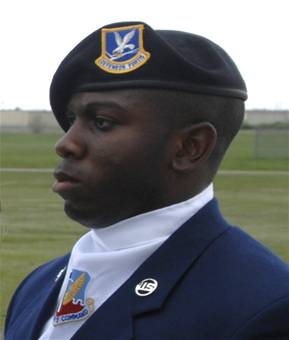


Airman 1st Class Todd Blue went on leave days after the nuclear weapons were “lost.” Blue died under questionable timing while on leave, visiting his family in Wytheville, Virginia at the age of 20 on September 10, 2007. He was a response force member assigned to the 5th Security Forces Squadron. What does this mean?

Airman Todd Blue occupied a key position in weapons systems security at Minot. [14] At Minot U.S.A.F. Base the 5th Security Forces Squadron to which he belonged was responsible for base entry requirements and a particular section, the Weapons System Security section, was responsible for preventing the unauthorized removal of military property. The latter is responsible for security of all priority resources, meaning the security of nuclear weapons. In other words not only did the 5th Security Forces Squadron keep eyes on what entered and left Minot, but they kept an eye on and monitored the nuclear weapons.

John Frueh
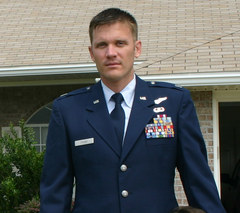


U.S. Air Force Captain John Frueh is another serviceman who could have been indirectly connected to the “lost” nuclear weapons. He was reported as being last seen with a GPS device, camera, and camcorder being carried with him in a backpack. Local police in Oregon and the F.B.I. seemed to be looking for him for days. His family also felt that something bad had happened to him.

On September 8, 2007 Captain Frueh was found dead in Washington State, near his abandoned rental car, after the Portland Police Department contacted the Skamania County Sheriff’s Officer. [15] The last time he spoke with his family was August 30, 2007. He had arrived from Florida to attend a wedding that he never showed up at. The Oregonian reported that “Authorities in Portland found no activity on his credit or bank cards since [Frueh] was last seen (...) [and that] the last call from his cell phone was made at 12:28 p.m. [August 30, 2007] from Mill Plain Boulevard and Interstate 205 in Vancouver [Washington State].” [16]

His background was in meteorology and the study of the atmosphere and weather. He was also reported to be a U.S. Air Force pararescue officer. [17] He was also a major-select candidate, which means he was selected for a promotion as a U.S. Air Force major, but was not officially promoted.

Captain Frueh belonged to the U.S.A.F. Special Operations Command. U.S.A.F. Special Operations Command has its headquarters in Hurlburt Field, Florida and is one of nine major Air Force commands. It is also the U.S. Air Force’s component of U.S. Special Operations Command, a unified command located at MacDill Air Force Base, which is also in Florida. The force provides special operations forces for worldwide deployment and assignment to regional unified commands, such as CENTCOM. Its missions include conduct of global special operations. These operations — and this is where careful attention should be paid — range from “precision application of firepower, such as nuclear weapons,” to infiltration, exfiltration (the removal of “devices,” supplies, spies, special agents, or units from enemy territory), re-supply and refuelling of special operational elements.

In Captain Frueh’s case his death is questionable too. The U.S. Air Force would not let a missing persons’ investigation go forward by the police without conducting its own investigation. Usually the different service branches of the U.S. military would investigate for missing servicemen, to see if these individuals are Absent Without Authorized Leave (AWAL) or have deserted, before an individual’s case is handed over to the police.

Clint Huff, Linda Huff, and Weston Kissel

Another military weatherman, along with his wife, also died after August 30, 2007. Senior Airman Clint Huff, belonging to the 26th Operational Weather Squadron and his wife Linda Huff died in a motorcycle accident on September 15, 2007. [18] The husband and wife fatality happened on Shreveport-Blanchard Highway, near U.S.A.F. Base Barksdale, when according to the Caddo Parish Sheriff’s Officer a Pontiac Aztec, a medium-sized SUV, initiated a left turn at the same time that the couple attempted to pass on a no passing zone and collided. [19]
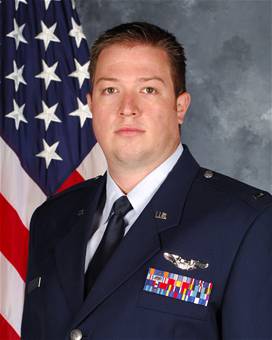


First-Lieutenant Weston Kissel, a B-52H Stratofortress Bomber pilot, also died in a reported Tennessee motorcycle accident. This was while he was on leave in, less than two months from the nuclear B-52 flights, on July 17, 2007. [20] His death came after another single-vehicle accident by another Minot serviceman, Senior Airman Adam Barrs. [21]

Adam Barrs and Stephen Garrett
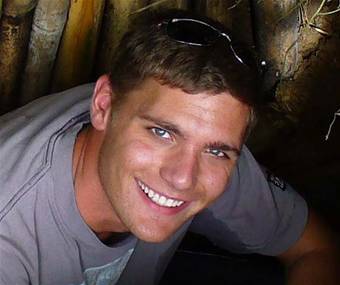


Senior Airman Barrs died as a passenger in a vehicle being driven by Airman 1st Class Stephen Garrett, also from Minot. Garrett, also belongs to the 5th Aircraft Maintenance Squadron.

The death of Barrs was reported as being part of a single-vehicle car accident. Associated Press reports state that “[Minot] Base officials say 20-year-old Barrs was a passenger in a vehicle that failed to negotiate a curve, hit an approach, hit a tree and started on fire late Tuesday [July 3, 2007] night.” [22] Barrs was pronounced dead on the scene of the accident, while Garrett was taken the hospital with no updates released by the U.S. Air Force. Adam Barrs also belonged to the 5th Aircraft Maintenance Squadron, where he was responsible for the maintenance and securing of the electronic communicational and navigation mission systems aboard the B-52H Stratofortresses on base. The 5th Aircraft Maintenance Squadron is also one of the units that are responsible for loading and unloading weaponry onto the B-52H Stratofortresses.

The deaths of Kissel and Barrs could be dismissed as irrelevant because they occurred prior to the incident. However, Barrs and Kissel could have been in one way or another connected to the advanced planning of the special operation, prior to the incident (special operations are not planned in a few days and may take months and even longer). There is, of course, no proof and only an independent investigation will be able to reveal whether these deaths are connected to the incident.

If there was an internal and secretive operation bypassing most military personnel, a few men in key positions would have to have been involved over a period of time prior to the August 29-30, 2007 flight. Senior Airman Barrs, due to his expertise in communication and navigational systems, could potentially have been involved in the preparations that would have allowed the nuclear weapons to escape detection by military surveillance and be ready for takeoff.

Reprimands, Replacements and Reassignments in the U.S.A.F. Chain of Command

Senior officers, including three colonels and a lieutenant-colonel, are among 70 personnel that will reportedly be disciplined for negligence, allowing a B-52H Stratofortresses Bomber to fly across the U.S. carrying six nuclear-armed cruise missiles that should never have been loaded under its wings. [23]

According to the Military Times, George W. Bush Jr. had been swiftly informed. This is a lockstep procedure. This illustrates the importance tied to the authorization needed for handling nuclear weapons. This is part of a two-way process in regards to authorization from the White House.

The commander of the 5th Munitions Squadron and the commander of the 5th Bomb Wing, Colonel Bruce Emig, have been replaced along with a series of other senior officers. This implies that the U.S. Air Force chain of command is directly involved in this event. None of these senior officers have been authorized to speak or make statements, according to U.S. military sources. Will any of these officers receive lucrative departure packages? Have they been reassigned?

More generally, the nature of the reprimands directed against senior officers involved has not been fully disclosed.

The “memory” of the incident is being erased through a reorganization of the ranks and a purge at U.S.A.F. Base Minot. The streamlining of the chain of command as well as the mysterious deaths of personnel who could have been involved in the incident, raise a series of far-reaching questions.

There are several important issues regarding the senior officers' chain of command at Minot, which will be addressed in this article. Once again, the most important questions in regards to the missing nukes are: Who gave the orders and authorization for the operation and what where the underlying objectives of loading armed nuclear missiles?


Other Mysterious Deaths: Was the Missing Nukes Incident connected to US War Plans directed against Iran?

Charles D. Riechers
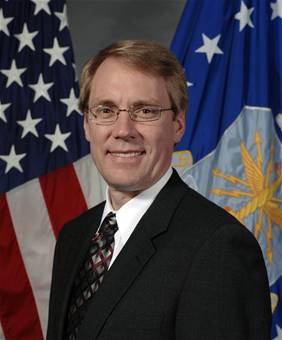
A U.S. Air Force official, Charles D. Riechers, has been found dead on October 14, 2007. [24] Riechers was a retired Air Force officer and master navigator specializing in electronic warfare. He was a member of the Senior Executive Service of the U.S. Air Force, and was the Principal Deputy Assistant Secretary of the Air Force for Acquisition and Management. A description of his duties includes “providing sound expert advice and guidance on acquisition and procurement policies, as well as formulating, reviewing and, as assigned, execution of plans, programs and policies relating to organization, function, operation and improvement of the Air Force's acquisition system.”

He apparently killed himself by running his car’s engine inside his suburban garage in Virginia. The death of Charles D. Riechers has been casually linked by The Washington Post to his involvement in fraudulent activities and embezzlement. [25] The Washington Post reported that the Air Force had asked defense contractor, Commonwealth Research Institute (C.R.I.), to give him a job with no known duties while he waited for official clearance for his promoted rank in the Pentagon. Riechers is quoted as saying: “I really didn’t do anything for C.R.I.,” and “I [still] got a paycheck from them.” The question, of course, was whether the contractor might expect favors in return upon his assignment to the Pentagon last January. [26] A mysterious suicide letter expressing shame was subsequently reported; the letter was reportedly from a man who had already admitted without shame that he was receiving money for doing nothing. This was known to the U.S. Senate, which had approved his promotion.

In a report featured by Pravda, Russian Intelligence analysts have said that the reported suicide of Charles D. Riechers was a cover-up and that he was murdered because of his involvement in the controversial flight of nuclear weapons over the continental United States.

Pravda reports that “Russian Intelligence Analysts are reporting today that American War Leaders have ‘suicided’ [sic] one of their Top US Air Force Officials Charles D. Riechers as the rift growing between the U.S. War Leaders and their Top Military Officers over a nuclear attack on Iran appears to be nearing open warfare.” [27]

According to the Pravda report, the incident was linked to an operation to smuggle nuclear weapons from the U.S. military in connection to launching a war against Iran.

The Commonwealth Research Institute (CRI), a registered non-profit organization is a subsidiary of Concurrent Technologies, which is registered with the IRS as a tax-exempt charity, which is run by Daniel Richard DeVos. Devos is also an associate of John P. Murtha, who was investigated by the F.B.I. for his Saudi links.

Certainly the ties of the Commonwealth Research Institute (CRI), a non-profit organization working for the Pentagon, are questionable and the organization could be a front for internal operations that bypass most military personnel. The case appears to be part of an internal operation that was being kept a secret from the most of the U.S. military, but what for?

Russell E. Dougherty
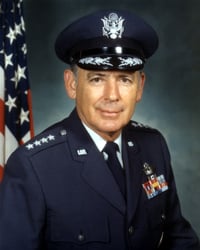


More than a month before the death of Riechers, General Russell Elliot Dougherty, a retired flag officer, was also reported to have died on September 7, 2007 at his home in Falcon Landing military retirement community in Potomac Falls located in Arlington, Virginia. [28] He once was one of the most senior individuals responsible for the nuclear arsenal of the U.S. military and also the former commander of Strategic Air Command (SAC) and director of the Joint Strategic Target Planning Staff, which identified nuclear targets worldwide amongst its responsibilities. At Minot next to his obituary was a military information notice on suicide, telling servicepersons what the signs of suicide are. [29]

Russell Dougherty in the course of his military career in the U.S. Air Force had dealt with the issues pertaining to Mutual Assured Destruction (MAD), full spectrum dominance, how to defeat the enemy and avoid a nuclear war, other uses for nuclear weaponry, Nuclear Primacy for the U.S., and tackling the effects of the wind and weather — due to their unpredictable natures — on the use of nuclear weapons.

The fact that the nuclear warheads were attached to the nuclear cruise missiles could mean that someone wanted to take the weapons in one step or to use them right away.

Timely Appointments at U.S.A.F. Base Minot

Several of the commanding officers at Minot were freshly appointed in June, 2007. This may have been part of standard procedures, but the timing should not be ignored.

Colonel Robert D. Critchlow was transferred, just before the incident, from the Pentagon to Minot and appointed commanding officer for the 91st Operations Group, a missileer unit and the operational backbone of the 91st Space Wing. In Washington, D.C. he was involved in research for the Congressional Research Services and later posted into Air Force Nuclear Response and Homeland Defence.

Colonel Myron L. Freeman was transferred from Japan to Minot in June, 2007. Colonel Freeman was appointed as the commander of the 91st Security Forces Group, which is responsible for securing Minot’s nuclear arsenal.

Colonel Gregory S. Tims was also appointed as deputy commander or vice-commander of the 91st Space Wing in June, 2007. However, Colonel Tims was transfered to Minot from California almost a year before.

One of the most senior non-commissioned officers (NCOs) or non-commissioned members (NCMs), Chief Master Sergeant Mark R. Clark, was also transferred to U.S.A.F. Base Minot from Nebraska in July, 2007.

Colonel Roosevelt Allen was also transferred to Minot from Washington, D.C. to become commander of the 5th Medical Group.

Colonel Bruce Emig, the now-former commander of the 5th Bomb Wing, was also transferred to Minot from U.S.A.F. Base Ellsworth in South Dakota in June, 2007. Colonel Emig was also the base commander of Minot.

Colonel Cynthia M. Lundell
, the now-former group commander for the 5th Maintenance Group, the unit responsible for loading and unloading weaponry onto the B-52H Stratofortresses was also freshly transferred from a NATO post in Western Europe in June, 2007. Were these appointments temporary? Were any of these appointments related to the six “lost” nuclear missiles?

Prior to the Missing Nukes Incident, Minot Airmen Meet with the President and the U.S. Air Force Chief of Staff


On June 15, 2007, George W. Bush Jr. met senior officers from U.S.A.F. Base Minot at U.S.A.F. Base McConnell in Wichita, Kansas during a visit to Boeing’s Integrated Defense Systems facility. Amongst them was Major Daniel Giacomazza of the 5th Operational Support Squadron.

Senator Patrick Roberts of Kansas was also present. “While he chaired the Senate Intelligence Committe from 2002 to 2007, [Senator] Roberts stonewalled attempts to investigate everything from the manipulation of intelligence in the rush to war in Iraq, President Bush’s warrantless wiretaps, and even allegations of the use of torture by the CIA,” according to Associated Press (AP) reports. [30] The same report also indicates that the U.S. President was in Wichita for a political fundraiser, and stopped at a new Boys and Girls Club of America to defray the costs of getting to Wichita via Air Force One for Senator Roberts’ campaign.

Military sources have reported that a B-52H Stratofortress was flown to Wichita so that Boeing’s engineers could take a look in order to make adjustments to the war planes for a new military program. [31] Nothing has been reported about any private meetings between President Bush Jr. or any of his presidential staff and the personnel from Minot. However, reports have been made of meetings between military families and the U.S. President in his office on Air Force One.
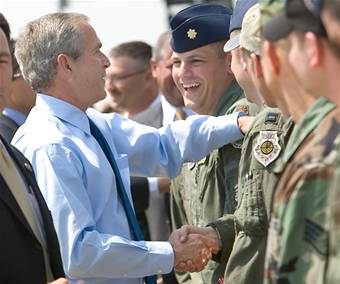


General Moseley, the Air Force Chief of Staff, had previously visited Minot on March 14-15, 2007, a month before Minot airmen went to Wichita. [32] If a secret mission was being prepared, these events could have played a role in the recruiting phases for an important internal special operation. Following their recruitment, Minot servicemen could have symbolically met General Moseley or White House officials to understand that the mission was being sanctioned by the highest ranks and offices in the United States.

Orders had to Come from the Top: Treason of the Highest Order

Orders had to come from higher up.

The operation would not have been possible without the involvement of more than one individual in the highest ranks of the U.S. Air Force command structure and the Pentagon.

The only way to bypass these separate chains of command is "to be above them" (from higher up), as well as have the possibility of directly overseeing their implementation.

These orders would then have been communicated to lower levels in the US Air Force command chain in different locations, to allow for a so-called “oversight” to proceed. The alternative to this is "an alternative chain of command", although this also needs someone in the highest ranks of office to organize and oversee it.


The post given to Riechers was politically motivated, given his track record in the U.S. Air Force. Riechers had been in a position of responsibility in the U.S. Air Force special operational support activities; something he had in common with Russell Dougherty, the former SAC commander. He would have been one of the best suited individuals for making arrangements in the case of an alternative command structure for a secretive nuclear operation. Moreover, he already had a record of corrupt behaviour through his involvement with the Commonwealth Research Institute. The possible involvement of U.S. Air Force weathermen and special operatives raises many questions as to what exactly was the objective of making the nuclear weapons disappear. [33]

The Investigation

The U.S. Air Force has publicly stated that it has made a “mistake,” which is very unusual and almost unprecedented for a military organization that tries to continually assure the American public of their safety.

The fact that seventy or more military personnel have been punished in the case of the “lost” nuclear weapons does not mean, however, that the senior commanding officers responsible for having carried out the special operation will be identified and punished.

Quite the opposite. The investigation could indeed result in a camouflage of the chain of command, where lower-ranking military personnel are accused and court-martialed, with a view to ultimately protecting those in high office who have committed an act of treason.

The series of deaths mentioned above, may have no ties whatsoever with the the August flight in question from Minot to Barksdale, but the issues of command, monitoring, and authorization cannot be overlooked or ignored. The American people have before them a case of treason that involves the highest offices of government and most probably the offices of the President and the Vice-President.

Once again, the “C2” process involves the Office of the President and Commander in Chief. It is an established line of command, without which nuclear weapons could not have been deployed or armed as they were in U.S.A.F. Base Minot. It is this command element that establishes the basis of authorization through which “absolute control of nuclear weapons” is maintained “at all times.”
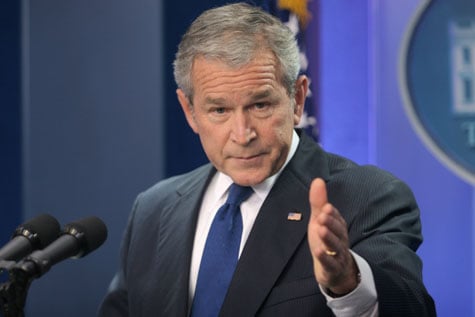


With time it is possible that military servicemen and servicewomen may come forward with more information.

However, in the meantime, there has been a streamlining of military personnel at U.S.A.F. Minot. Base personnel have become dispersed and reassigned to other locations.

If they on the grounds of loyalty to their country, the United States of America, come forward and reveal what has taken place, they are to be saluted with full honour by all ranks. As George Orwell said, “In a time of universal deceit, telling the truth becomes a revolutionary act,” and indeed these are deceitful times.


The fact that U.S. Air Force officers came forward and reported this incident is contrary to U.S. military procedures, regulations, and laws. The U.S. military will never release any information that will risk or damage its reputation. Any information in regards to nuclear weapons can not be released without prior consultations with and authorization by the White House.

The nuclear weapons were armed and moved deliberately. Orders had to have come from the highest echelons of the U.S. government.

The question is what exactly were they meant for? Were they part of a war agenda or something else?

Bush Threatens Iran with Nuclear Weapons

What adds intrigue to an understanding of the missing nukes, are the international events and war games taking place just after the “lost” nuclear weapons incident, not to mention the President’s ongoing threats to attack Iran with nuclear weapons and Vice President Cheney's repeated warnings that a second large scale terrorist attack on America is under preparation, with the support of Iran.

In the U.S., under the Vigilant Shield 2008 war games (initiated in September) and the TOPOFF anti-terrorism exercises, some form of nuclear terrorist attack on American soil had been envisaged. The roles of Russia and China had also been contemplated. The latter would be “a likely scenario” had the U.S. attacked Iran and as a result Russia and China had decided to intervene. [34] Under Vigilant Shield 2007, held in 2006, the possibility of a nuclear war with Iran’s allies, Russia and China had been contemplated in the war games scenario.

The Kremlin has responded by holding its own war games.[35]

An unveiled threat to trigger World War Three has been the response of George W. Bush Jr. to Russia’s statements warning that a US sponsored war with Iran, could result in an escalating World War III scenario.

The six nuclear warheads were not meant for use in theatre operations against Iran. This is obvious because if they were they would have been deployed via the proper procedural routes without the need to hide anything. Besides, there are already theatre-level nuclear weapons ready and armed in Europe and the Middle East for any possible Middle Eastern mission. There was something more to the incident.

It is also worth noting that the Israelis launched an attack on an alleged Syrian nuclear facility that both Tel Aviv and the White House claim was constructed with the assistance of North Korea. This event has been used to draw a Syria-Iran-North Korea nuclear proliferation axis. [36]

In regards to the case of the missing nuclear weapons, weathermen and military personnel with an expertise in space and missile components were involved. The incident took place during a time when the U.S. missile shield projects in Eastern Europe and Eastern Asia, directed against Russia and China, were raising international tensions and alarms. On October 23, 2007 President Bush Jr. stated: “The need for missile defence in Europe is real and I believe it’s urgent.” [37]

Nuclear warfare, the militarization of space, and “the missile shield” are interrelated military processes. The overtones of Nuclear Primacy are hanging in the air. One of the goals of the U.S. military has been to effectively shield itself from a potential Russian or potential Russian and Chinese nuclear response to a nuclear “First Strike” from the U.S. military. [38] The militarization of space is also deeply linked to this military project. Like their advanced knowledge about the U.S. missile shield project, Russian and Chinese officials have got wind of these ambitions and are fully aware of what the U.S. intends to do.


NOTES

[1] Sarah Baxter, US hits panic button as air force ‘loses’ nuclear missiles, The Times (U.K.), October 21, 2007.


[2] The Nuclear Reactions Data Centres also estimated that the W80-1 stockpile included a total of 1,400 warheads remain in stockpile associated with the 900 ALCMs that are in storage with their warheads removed.


[3] Baxter, US hits panic button, Op. cit.

[4] John Andrew Prime, Barksdale bombers expand B-52 capabilities, The Sheveport Times, August 27, 2007.

[5] Baxter, US hits panic button, Op. cit.; Major-General Newton is also responsible for formulating policy supporting air, space, nuclear, counter-proliferation, homeland, weather, and cyber operations. Because of his role as one of the Air Forces’ key flag officers in regards to nuclear issues and counter-proliferation he has been involved in war planning in regards to Iran, Israeli preparations for attacks on Syria, and the 2006 Israeli war against Lebanon.

[6] Robert Stormer, Nuke transportation story has explosive implications, Fort Worth Star-Telegram, Octobers 8, 2007.

[7] Ibid.; To help ensure adequate shipboard security, TLAM-N is protected by an intrusion detection alarm system that indicates an intrusion, both visually and audibly, at a continuously manned station capable of dispatching a security team.

[8] Ibid.

[9] Ibid.

[10] Ibid.

[11] Michael Hoffman, B-52 mistakenly flies with nukes aboard, Military Times, September 10, 2007; Associated Press sources also made the same report. Military Times simply changed their article and AP withdrew its report on the basis of a factual error.

[12] Office of the Inspector General, U.S. Department of Defence (DoD), Year 2000 Status of the Defense Threat Reduction Agency Nuclear Weapon Information Tracking Systems, Report No. 99-235 (August 19, 1999).

[13] Michael Hoffman, Commander disciplined for nuclear mistake, Militarty Times, September 7, 2007.

[14] Minot Airman dies while on leave, Minot Air Force Base Public Affairs, September 12, 2007.

[15] Body of missing Air Force captain found, Associated Press, September 10, 2007.

[16] Kimberly Wilson, Portland police seek Air Force weatherman missing on trip, The Oregonian, September 5, 2007.

[17] U.S. Air Force operatives that are tasked with recovery and medical treatment of personnel in war environments, as well as handling astronauts returning from space. They are the only members of the U.S. military that are specially trained and equipped to conduct personnel recovery operations in hostile or denied areas as a primary mission.

[18] Victims in Saturday motorcycle accident identified, The Sheveport Times, September 16, 2007; Notice of Active Duty Death, The Bombardier, September 21, 2007, p.1.

[19] John Andrew Prime, Caddo deputies work double fatality accident, The Sheveport Times, September 15, 2007.

[20] Minot Airman dies in motorcycle accident, Minot Air Force Base Public Affairs, July 18, 2007.

[21] Minot Airman identified, Minot Air Force Base Public Affairs, July 5, 2007.

[22] Authorities identify Minot airman killed in crash, Associated Press, July 5, 2007.

[23] Baxter, US hits panic button, Op. cit.

[24] Air Force official found dead, The Tribune-Democrat, October 16, 2007; Ginger Thompson and Eric Schmitt, Top Air Force Official Dies in Apparent Suicide, The New York Times, October 16, 2007.

[25] Robert O’Harrow Jr., Air Force Arranged No-Work Contract: Experts Question Official’s Deal With Nonprofit, The Washington Post, October 1, 2007, p.A01.

[26] Ibid.

[27] Top US Air Force official ‘suicided’ [sic] as Iran war nears, Pravda, October 16, 2007.

[28] Yvonne Shinhoster Lamb, Obituaries: Russell E. Dougherty, The Washington Post, October 13, 2007, p.B06.


[29] General Dougherty, former SAC commander, dies, The Bombardier, September 21, 2007, p.9.

[30] Deb Reichmann, Bush Raises Money for Kansas Senator, Associated Press, June 15, 2007.

[31] Warbirds meet commander and chief, Minot Air Force Base Public Affairs, June 22, 2007.

[32] Staff Sergeant Trevor Tiernan, CSAF visits Minot, Minot Air Force Base Public Affairs, March 16, 2007.

[33] Infra. n.38.

[34] Mahdi Darius Nazemroaya, Vigilant Shield 2008: Terrorism, Air Defences, and the Domestic Deployment of the US Military, Centre for Research on Globalization (CRG), October 6, 2007; Michel Chossoduvsky, Dangerous Crossroads: US Sponsored War Games, Centre for Research on Globalization (CRG), October 6, 2007; The March to War: NATO Preparing for War with Serbia? Centre for Research on Globalization (CRG), October 19, 2007.

[35] Michel Chossudovsky, New Cold War: Simultaneously, Russia and America Conduct Major War Games, Centre for Research on Globalization, October 16, 2007.

[36] Both the U.S. and Israeli governments cite the arrival of a North Korean ship with alleged nuclear-related cargo as proof, but one needs only point out one fact to dislodge this claim. The U.S. government has setup an internationally illegal program involved in policing the seas and maritime traffic, the International Proliferation Initiative (IPI). Under the IPI the U.S. has been illegally stopping North Korean vessels and inspecting them, especially when they have suspected suspicious materials. Hereto, North Korea has not been given any carte blanches from vessel inspections. The U.S. Navy and NATO vessels have a virtual cordon of the waterways around the Middle East from the Indian Ocean to the Read Sea and Mediterranean Sea. If the North Korean vessel had nuclear materials it would never have reached Syria.

[37] Missile shield is ‘urgent’ - Bush, British Broadcasting Corporation (BBC), October 23, 2007.

The U.S. is well in the process of implementing the recommendations of the Project for the New American Century (PNAC); “[The United States must] develop and deploy missile defences to defend the American homeland and American allies, and to provide a secure basis for U.S. power projection around the world,” and “Control the new ‘international commons’ of space and cyberspace and pave the way for the creation of a new military service — U.S. Space Forces — with the mission of space control.”

Thomas Donnelly et al., Rebuilding America’s Defenses: Strategy, Forces, and Resources For A New Century (The Project for the New American Century: September 2000), p.v.

[38] It is here that two things should be noted in regards to physics and magnetospheric physics; Firstly, nuclear explosions from the air are different than ground-based nuclear explosions in many ways (including contamination levels), but the weather and wind direction are major unknowns or variables; Secondly, as a fundamental natural law energy never disappears, it only changes or is transferred. The energy from nuclear explosions can theoretically be transferred into the Earth’ magnetic radiation fields, called the Van Allen Belt or the Van Allen Belts, and used to energize and excite various particles, sub-atomic particles, and ions. Tentatively, if manipulated this can have harmful results on surface areas, including burning electronic and communication devices, and military applications such as disrupting satellites in space. If this were possible Russian, Chinese, Iranian, or Indian military defences, communications, and missile facilities could be effortlessly neutralized.

These radiation belts also travel in loops and notionally an energized pulse set off from an area in the U.S. could circumnavigate into an area halfway around the globe.
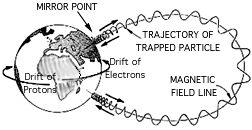


In fact the U.S. military has been experimenting with manipulating the radiation belts since the end of the Second World War. The U.S. Navy’s Project Argus, taking place from August to September 1958, is an example. A total of five nuclear weapons were used; three atom bombs (weapons using nuclear fission) were detonated above the Atlantic Ocean and two thermonuclear or hydrogen bombs (weapons using nuclear fusion) in the Pacific Ocean in an effort to manipulate the Van Allen Belts.

Mahdi Darius Nazemroaya is an independent writer based in Ottawa specializing in Middle Eastern affair. He is a Research Associate of the Centre for Research on Globalization (CRG).


Spread the word Digg it! - reddit

Latest Articles in: Commentary
- San Diego Fires: The Blackwater Connection
- Capitalism Is Not Freedom, and Socialism Is Not Love
- House Passes Thought Crime Prevention Bill
- Iran: The Road to Armageddon?
- Papier Mache

Email this article:
To:
From:

Why register at informationliberation?
>Access to our one of a kind Newsletter explaining how to free yourself from the system.
>Access to our weekly NewsDigest with the top news stories of the week.
>The ability to customize our Info Portal.
>Reserve your name for comments and forum use.

Comments 1 - 3 of 3 Add Comment Page 1 of 1
queenofit

Posted: Oct 29 2007, 11:47 AM

Link

I remember back in the 60's in elementary school having to duck under our desk as part of some drill that would shelter us from an attack? I think back on that today and shake my head, (as if ducking under our desk did some kind of good). I think it was part of the "process" of brainwashing us, into following orders. And maybe even training us to believe we have no control on the situation. Hiding scrunched under and waiting for the bomb to drop.

I am in my late 50's now, and here I sit, scrunched under my desk (metaphorically speaking) waiting for the bomb to drop. I guess I was trained well.

I knew that this "accident" was not an accident when I read about it last September, now here we get more facts regarding all the "mysterious" deaths> and we sit and we scrunch, and we wait.....

heavy sigh.....

All that is necessary for evil to succeed is that good men do nothing. - Edmund Burke
dave

Posted: Oct 29 2007, 2:56 PM

Link

In the UK, a small island that has had much war, although the people were lied to e.g. dual control on the nukes (not true), there was censorship e.g. concord was built specifically to evacuate the NWO players (untold), there wasn't an offer of the public being protected or drilled. The red cross have a few tea bags and secret communication sets, the military misinformation control goes through the BBC, but there are no drills and people are used to putting up with a lot as they have been at war much of the last 100 years.

When the bombs went off in London on 7/7 (an inside job which is quite simple to evidence), what frightened people was the hardware and attitude the police were walking round with, not the bombs.

There probably was war propaganda in the fifties, as I was born in 62 I missed it. It is back here now, MI5 and their security levels just like DHS in the US (the threat level was lowered for 7/7). I went to their website some time ago only to see all manner of lies, particularly offensive the lies they were telling children. I wrote to them, probably coincidental, but they removed the lies, easily evidenced specific lies. I contacted the NSA for the same reasons, they simply ignored but that provides evidence of wilful deception, significant by law and by principle were they to attempt to claim any legitimacy.
Nemo666

Posted: Oct 30 2007, 1:16 AM

Link

With so many coincidental deaths associated with this nuclear weapons fiasco; it leads me to believe that the order to transfer these weapons leads all the way to the top. I personally feel that nukes have already made their way to the Arabian Gulf/ Indian Ocean area and their plan; ie., Bushco, is to have the ultimate heavy armaments on hand when the surprise attack on Iran is launched. These madmen are obsessed with "shock and awe"; ie., hopefully terrifying the world into submission with their newly flexed corporatist/fascist power muscle... not ! :|

Madmen and women have taken over this nation. The dollar is tanking against all the words currencies. Commodity pricing has become a moonshot. The housing crisis debacle along with our out of control leadership with an agenda is sheparding this nation into total, absolute destruction.

When they are finished we will be a pariah among nations with it's people living under some type of surreal, "pink" martial law paradigm; ie., "hear, speak, and see no evil" and you'll probably do fine. Question the order of things and you will either end up in Camp Halliburton or possibly summarily "snuffed" just like those associated with this nuclear weapons debacle. If Orwell were alive today, he'd surely feel self-fulfilled concerning his prophecies about the future.

Meanwhile the good citizens of this one great nation are still swiping their cards, buying the latest digital gadgetry etc. while failing to pay attention to the "ball"; ie., their system of government, the maintenance of their freedom and the unfolding crash of their economy.

Freedom is not free! "The price of freedom is eternal vigilance" ... Thomas Jefferson

Carl Nemo **==

Great economic, financial speedlinks ... STAY CURRENT!!

You shall be glad you did.

Again, thanx to "anonymous" at ICH. WOW! It is so great to encounter someone who "gets" it. It just gives me a feeling of JOY.


**Watch this link** It's regarding Japan & US dollar.

http://www.thetruthseeker.co.uk/...JAMIN- TOKYO.wmv

William Clark talks about "Petrodollar Warfare"
http://video.google.com/videopla...earch& plindex=3


Forex Market Drivers
http://www.forex.com/ forex_fund_...d_analysis.html

Recycling Petrodollars
http://www.ny.frb.org/research/c...sues/ci12- 9.pdf

Petrodollar Recycling
http://www.un.org/esa/ffd/Multi-...vid% 20lubin.pdf

Petrodollar Recycling And Global Imbalances
http://www.imf.org/external/np/s...006/ 032306a.htm

The Petrodollar Tsunami Is Here
http://www.portfolio.com/views/c...rs-Buying- Spree

PETRODOLLAR & IRAN & IRAQ
http://www.321energy.com/ editori...llie042107.html


In conclusion, stop sitting on your ego and do a bit of homework. We buy foreign goods to receive a barrel of oil. US has no purchasing power with the current dollar index.


Tomorrow, expect to wake up on the oil price story. $93 - $95/bl

As I type, dollar is trading @ .7694. Click to see.
http://quotes.ino.com/chart/?s=N...s=NYBOT_DX& v=d6

October 28, 2007

Ed Steer: Larry Lindsey lays it on the line - on banks and CRAZINESS

By Ed Steer
for Casey Research
www.CaseyResearch.com
Friday, October 26, 2007

One of the speakers I was particularly interested in hearing at the New Orleans Investment Conference this year was Larry (Lawrence) Lindsey, the former economic adviser to President George Bush in the early years of his first term in office.

The reason that I dragged myself out of bed at 7:15 in the morning to hear him (a tough thing to do when you're whooping it up almost every night) had to do with an event that occurred in the second year of GATA's existence. The brighter lights at GATA had figured out that there was a serious problem in the gold market and that the bullion banks were not only short massive amounts of the physical metal but also had a stack of derivatives written against gold as well.

Bill Murphy, GATA's chairman, approached a lifelong friend of Dubya's and was able to send an executive summary of these concerns directly to the president via his private fax at the White House. Bush had been president for only a few months and there was concern that this problem, which had started under Clinton, would blow up on the Bush watch.

Murphy received a reply the same day, but it came from Larry Lindsey rather than Bush. Lindsey acknowledged receipt of the fax but wrote that he wasn't prepared to comment because GATA consultant Reg Howe had filed suit against the Bank for International Settlements, the Federal Reserve, and the US Treasury Department, plus a host of bullion banks, for rigging the gold market; and the case was still in the courts.

Can't comment because it's before the courts? Lindsey was a public servant, and there's nothing in law that precludes government officials from commenting on matters in litigation.

Anyway, we soon discovered that President Bush and his cronies weren't going to do a thing about it. The fact of the matter was that the Bush administration was just as involved as the Clinton administration.

Anyway, that's where it sat until I got to New Orleans.

When he started his speech, Lindsey asked whether the cameras mounted in the speaker's hall were TV cameras. Once he was assured that they weren't, away he went. I made notes but I'm going to do some paraphrasing here and touch only the high points.

The first thing Lindsey said was that he was a card-carrying member of "the Brotherhood of International Central Bankers," and once a member, always a member ... all for one, and one for all.

He commented that the Fed had turned the humble American home from a place to live into a financial asset that had become a cash cow for homeowners who were using it like an ATM machine. Now we've all heard that before, but coming from him, it was candor I wasn't expecting. He went on to say that once the Fed people noticed how bad the quality of loans was becoming, they were reluctant "to tinker with a boom," so they sat on their hands.

Lindsey's charts went into the collateralized debt obligation problem, the asset-backed commercial paper, mortgage-backed securities .. the lot. He said that it will "force banks et al. to mark these products to market (over time) instead of their current practice of marking to model ... or to myth." He wasn't the least bit worried about how the hedge funds would manage because, as he said, they were very good at looking after themselves.

He appeared delighted that Wall Street had been able to unload hundreds of billions of dollars' worth of (now toxic) CDOs on the rest of the world, saying that "we Americans were very clever" in doing this.

He showed graphs of the real estate market including the number of months of supply and said that now that the real estate credit cycle had ended, few would be able to refinance mortgages that had had teaser rates, and that housing prices were going to go into a steep decline.

In answer to a question from the audience about the obviously bogus Consumer Price Index numbers, Lindsey said that it was a government statistic and that, speaking as a businessman himself, anyone in business should definitely not rely on it.

His comments on interest rates were to the effect that by mid-2008, the Fed Funds rate would be 3.5 percent.

There was much more to the speech than this, but it was all along the same lines of "yep, we created this economic, financial, and monetary monster, here's the road map of how we did it, and the results. Now it's up to the citizens of the United States and the rest of the world's financial community to live with the consequences."

His comments were eerily similar to those made back in the early 1970s by then-Treasury Secretary John Connolly when he said (to European central bankers, I believe), "It may be our currency but it's your problem." Going further back in time, Marie Antoinette said, shortly before being relieved of her head, "Let them eat cake."

And you were wondering why the Treasury International Capital numbers were so bad in August? Wonder no longer.

As soon as the speech was over I hurried out into the hall to catch Lindsey before he took off. I managed to get a couple of minutes alone with him, picking up a few more items of interest.

First I asked him how he felt about being removed from his advisory position with Bush after having the audacity to predict that the war in Iraq would cost the United States at least $200 billion. This week, of course, we heard that the new estimates have it that the war will cost $2.4 trillion.

Lindsey shoved right past the question and said that it was a war that the United States must win because the security of the country and the world depended on it. He pointed out that Franklin Roosevelt had spent 150 percent of U.S. GDP on World War II. I jumped in rather bravely and asked,

"Does that mean that the U.S. is prepared to spend $15 trillion on this war?"
Lindsey thought about it for two seconds and said that
150 percent of GDP was more like $22 trillion, and if that was what was required, so be it.

At that moment I felt like Alice in Wonderland shortly after she had taken the red pill. I was incredulous.

Going further down the rabbit hole, I forayed into the gold world. I worded my next question in such a way that Lindsey couldn't answer it with a simple yes or no. I mentioned his comments in the speech about CPI and told him that it was obvious that the inflation genie was out of the bottle, as commodity prices were on the rise and gold was up to $750. I asked him how long he thought the Fed and the Treasury Department were going to hold the gold price down. He answered along the line of

"Neither the U.S. Treasury or the Fed is doing anything to influence the gold price. It's all coming from the European central banks."
He volunteered that he was, in fact, a "gold bull" because of all that was happening in the world. He repeated that he was a "gold bull."

By then a crowd had gathered around us, and others were asking questions. The first question was about a dollar devaluation, either planned (Plaza Accord-style) or unplanned, and how that would affect the United States. Lindsey's answer was that it was foreign holders of dollar assets who would be hurt the most, not the United States. When pressed on this particular point, Lindsey said that,

"no, a 20-30 percent drop in the value of the dollar would have minimal impact within the U.S."

By this time, Lindsey was starting to look like the Mad Hatter, so I knew it was time to go. I took the blue pill and crawled out of the rabbit hole.

I wish you had been there. Lindsey's speech and answers to my questions and those of others were off the charts. But he was a great speaker and a really charming guy ... the 21st-century's equivalent of a salesman selling snake oil from the back of a covered wagon.

In celebration, I bought some more physical gold. Then I put a deposit on the (slightly used) WWII surplus twin 50-calibre machine gun that the Mogambo Guru had put up for sale.

See you in the trenches, and bring your crash helmet with you.

---

Ed Steer is a regular contributor to Casey Research and a member of the Board of Directors of the Gold Anti-Trust Action Committee Inc.


Speedlinking toolkit for those who want to be IN THE KNOW


This is another of the fabulous lists presented on International Clearing Houses FANTASTIC forum board. Climb on board! GET WITH IT! Do some viewing while you still have the chance! Make a CD of these treasures, keep them all on hand, make copies for FRIENDZ and neighbors who will watch these.

Just a note: This is a very EVOLVED thing to do, to GET UP TO SPEED with Truth. You see, unless you are at the tippy top of the PYRAMID, you have absolutely nothing to gain by following the ever-diminishing circle of Mainstream media outlets.

They don't get it or are BRAINWASHED themselves and are merely spouting what they learned a loooooooooong time ago.
They'll parrot it as long as someone will pay them to do so, too.
Money grab$ abound at the top of all the governments, too,
so don't believe THEM.


It really is a plutocracy, run by corporations who want
more of your money,
your brains,
your conscience,
your heart
your hands working for THEM
and YOUR TIME,
which truth be known
is the most precious thing you have.
The theft of our TIME is the worst evil of ALL.

When someone gives you their TIME,
even if it's to rag on you,
it's a compliment to your soul.

But these shill$ who post on the mainstream media (MSM)
aren't giving you their time,
they're giving you propaganda and SPIN
and a call to ignore your conscience.

But SUBconsciously,
I really believe that they LIKE it when we stand up

as human beings and say

ENOUGH.

Say, what did YOU do for your fellow human beings today??
Do you ask yourself that everyday?
I go to bed and get a REAL GOOD SLEEP.

I shall never ever let the slug$ shut me up,
nor quit digging up dirt to figure out
how they DO IT
and
what we can DO about it.

Here's an idea . for your fellow earthlings,
have a gander at these youtube links ..
give them all abit of your TIME.
Then when you TRULY know,
you can really serve your ethics and be a
Big Help to everyone.

Notice
that on the picture of that beautiful blue planet
there are no nations
no borders
no races
no barriors
these are all made up by MAN
We're just a spaceship hurtling through space
and we must all learn to work
TOGETHER

Finding out what is happening
is our very FIRST priority.
These links below are a good investment of
YOUR TIME
an investment in yourself

[and many thanks to Anonymous!!
May you have another wonderful day here
on
Planet Earth

-<<:>>- -<<:>>- -<<:>>-

Media/Military plan. 2004
Its unfolding right before your eyes. Plant this on all blogs and websites.
http://www.youtube.com/user/SamsonOption

Collateralized Debt Obligation (CDO)
http://www.youtube.com/watch?v=X...h? v=XjoJ9UF2hqg

Economics 101: they lose, you pay
http://www.youtube.com/watch?v=a...h? v=aUDskNLDA4I

Cramer: Why I Took the Fed to Task on 'Stop Trading'
http://www.youtube.com/watch?v=x...h? v=xzoYQ41Yd0Q

How Millions of American Will Lose Their Homes
http://www.youtube.com/watch?v=b...h? v=biP2JOf5euo

THE HOUSING CRASH ... Animated Editorial Cartoon
http://www.youtube.com/watch?v=L...h? v=LLmhaimwNq0

**Must Watch** Will The Dow Jones Crash?
http://www.youtube.com/watch?v=S...tIPhBHghU0& NR=1

Subprime Derivatives
http://www.youtube.com/watch?v=0...h? v=0YNyn1XGyWg

Nippon Oil to buy Iran oil in yen
http://news.bbc.co.uk/2/hi/busin...ess/ 6981375.stm

Japan ceases to use US dollar as reserve currency
http://www.youtube.com/watch?v=3...h? v=30BBvvzl730

China shifts to euros for Iran oil
http://business.scotsman.com/lat...fm? id=474362007

The Crash_The Coming Financial Collapse of America
http://www.youtube.com/watch?v=k...h? v=k9VzQQCIt44

The Petro Dollar, Iraq, Oil and Bush
http://www.youtube.com/watch?v=u...h? v=uljOLFyCjjc

Timeless Wisdom & Warnings from the Inventors of America
http://www.youtube.com/watch?v=r...h? v=rErukvYVPOI

Media histronics revisted: The Wall Street Journal OpEd pages

As if I don't get enough bs reading the Canadian press opeds, and particularly the business shill, I DO have to take into account what passes for remarks (they're really just ignorant jabs) by the neoCON set. Nowhere do you get a more vivid xray pic of the truly DELUDED than at the WSJ. Mike Whitney has POINTERS for all of you on how to spend a real good dollar .. I spend my dimes and nickels keeping this computer array running so's I can access all those neat little right wingers who think something is achieved producing WAR MACHINES and can't figure out that they themselves are one day away from REPRESSION!! for the slightest infraction of the unspoken "Rules" as the war of engagement is against all of us, unless we have about a billion in the bank these days.

So that said, the WSJ is an important thing to track as it feeds them, the overpaid corporate drones, what they are SUPPOSED to pick up, spout back and BELIEVE.


The ICH forum posters are especially FINE folks, I have found in this wasteland of "lesser of two evils" that folks seem to "fall" for .. I get some of my very best inspiration and info from them.

Murdoch’s Cuckoo’s Nest: The Wall Street Journal’s Op-ed Page

By Mike Whitney

10/26/07 "ICH " -- -- The Wall Street Journal’s editorial page is the ideological headwaters for far-right fanaticism in the US. It is less of a forum for open debate than it is a breeding ground for noxious ideas that undermine democratic institutions. Every day, there’s a whole new slate of extremist opinion pieces defending one absurdity or another. Typically, the articles focus on the two issues of primary importance to all conservatives; war and taxes. It’s astonishing how many variations there are on the same hackneyed theme.

Conservatives are naturally distrustful of ideas, so they’ve created a platform where they can couch their reactionary views in academic-sounding jargon without any real attempt at upgrading social policy. There appears to be an endless reservoir of Reagan-era “supply side” zealots and think-tank windbags who are more than eager to promote the topic-du jour, whatever that may be. By using right wing celebrities as their standard-bearers, the WSJ is able to elevate the most mundane, nonsensical arguments to a level of respectability. And that’s the objective---to make hard-nosed, narrow-minded chauvinism look like enlightened policy.

Typically, the editorials take aim at any regulation which restricts industry or any law which protects the citizen. Articles are chosen on the basis of how they appeal to a small group of corporate mandarins whose views about “how the world should be organized” are nearly identical. In other words, it is an “echo chamber” for the investor class. That’s why liberals should pay attention. The men who currently run the world are not shy about revealing what they have in mind for the rest of us. Isn’t it worth the price of a subscription to find out what that is?

In the last few days the WSJ has run articles defending Exxon against the $2.5 billion punitive damages that were ordered by the Ninth Circuit Court of Appeals for its massive oil spill in Alaska nearly 2 decades ago. They’ve run another tiresome apology for Judge Robert Bork, the alleged victim of a left-wing witch hunt. They’ve provided a lawyerly defense of the Marines who went on the “killing spree” in Haditha; another promotion for the extortionist World Bank, an emotional plea to “Save the Bush Tax Cuts”, and, of course, an over-the-top 1500 word thesis on why “Victory Is Within Reach In Iraq” by neocon nutcase Michael Ledeen.

On Monday, October 22, the WSJ ran an article by David Rivkin, “Getting Serious about Torture”, which essentially defends the “cruel, inhuman and degrading” treatment of terror suspects by pointing out the relative nature of these terms. (Isn’t it odd that questions related to torture never came up before Bush took office?)

As Rivkin says, “The words cruel, inhuman and degrading, whether or nor a particular interrogation method shocks the conscience depends very much on the circumstances.”

Sure, David, it’s all relative, isn’t it? How about “eye gouging”; is that okay, too?

Remember when conservatives used to rail against “moral relativism”? At the time, it seemed like a matter of principle. Now we can see that it was just empty posturing.

At the end of his article Rivkin reminds us that, “There is no free lunch. Coercive interrogations have been key in preventing post 9-11 attacks on American soil.”

Indeed. Sounds like a pretty spirited defense of torture to me. Am I missing something?

No theory is too whacky or obscene for the WSJ’s editorial page as long as it conforms to the far right mind-set of its readership. For just one dollar, anyone can take a seat in the enemy’s camp and listen in. Sounds like a bargain to me.

Governor Schwarzenegger Backs Aerial Biochemical Spraying That Harms Children

(NewsTarget) On September 9th, 2007 several planes hired by the State of California Food and Agricultural Department (CDFA) flying at an altitude of approximately 500ft sprayed the untested biochemical, CheckMate®OLR-F, on over 30,000 citizens in Monterey and other surrounding cities in California. This occurred without the permission of the citizens. The spraying continued for three nights from approximately 8pm to 5am. About 1,500 pounds of biochemical were dumped on the cities. Many citizens did not even know what was happening when the planes were buzzing overhead.

An 11 month old child nearly died from breathing difficulties. A six year old child developed asthma as a result of the aerial spraying. Over one hundred people signed affidavits stating that they got sick from the spraying. Hundreds of people had symptoms like; shortness of breath, headaches, dizziness, burning lungs, nausea, and muscle aches.

The excuse for aerial spraying is not a deadly disease carrying mosquito, but a moth whose larva may eat some leaves of some plants; called the Light Brown Apple Moth (LBAM). The CDFA considers the moth an invasive species since it is from Australia. Yet, evidence suggests that the moth has been in California for many years, living peacefully. In response to the moth, the CDFA set up relatively harmless sticky traps, which have captured nearly every Light Brown Apple Moth in the Northern California region.

Governor Schwarzenegger is a strong supporter of the declared emergency; the need to spray untested biochemicals on humans to stop the LBAM from destroying crops.

This aerial spraying violates several state, federal and international laws. It violates the right to personal safety given by the California State Constitution, the very document that creates the California government. It violates the Americans with Disabilities Act, which protects people with chemical sensitivities and other disabilities from discrimination. It violates the Federal constitutional right to personal liberty. It violates the EPA's laws against spraying pesticides on people. It violates human rights laws that say that human experimentation without consent is unethical and immoral. It violates criminal laws that claim it is a crime to poison children, or anyone else. It violates pollution laws to spray a toxic substance over plants, animals, and waterways. It violates laws against organized crime and it violates the very tenants of our democracy; a system of government designed to represent the people, not to poison the people to represent private agri-business interests.
...http://www.newstarget.com/022158.html

While in Paris, Rumsfeld

Is Charged with Torture …

"Legally speaking, few complaints are as irrefutable as this one. Then there is the political aspect: this touches on the Bush Administration ... But there should be impunity for no one."

-- Patrick Baudoin, French Lawyer Who Filed the Complaint

By Julien Martin

Translated by Andrew Levine

France - Rue89 - Original Article (French)

At three pages and with twenty-seven appendixes, the French complaint filed on Thursday by four human rights organizations against Donald Rumsfeld is detailed and damning. The former American Secretary of Defense from 2001 to 2006 is accused of torture, in particular with respect to the prisoners of Abu Ghraib in Iraq and Guantanamo Bay in Cuba.

This is the fifth complaint against the man considered one of the architects of the Iraq War. Two criminal complaints were dismissed in Germany (the second, however, will be appealed next week) and two more have been filed, one in Argentina and one in Sweden.

But for the first time, Donald Rumsfeld has been charged while in the country in which the complaint was filed. Arriving in Paris on Thursday, he gave a lecture on Friday morning without specifying the duration of his stay. Owing to the universal jurisdiction defined under the 1984 United Nations Convention Against Torture and enshrined in French law ten years later, his presence here forces France to act unless the country rejects the complaint.

In the French complaint, which Rue89 has obtained a copy of, the International Federation for Human Rights Leagues, the French League for the Defense of Human and Civil Rights, the Center for Constitutional Rights [of New York] and the European Center for Constitutional and Human Rights intend, "to take all preliminary measures to ensure that this person is detained or else kept on French territory."

Testimony from former detainees and American troops fills out the complaint, which lists the alleged interrogation methods: two-day-long periods of sleep deprivation, 20-hour interrogations, sexual humiliation, and religion-related threats, among others.

Most importantly, memos written by Donald Rumsfeld himself are included as appendixes. Some quotes mix the serious nature of the proposal with cynicism: "I stand for 8-10 hours a day. Why is standing limited to four hours [for prisoners]?"

Patrick Baudoin, the lawyer who filed the complaint, organized a press conference in Paris on Friday to publicize his legal action. A sign that media pressure is stronger than political pressure:

"Legally speaking, few complaints are as irrefutable as this one. Then there is the political aspect: this touches on the Bush administration ... But there should be impunity for no one."

At the Court of First Instance in Paris, no more information was given out than necessary. Laurence Abgrall, the assistant prosecutor of France, told Rue89 that "the complaint should not run up against any major difficulties," but before being heard, "we're checking to make sure we have jurisdiction."

"The issue is whether or not Donald Rumsfeld has immunity. We are currently checking to see if he's still in France. But I can't tell you anything more about it."

Why the Iraqi Kurds Won’t Give in to Turkish Threats

By William Kern (Watching America)

Are the PKK terrorists who have been killing Turkish soldiers receiving significant aid and comfort from the government of Iraq’s semi-autonomous north? According to this op-ed article from Iraqi Kurdistan’s Kurdish Media, all Kurds -whether they are members of the PKK, Peshmerga soldiers or civilians - will resist the Turks “to the last drop of blood.”

“They know that this Kurdistan state, which they have been able to create and maintain in northern Iraq, is the ultimate prize for all Kurds. It’s a prize that Kurds have been trying to win for generations upon generations.”

By Karwan Qader

October 23, 2007

Iraqi Kurdistan - Kurdish Media - Original Article (English)

To almost all Kurds, talk of a Turkish invasion is the most critical issue. Recently, the Turkish Parliament approved a resolution granting the military permission to invade Southern Kurdistan (also known as northern Iraq WATCH ). Turkish politicians and generals claim that their purpose for invading will be to destroy Kurdistan Workers’ Party [PKK] camps in the region. But the reality is that what Turkey is most disturbed by is the autonomy that the Kurds have gained in Iraq. They are uncomfortable with growing international acceptance of Kurdistan and the legitimacy that Kurds have been able to achieve.

In response to this, in addition to deploying 400,000 soldiers along the Turkish-Iraqi border, the Turkish state has taken other steps. They have demanded that the Iraqi government arrest 140 individuals (36 of whom are members of the Kurdistan Regional Government (KRG), and they have even gone so far as to demand the arrest of the son of the President of the Autonomous Kurdish Government in Iraq, Massoud Barzani [Mensur Barzani, who is the chairman of the ruling Kurdistan Democratic Party’s intelligence organization ].

The Turks even began limited operations along the border this week, but were stopped in their tracks when Kurdish rebels effectively ambushed their forces and foiled their plans. But most importantly, the Turks have ignored every Kurdish call for a peaceful resolution and have effectively rejected any political dialogue.

Given this, the Kurds will not be so quick to adhere to Turkish demands. Despite all of their domestic problems, corruption and issues of establishing democracy that Kurds now face in their semi-autonomous region, they realize that what they have gained in Iraq is their right and in unlike anything they have experienced before. Kurds know that this Kurdistan state, which they have been able to create and maintain in northern Iraq, is the ultimate prize for all Kurds. It’s a prize that Kurds have been trying to win for generations upon generations. After all the injustice and genocide that has been perpetrated against the Kurdish people by oppressive states that surround them and have occupied them, Kurds have finally established the right to rule their own affairs in their own nation. They have finally established peace in a part of the world that is infamous for war. Even during the bloody Iraq War, Kurdistan stands as the only peaceful region. Hence politicians and generals in Turkey are foolish if they think Kurds will easily or willingly give up their new-found rights.

Why kill Kurds?

Kurdistan will not now, nor in the nearby future become independent. Kurds will not rule themselves for a long time to come. At least not as long as neighboring countries need Kurdistan's water. The water from the Kurdish mountains also is the life line for Israel, and much more expensive than oil.
Why Kurdistan? Have a look at the map, it shows where and why. http://members.tripod.com/surkew/id18.htm

FPF - Update 27 October 2007 - Today's information from the pro-war New York Times: ''US troops in Iraq will do absolutely nothing," Maj. Gen. Benjamin R. Mixon, the top American commander in northern Iraq, said. He had ''no plans to order his troops to confront Kurdish rebels in the mountains,'' he said, ''to fight the PKK.'' Also those Kurdish groups in northern Iraq claim that Turkey's ultimate motive is to prevent the formation of a Kurdish state in northern Iraq, Kurdistan, by occupying its territory and ultimately controlling part of its natural resources. The Kurds are absolutely and legally right, but the US/UK junta's multinationals don't want to share the power and profit with them, or with 'partner' Turkey.* That's why the Kurdish resistance is killed too.

NATO partner Turkey violently proceeds opening the water war front in different Kurdish areas, and the US/UK junta further and negatively alters the destiny of the Middle East as was planned. In a way that probably could not be challenged for decades, and not solely by controlling Iraq's oil, but by controlling its water.* There are no 'official' reports about concrete U.S.-Turkey cooperation on suppressing Kurdish 'rebels' it's wrongly stated, and the Chicago Tribune reported last Tuesday the U.S. military has considered launching cruise missile against PKK targets, but air strikes using manned aircraft were an easier option, one unidentified official told the Tribune.*

Because, in what to the Kurds is known as Kurdistan, (see map), and where they have fought for decades for their independence as a people, that's where not only the Kurdish oil capital of Kirkuk is located, but where also the very important water resources are. In Kurdistan the Tigris stream is made up of five long rivers from the mountainous regions. The Euphrates flood is another very important water supplier from those life spending sources and in 1991 a huge water dam and irrigation system was build. Costing more than 10 billion US dollars, and situated in the Kurdish region of Turkey. Turkey had at that time already signed 'secret' agreements with Israel, among others to thus secure the future delivery of Kurdish water to Israel, via the Mosul/Kirkuk/Haifa oil and water pipelines. It's officially known that Turkey receives Israeli hightech, training and all kinds of weapons in return.*

RICE TO VISIT TURKEY

The 2nd and 3d November 2007, the globally detested US 'Secretary of State' Condoleezza Rice, who everywhere leaves a huge trail of death and destruction, will visit Turkey. To check what more can be done by the US/UK's NATO and Israeli armed forces to stop Kurdish PKK resistance fighters, which are called 'rebels' or 'terrorists' as usual because they too endanger the multinationals profit and power. By the generalizing US junta's 'State Department', the whole of the (resistance) PKK was officially classified as a 'terrorist organisation'. But clearly some are more 'terrorist' than others... Formally Rice is supposed to attend an international meeting on Iraq in Istanbul, but before this meeting on the by the U.S. c.s. lost illegal invasion of former ally Iraq, Rice will have talks with Turkish leaders in Ankara concerning some of the PKK people.

Turkey 'pro forma' will be asked by the US and Israeli delegation to 'take it easy', after deadly clashes 30 kilometers into Iraq, including attacks from the Turkish air force on some Kurdish groups, but that will be the 'smoke and mirror' part. The Kurdish resistance groups - contrary to the Kurdish collaborators which have sold themselves - do not intend to give in to Turkish/US/UK and Israeli demands and so called 'agreements' concerning Kurdistan. Whereupon the mainstream propaganda is describing the Kurdish resistance fighters as 'terrorists', as a pretext which also can enable an attack with the armed forces of the US/UK plus NATO, and thus Turkish forces, on Iran, as Israel and its lobby in the US junta fervently wants.

"We are chasing Kurdish terrorists in the area." the propaganda media will spout, again treacherously 'selling' this other pretext for resource wars. Without any proof whatsoever, and as always, the propaganda media will also accuse them of 'ties with al Qaida' or some other CIA front organisation used in the US-made global war of terror. As if - according to UNICEF - 2.7 million dead people in Iraq is not enough, Rice c.s. - representing the worst this world has to offer - will state that those 'terrorists' should be 'neutralized'. Because the US/UK junta still is prone to illegal invasions, their global threats and terrorism, and, what they keep saying is ''the need for international intervention''. It's all a pack of lies.

TURKISH PM ERDOGAN: PKK IS A TERROR ORGANISATION

"Turkey is committed to pursuing and hunting down members of the terrorist organisation the PKK who use the north of Iraq as a base to stage attacks in Turkey, Prime Minister Recep Tayyip Erdogan said last Thursday. Speaking in the Romanian capital Bucharest, where he was on an official visit, Erdogan said Turkey would use its legitimate rights under international law to defend itself against attacks by the PKK. Asked if his forthcoming visit to the US would be used to obtain clearance for Turkish forces to enter northern Iraq to strike at the PKK, Erdogan said Turkey did not need the permission of anyone to defend itself.

"The ball is off our court now, and we will have to do what is necessary on our own if those who have the responsibility do not take action," he told reporters. He also said that Turkey's European allies were failing a test of their sincerity in the fight against terrorism. "Unfortunately, the terrorist organization has been establishing associations in several European countries, receiving financial support and our European friends are employing delaying tactics by refusing to hand over the PKK operatives they captured to Turkey." Erdogan said.

WHO IS DOING WHAT?

A couple of years ago The Guardian (UK) quoted american journalist Seymour Hersh, who is well informed because he knows the zionists which he calls 'a cult that has taken over', and wrote about what they were doing to Kurdistan too.* Hersh's story was published in the UK, using the title Israelis 'using Kurds to build power base', and the article was written by Gary Younge, the Guardian's correspondent in New York. Quote: "Israeli military and intelligence operatives are active in Kurdish areas of Iran, Syria and Iraq, providing training for commando units and running covert operations that could further destabilize the entire region, according to a report in the New Yorker magazine. The article was written by Seymour Hersh, the Pulitzer Prize-winning reporter who exposed the abuse scandal in Abu Ghraib. It is sourced primarily to unnamed former and current intelligence officials in Israel, the United States and Turkey.

Israel's aims, according to Hersh, are to build up the Kurdish military strength in order to offset the strength of the Shia militias and to create a base in Iran from which they can spy on Iran's suspected nuclear-making facilities. "Israel has always supported the Kurds in a Machiavellian way - a balance against Saddam," one former Israeli intelligence officer told the New Yorker. "It's Realpolitik. By aligning with the Kurds Israel gains eyes and ears in Iran, Iraq and Syria. The critical question is 'What will the behaviour of Iran be if there is an independent Kurdistan with close ties to Israel? Iran does not want an Israeli land-based aircraft carrier on its border."

MORE BLOOD, TEARS AND PAIN

By supporting Kurdish separatists, Israel also risks alienating its Turkish ally and undermining attempts to create a stable Iraq. "If you end up with a divided Iraq it will bring more blood, tears and pain to the Middle East and you will be blamed," a senior Turkish official told Mr Hersh.

Intel Brief, an intelligence newsletter produced by former CIA chiefs, noted early this month that the Israeli actions are placing increasing stress on their relationship with Turkey, which was already strained over the war. "The Turks are increasingly concerned by the expanding Israeli presence in Kurdistan and alleged encouragement of Kurdish ambitions to create an independent state."

According to Mr Hersh, Israel decided to step up its role in Kurdistan last summer after it was clear that the United States incursion into Iraq was failing, principally because it feared the chaos would strengthen Iran. The Israelis are particularly concerned that Iran may be developing a nuclear capability.

Iran said on Saturday it would reconsider its suspension of some uranium enrichment activities after the International Atomic Energy Agency issued a resolution deploring Iran's limited cooperation with the agency.

In the autumn the former Israeli prime minister Ehud Barak told the US vice president, Dick Cheney, that America had lost in Iraq. Israel "had learned that there's no way to win an occupation," he told Mr Cheney, and the only issue was "choosing the size of your humiliation".

From July last year, argues Mr Hersh, the Israeli government started what one former Israeli intelligence official called "Plan B" in order to protect itself from the fallout of the chaos prompted by America's failure ahead of June 30. If the June 30 transfer of sovereignty does not go well, "there is no fallback, nothing," a former National Security Council member tells Hersh. "The neocons still think they can pull the rabbit out of the hat in Iraq," a former intelligence official says. "What's the plan? They say, 'We don't need it. Democracy is strong enough. We'll work it out.'"

Israel has a longstanding relationship with the Kurds, whom they regard as one of the few non-Arab allies in the area. The Iraqi Kurds, who played a key role in providing the United States with intelligence ahead of the war, have been angered by the United Nations resolution on Iraq earlier this month. The resolution did not affirm the interim constitution that granted them minority veto power in a permanent constitution and so could potentially leave them sidelined.

KURDISH INDEPENDENCE IS CALAMITOUS TO THE REGION...

One Turkish official told Mr Hersh that Kurdish independence would be calamitous for the region. "The lesson of Yugoslavia is that when you give one country independence everybody will want it. Kirkuk will be the Sarajevo of Iraq. If something happens there, it will be impossible to contain the crisis." [end quote]

And the crisis keeps growing. AP, the 'American Propaganda' bureau, writes that the US-made Iraqi Prime Minister Nouri al-Maliki's so called 'government', has protested to Ankara over cross-border shelling of Iraqi territory by the Turkish army and repeatedly called for a diplomatic solution to the conflict. Al-Maliki has received an invitation from Erdogan to visit Turkey, but it's no surprise that no date has been set. The whole of course being intended to get the Israeli and US/UK war machine further thwart efforts by Kurds and Turks to annex the water and the oil rich area and the city of Kirkuk, plus the rest of what by the inhabitants is looked upon as Kurdistan.

Like the US/UK's multinationals and Israeli plotters, Kirkuk's Arab and Turkoman residents reject Kurdish claims to Kirkuk. Iraq's 'constitution' stipulates that a referendum on the fate of Kirkuk must be held in the city before the end of the year, which would likely be won by Kurds - guess which group! - raising Turkish concerns that it would fuel separatist sentiment at home.

So the plan is - depending on further armed actions - that Rice will assure the Turkish government what is said above, that Kurdistan in the nearby future will definitely NOT become independent, and that some fake autonomy or similar with a good sounding name will be offered. Like the Turks, Rice's kongsi of killers will see to it that Kurds will not rule themselves for a long time to come, and when they dare to offer resistance, they're chased and killed.

PKK LEADER ÖCALAN WAS KIDNAPPED BY THE MOSSAD

Or, like PKK resistance leader Abdullah Öcalan who, because of the Greek government's usual and criminal collaboration with the Israeli Mossad, in 1999 was kidnapped in Kenya's capital Nairobi, one of the CIA's main headquarters in Africa. The also by the EU countries refused and hunted Öcalan, was after his totally illegal kidnapping, brought to jail in Turkey but the people in power didn't dare to kill Öcalan, because of the immense and global protests. Hardly ever anything was seen or heard which was said about the tyrannous disregard of human rights.*

The anger of the Kurdish resistance is also based upon a further growing 'security' axis between the US/UK junta, Israel and Turkey, which, since its official inauguration in February 1996, has permeated all levels of Turkey's foreign policy. Including the highest echelons of the armed forces which fight an oppressive war against some groups of the PKK in southeastern Turkey and northern Iraq. Where the Kurdish resistance fighters rightly say, that the natural resources of Kurdistan ought to help the Kurds to become autonomous, to be a souvereign state.

That's why some Kurds get arms, and other Kurds get killed.

And that's what the whole fight is about: power and profit.

Nothing else...


HENK RUYSSENAARS


Story Source: Guardian (UK) - Url.: http://www.guardian.co.uk/print/0,3858,4952249-103552,00.html

New York Times (war propaganda) today - Oct. 27th - 2007 - "Iraq Plan to Add U.S. Troops at Kurdish Border Is Rejected by Turkey" - Url.:
link to www.nytimes.com

Israel signs agreement to buy water from Turkey and may pay for part of it with weapons, in a deal - Url.:
www.uswaternews.com/archives/arcglobal/4israsign3.html

Power Bloc Turkey and Israel Lock Arms - Israeli weapons offer Turkey a way around such sanctions. The PKK to increase its leverage with Turkey over its water rights. - Url.:
www.thirdworldtraveler.com/New_World_Order/PowerBloc_TurkeyIsrael.html

Reshaping the Mideast countries - Kirkuk/Haifa pipelines - Url.: http://www.nogw.com/ilrunshow.html

NOORDWIJK, The Netherlands - Khaleej Times Online - NATO allies express solidarity with Turkey - NATO expressed solidarity with Turkey on Wednesday. Turkish warplanes reportedly bombed Kurdistan Workers' Party (PKK) targets. -

Kurdish Fighters Defy The World From Mountain Fortress As Bombing Begins - Patrick Cockburn in the Qandil mountains, Iraq - 25 October, 2007 - The Independent - Url.: http://www.countercurrents.org/cockburn251007.htm

Seymour Hersh: We've Been Taken Over by a Cult. - Url.: www.apfn.net/messageboard/02-04-05/discussion.cgi.31.html

Turkey Visited By JINSA Delegation - JINSA Online, February 04, 1997 - Url.:
link to www.jinsa.org

Al Ahram on PKK leader Öcalan's hijack by the Mossad and following global protests Url.: http://weekly.ahram.org.eg/1999/418/re1.htm

* FPF-COPYRIGHT NOTICE - In accordance with Title 17 U. S. C. Section 107 - any copyrighted work in this message is distributed by the Foreign Press Foundation under fair use, without profit or payment, to those who have expressed a prior interest in receiving the information. Url.: http://tinyurl.com/3z3r6

Iran, Iraqi Kurdistan hold talks on security issues
Tehran Times Political Desk

TEHRAN -- Supreme National Security Council deputy director for local security affairs here on Saturday said that a second round of talks was held between a visiting delegation from Iraqi Kurdistan and Iranian officials.

The Iraqi side explained about the newly arranged operations for preventing any further infiltration of terrorist groups into Iran, Mohammad Jafari said.

Jafari stated the Iraqi side also insisted that five Iranian diplomats, who were kidnapped by U.S. forces in Irbil and another detained Iranian official in Soleymaniyeh, should be immediately released.

It was also agreed that Iran’s consulates in Soleymaniyeh and Irbil should be reopened,” the official explained

Top 10 Surprising Results of Global Warming that you haven't heard yet

You’ve probably heard about the global warming song and dance: rising temperatures, melting ice caps and rising sea levels in the near future. But Earth’s changing climate is already wreaking havoc in some very weird ways. So gird yourself for such strange effects as savage wildfires, disappearing lakes, and freak allergies.

read more | digg story

Condi Rice reminded of the BLOOD ON HER HANDS


Anyonw know what that security guy handed Condi at :12?

U.S. NATIONAL DEBT CLOCK

The Outstanding Public Debt as of 28 Oct 2007 at 10:05:41 AM GMT is:

$ 9 , 0 6 3 , 7 7 6 , 3 4 4 , 0 6 0 . 1 4

The estimated population of the United States is 303,376,365
so each citizen's share of this debt is $29,876.34.

The National Debt has continued to increase an average of
$1.42 billion per day since September 29, 2006!
Concerned? Then tell Congress and the White House!

New Weapons: Advanced Seminar

Pentagon New Weapons

DDX

DDX firing rail gun


US Military industrial complex is the entity that invest more in new technologies so they can get more effective and intelligent weapons for the future, the most recent idea that change the way they hunt enemies was to put Hellfire missile to UAV Predator.


But the most advance and state of the art weapon is to put weapons on satellites with Rail Guns (Gauss Weapon) that can shoot a 40 pounds projectile at Mach 7, and can travel up to 200 miles and obliterate a target, that projectile would not need explosive they would be effective only with kinetic energy of the impact. The cost of munition of that weapon would be smaller than 1 million Tomahawk.


Satellite weapons would be available maybe beyond 2015.


Also known as RODS Of GOD


RODS of GOD Satellites

These weapon would be also on the Destroyer DDX that would run using Permanent Magnet Motor technology.


Another NEW weapon would be the laser gun that US Air force plan to put on a 747 plane to shoot down enemy missiles.

Future C-130 with Laser Gun


Pentagon stays the course with laser weapon

Airborne Laser given a reprieve — and challenging development schedule

Image: Airborne Laser
Jim Shryne / USAF
The Boeing-led Airborne Laser team exposes the Airborne Laser's conformal window during a test flight. Such an exposure is necessary for the weapon system to complete its mission of shooting down a ballistic missile during the boost phase of flight.


As envisioned, the aircraft would fly in a figure-eight pattern over an area deemed a likely site of a missile launch. Onboard infrared sensors would detect the launch and feed that information into a computer that would direct the laser turret to point at the ascending missile. The turret would then fire two lower-powered solid-state lasers — one to track the missile and one to measure atmospheric distortion — before shooting the high-powered chemical laser at the target.

The ABL program's inability to meet cost and schedule targets in past years once made it a candidate for termination. Just prior to his 2004 retirement, U.S. Air Force Lt. Gen. Ronald Kadish, who was then serving as the Missile Defense Agency's director, said the program could be canceled if it did not perform well in initial flight and ground tests that were scheduled for late in the year.

Those tests were a flight of the aircraft outfitted with the battle-management and fire-control systems, and a brief firing of the chemical laser on the ground. Both went smoothly, and the senior Missile Defense Agency officials have not invoked similar termination threats in relation to any upcoming ABL test, Daniels said in a telephone interview.

As the 2004 demonstrations approached, markers, called "knowledge points," were laid out to ensure that progress on the program — or lack thereof — would be easy for senior MDA officials and their congressional overseers to gauge, said Daniels, who took over the program in April 2005. He replaced Brig. Gen. Ellen Pawlikowski, who now serves as the director of the Air Force's military satellite communications joint program office.

Flight testing planned
The ABL program has a budget of $471.6 million in 2006. Knowledge points laid out for this year include testing of the solid-state lasers for missile tracking and atmospheric-distortion correction. Ground-based tests of those lasers are slated to wrap up in August, with flight testing to take place by the end of the year, Daniels said.

Image: Laser window
Lockheed Martin
An engineer at Lockheed Martin's facility in Sunnyvale, Calif., inspects the Turret Ball Conformal Window on the Flight Turret Assembly for the Airborne Laser. The window is the exit for the High Energy Laser, as well as the exit and return window for the Beacon Illuminator and Tracker Illuminator lasers.

During the flight test, the lasers will be fired at a military NKC-135 aircraft with a picture of a ballistic missile painted on its fuselage, according to Greg Hyslop, Boeing vice president and ABL program director. While these lasers are relatively low-powered, the aircraft will be shielded and the pilots will wear protective goggles, he said.

Also planned for 2006 is the refurbishment of the optical hardware on the high-power chemical laser for a new round of ground testing in 2007, Daniels said.

That hardware has been used extensively over the past 18 months, and the military plans to give it a thorough cleaning and inspect it to ensure it is ready for the next series of tests and then the 2008 intercept, Daniels said.

MDA has requested $631 million for the ABL effort in 2007. During that year, the MDA plans to install the refurbished chemical laser hardware on the 747 aircraft, and run ground tests to prepare for the 2008 intercept demonstration, Daniels said.

Demonstration to determine future
Air Force Lt. Gen. Henry "Trey" Obering, the MDA's current director, has indicated that the 2008 demonstration likely will factor heavily into a decision on whether to continue with the ABL program beyond then. The ABL has been positioned as a competitor to the Kinetic Energy Interceptor, a boost-phase missile defense system slated for a flight test in 2008, and MDA officials have indicated that only one of the programs may be funded over the long term.

Daniels said an operational ABL fleet ultimately could consist of seven aircraft.


By Jeremy Singer
Updated: 8:32 p.m. ET March 22, 2006

The threat of cancellation no longer looms over the Pentagon's Airborne Laser effort, but senior program officials say they are taking nothing for granted as they prepare for a missile-intercept demonstration in 2008.

Several clear test milestones have been laid out for the Airborne Laser in 2006 so that senior Missile Defense Agency officials will be able to measure its progress, according to Air Force Col. John Daniels, the effort's program director.

The Airborne Laser, or ABL, is a Boeing 747 aircraft being equipped with a high-powered chemical laser to destroy ballistic missiles in their boost phase. Chicago-based Boeing Co. is the prime contactor on the effort.

When it submitted its 2006 funding request to Congress last year, the MDA said it was planning to begin design work on a second ABL aircraft in 2007. The plan accompanying the budget submission for 2007 delays that work to 2009, to take advantage of the lessons learned from the intercept demonstration, Daniels said.

If the 2008 demonstration is successful, it likely would be followed by attempts to shoot down longer-range missiles, Daniels said.

Other work that could follow a successful 2008 intercept demonstration includes testing the ABL against other airborne targets, and possibly using the system to track space debris, Hyslop said during a March 10 briefing for reporters.

© 2007 Space.com. All rights reserved.


John Macneill
Space-based weapons have exceptionally disparate advantages and disadvantages: They are extremely powerful and difficult to defend against, but they’re also expensive to launch and maintain and they’re in constant motion above the Earth.


Rods from God
Space-launched darts that strike like meteors

By Eric Adams
This technology is very far out—in miles and years. A pair of satellites orbiting several hundred miles above the Earth would serve as a weapons system. One functions as the targeting and communications platform while the other carries numerous tungsten rods—up to 20 feet in length and a foot in diameter—that it can drop on targets with less than 15 minutes’ notice. When instructed from the ground, the targeting satellite commands its partner to drop one of its darts. The guided rods enter the atmosphere, protected by a thermal coating, traveling at 36,000 feet per second—comparable to the speed of a meteor. The result: complete devastation of the target, even if it’s buried deep underground. (The two-platform configuration permits the weapon to be “reloaded” by just launching a new set of rods, rather than replacing the entire system.)

The concept of kinetic-energy weapons has been around ever since the RAND Corporation proposed placing rods on the tips of ICBMs in the 1950s; the satellite twist was popularized by sci-fi writer Jerry Pournelle. Though the Pentagon won’t say how far along the research is, or even confirm that any efforts are underway, the concept persists. The “U.S. Air Force Transformation Flight Plan,” published by the Air Force in November 2003, references “hypervelocity rod bundles” in its outline of future space-based weapons, and in 2002, another report from RAND, “Space Weapons, Earth Wars,” dedicated entire sections to the technology’s usefulness.

If so-called “Rods from God”—an informal nickname of untraceable origin—ever do materialize, it won’t be for at least 15 years. Launching heavy tungsten rods into space will require substantially cheaper rocket technology than we have today. But there are numerous other obstacles to making such a system work. Pike, of GlobalSecurity.org, argues that the rods’ speed would be so high that they would vaporize on impact, before the rods could penetrate the surface. Furthermore, the “absentee ratio”—the fact that orbiting satellites circle the Earth every 100 minutes and so at any given time might be far from the desired target—would be prohibitive. A better solution, Pike argues, is to pursue the original concept: Place the rods atop intercontinental ballistic missiles, which would slow down enough during the downward part of their trajectory to avoid vaporizing on impact. ICBMs would also be less expensive and, since they’re stationed on Earth, would take less time to reach their targets. “The space-basing people seem to understand the downside of space weapons,” Pike says—among them, high costs and the difficulty of maintaining weapon platforms in orbit. “But I’ll still bet you there’s a lot of classified work on this going on right now.”

The Weekly Standard June 8, 2005

Related Articles:
Advanced Tactical Laser
Is This What War Will Come To?
Rods from God
Metal Storm
Electromagnetic Railgun
Supercavitating Torpedo

The Rods from God

By Michael Goldfarb

BY CHANCE, the same day that Star Wars: Revenge of the Sith was released in theaters across the country, the world learned of the Bush administration's plans to weaponize space. So while critics speculated about the parallels between the Evil Empire and the Bush administration, pundits debated the merits of "space superiority"--the allies it would alienate, the treaties it would violate, the billions it would cost. The irony was not lost on Teresa Hitchens, vice president of the Center for Defense Information, whose insistence that the world would not "accept the U.S. developing something they see as the death star," was carried in the pages of the New York Times.

Among the weapons the Air Force might deploy are space-based lasers, a space plane capable of delivering a half-ton payload anywhere in the world in 45 minutes, and the "rods from god." The rods are currently just a concept--and have been since the early 1980s--but, if the myriad technical and political hurdles to deployment could be overcome, the system could represent a tremendous leap forward in the military's ability to destroy underground, hardened facilities of the type that have allowed Iran and other rogue states to violate the Nuclear Proliferation Treaty with impunity.

HOW DO THE RODS WORK? The system would likely be comprised of tandem satellites, one serving as a communications platform, the other carrying an indeterminate number of tungsten rods, each up to 20 feet in length and 1 foot in diameter. These rods, which could be dropped on a target with as little as 15 minutes notice, would enter the Earth's atmosphere at a speed of 36,000 feet per second--about as fast as a meteor. Upon impact, the rod would be capable of producing all the effects of an earth-penetrating nuclear weapon, without any of the radioactive fallout. This type of weapon relies on kinetic energy, rather than high-explosives, to generate destructive force (as do smart spears, another weapon system which would rely on tungsten rods, though not space-based).

Clearly the rods are a first-strike, offensive weapon. The nation's aging fleet of ICBMs, and its more modern Ohio-class submarines--each carrying 24 Trident missiles--will serve as an adequate nuclear deterrent well into the 21st century, but nuclear weapons cannot deter rogue states from developing their own nuclear arsenals.

Iran has used deeply buried facilities, such as the one in Natanz, to shelter its nuclear program from an assault similar to Israel's raid on Iraq's Osirak facilities. This has limited America's options for intervention. A conventional attack on such facilities might succeed in setting the Iranian program back a few years, but due to the presumed dispersal of equipment over a number of sites across the Islamic Republic, only good intelligence and a great deal of luck would eliminate the threat entirely. And while a nuclear attack could be tactically successful, it is politically unviable. A few well-placed tungsten rods, however, would guarantee the destruction of the targeted facilities (assuming timely and accurate intelligence).

OF COURSE THE RODS would not be a panacea for proliferation. It is hard to imagine how the "rods from god" would alter the equation in North Korea, which possesses thousands of rockets and artillery pieces capable of hitting Seoul in retaliation for any perceived act of aggression by the United States. But no other rogue state can hold a gun to the head of the international community the way North Korea can. Absent such a non-nuclear deterrent, rogue states such as modern-day Iran and Saddam-era Iraq have employed hardened, underground bunkers (note the recent discovery of a large, underground insurgent lair in Anbar) as their primary defense against American air superiority.

There are a number of interest groups working to stymie plans to build either a new generation of fission bombs or space-based weapons (see here, and here). These groups present reasonable arguments against both strategic avenues. For instance, if the administration starts production on a newly designed nuclear weapon, it would likely be in violation of the Nuclear Proliferation Treaty. Furthermore, such weapons run the risk of mitigating the military's well-founded fear of launching a nuclear first-strike.

The arguments against space weapons range from the practical--they will be extremely expensive to build and maintain, and they may not work--to the ideological. Teresa Hitchens simply maintains that, "The world will not tolerate this." John Pike, of globalsecurity.org, speculates that the likelihood of the rods, or any other system, being deployed in space over the next decade were "next to nil." The reason, he explains, is that the military appears to be putting very little money into the research and development of such systems--though the military's immense classified budget could in theory be hiding some of the evidence.

Pike offered another interesting explanation for why the rods may remain on the drawing board--the GBU-28. The GBU-28 was designed to destroy underground bunkers, but there have been doubts about whether it can actually penetrate Iran's buried facilities. Pike says they would--"like a hot knife through butter"--and that this misperception may have been intentionally fostered: "to lull the mullahs into a false sense of security."

THE RODS may indeed be more science fiction than science. They are at least 10 years away from being operational, and the cost of launching heavy tungsten rods into orbit would be, well, astronomical. Other financial challenges include the satellite's "absentee-ratio," which refers to number of satellites, or in this case bundles of rods, which would be necessary to assure proximity to the target.

Furthermore, it may be necessary to slow substantially the rods' rate of speed to prevent them from vaporizing on impact--though retrorockets might offer a solution to this problem. Simply attaching a tungsten rod to the tip of an ICBM would overcome many of these hurdles, but would create another serious problem: the need to involve the Russians and Chinese, who might detect such a launch and mistake it for an American nuclear attack on their own territories.

Whether the Air Force does ultimately pursue this particular platform to fulfill its vision of American space superiority is a decision that should not be taken lightly. There are a great many obstacles to getting a tungsten rod into space and bringing it back down on the nuclear facilities or command centers of our enemies. Such obstacles range from our continued reliance on unreliable intelligence to the probability that our enemies would adapt to the new technology. Nevertheless, it's likely that space will be weaponized. The only question is whether the U.S. Air Force or the People's Liberation Army will be at the vanguard of the revolution.

Michael Goldfarb is an editorial assistant at The Weekly Standard.

Under the North American Free Trade Agreement, Canada lost control over its energy resources. Now, with “NAFTA-plus”, it could also lose control over its freshwater resources, say experts.

Canada’s water is on the trade negotiating table despite widespread public opposition and assurances by Canadian political leaders, said Adèle Hurley, director of the University of Toronto’s Programme on Water Issues at the Munk Centre for International Studies.

A new report released Sep. 11 by the programme reveals that water transfers from Canada to the United States are emerging as an issue under the auspices of the Security and Prosperity Partnership (SPP). The SPP — sometimes called “NAFTA-plus” — is a forum set up in 2005 in Cancún, by the three partners, Canada, United States and Mexico.

Economic integration as envisioned by the powerful but little-known SPP is slowly changing the lives of Canadians, says Andrew Nikiforuk, author of the report “On the Table: Water Energy and North American Integration”.

The SPP is comprised of business leaders and government officials who work behind the scenes and are already responsible for changes to border security, easing of pesticide rules, harmonisation of pipeline regulations and plans to prepare for a potential avian flu outbreak, Nikiforuk writes.

“The SPP is run by corporate leaders; governments are irrelevant,” said Ralph Pentland, a water expert and acting chairman of the Canadian Water Issues Council.

Pentland envisions a future where, in response to ongoing drought problems in the United States, the SPP will make arrangements to dole out millions of dollars of public funds for private companies to build pipelines to transfer water from Canada.

“The SPP is like putting the monkeys in charge of the peanuts,” he told Tierramérica.

Massive water diversions from Canada do not make economic or environmental sense, according to water experts. Far better and cheaper is to improve water efficiency and eliminate waste. The United States and Canada lead the world in water consumption and are extraordinarily wasteful, Pentland says.

Moreover, most of Canada’s water is in the far north, not near its border with the United States. And even the transboundary Great Lakes are at their lowest levels in 100 years due to climate change, notes Nikiforuk.

William Nitze, prominent member of the SPP and chairman of GridPoint Inc., a company that makes energy management systems, is not in favor of bulk water exports.

“Water management has been poor in all three countries,” Nitze said. Canada, for example, favors guidelines over mandatory rules for keeping pollutants out of water. And Mexico needs to double its investment in its water infrastructure, he noted.

Nikiforuk agrees that Canada has mismanaged its water resources. He points out that Canada already ships enormous volumes of water to the United States, in the form its main exports: grain, cattle, hogs, aluminum, automobiles and oil. Each of these requires many tons of water to produce, but the latter is perhaps the most controversial.

Most of Canada’s oil comes from the tar sands, a 125-billion-dollar capital project in the boreal forest of northern Alberta province. One million barrels of oil flow south each day to the U.S. making Canada its largest supplier.

However, it takes three barrels of freshwater to produce one barrel of oil from the tar sands, says Nikiforuk.

The project already consumes 359 million cubic metres of water, enough for a city of two million people in Canada. Ninety percent of the water becomes contaminated and has to be stored in vast tailings impoundments. More than 10 of these exist, covering an area of 50 square km.

Members of the SPP North American Energy Working Group met in Houston, in the southern U.S. state of Texas, in 2006, where they talked about the “pipeline challenge”, a proposed a five-fold increase in production at the tar sands, said Nikiforuk.

“No mention was made of water at the meeting, but there isn’t nearly enough water in the region for this kind of expansion,” he said.

Under NAFTA rules, Canada cannot reduce its energy exports to the United States, according to Gordon Laxer, director of the Parkland Institute, a research network at the University of Alberta.

“The U.S. is the most energy wasteful nation on Earth. And Canada is sacrificing its environment to feed America’s addiction to oil,”
Laxer said in an interview.

“Respected energy analyst Matthew Simmons told me Canada should stop furthering the U.S. addiction to liquid fuels and make it illegal to use fresh water in tar sands,”
said Nikiforuk.

There is ample evidence that environmental standards and stewardship in Canada and Mexico have plummeted since NAFTA went into effect in 1994, and “accelerated trade under the SPP means accelerated environmental abuse,” he said.

It is time to see how much bounty every pirate is going to get for the ILLEGAL Invasion and Destruction of Irak, of course the big winner USA, UK with some bones, and Netherlanda, Spain with maybe one contract...it doesn't matter if a lot of Iraqies are fleeing from their country and some more dying there...its all about MONEY and OIL.


“We live under a system by which the many are exploited by the few - and war is the ultimate sanction of that exploitation.” Harold Laski, 1945.


At the end of August, in Dubai and the beginning of September, in London, conferences were held in order to privatize and carve up contracts for every essential service and infrastructure in Iraq. There was not a mega-corporate pig anywhere on earth, seemingly, who did not have its trotters in the trough. As Iraqis flee in an exodus of biblical proportions and die in a genocidal one, US/UK government backed corporate priority is a smash and grab raid of every asset and facility in the “land between two rivers”.

Meetings were organised by the Iraq Development Programme, under the auspices of the Arab-British Chamber of Commerce (“Arab” clearly secondary, as since Arabic is written from right to left, Britain comes first and the Arabic version, last) ninety five percent of “tendered” (“assumed” seems more apt) contracts are US giants. The UKEgypt, Netherlands and Spain getting one each, according the IDP website (http://www.iraqdevelopmentprogramme.org ) was thrown minimal bones, with

The “best-in-breed” technology is to the brought to Iraq, as it is milked dry.

Trough facilitators include: the misnamed United States Aid and International Development (USAID), U.S. Embassy Iraq, Department of Defence Army Corps of Engineers, (U.S.) Defence Procurement and Acquisition Police, U.S. Government Iraq Infrastructure and Reconstruction Programme (NB: http://www.bechtel.com/iraq ) the Overseas Private Investment Corporation, U.S. Government Iraq Reconstruction Projects - and on and on. To mix metaphors, potential cash cows don't come bigger than this.

The carpetbaggers had a little bit of help from their quisling friends in their illegitimate and illegal carve up. Dr Adel Abdul Mehdi, Iraq's “Vice President”, said: “Iraq's new investment law will facilitate investment for both Iraqi and non-Iraqi businesses by providing a secure investment environment.” Referring to Iraq's resources, he said the conference presented opportunities across a wide range of industries: oil, gas, agriculture, infrastructure.

Indeed. Up for grabs are: hospital and security equipment, medicines, road and rail machinery, oil production tools, finance and telecommunication systems. Rebuilding of roads, rail, hospitals, government buildings, schools, water purification plants and electricity, information technology, telecommunications, all to move from state owned to the “free market economy”.

If Iraqis are down to near no electricity now, due to the liberators' inability to provide what Saddam Hussein's government did within just months after the 1991 decimation, they won't be able to afford it in the future anyway. “Yes we have plans for fully privatising”, Iraq's electricity “Minister” Karem Waheed Hassan, told UPI.

Ali Al Dabbagh, for the Electricity Company, was concerned only for assurances “for the investor”, Iraq's population did not come into the equation. Contracts will be granted; $Billions will be spent; contractors paid their massive profits - and the lights will go out all over Iraq (except the Green Zone, and the Vatican City sized U.S. embassy, if the resistance haven't blown them up.)

In the country which brought the world writing, the first written records, Algebra, Astronomy, the wheel, the first time piece, Irrigation, the first pharmaceutical college, the “Epic of Gilgamesh”, and it is thought, the first university, the Universities of Florida and Oklahoma are being drafted in as education “curricular consultants” to take advantage of the “key opportunities in ICT and education”.

It would be interesting to know what the Universities of Florida and Oklahoma can offer to a country which, as with Palestine, prior to the invasion, had the most PhD's per capita, in the world. Whose educational system was so exemplary, that UNESCOIraq, commenting that it was the only country, in their experience, where a child could be born in abject poverty, of illiterate parents and complete his education to become an architect, engineer, surgeon, or whatever he or she aspired to. Education was free from kindergarten through university and post graduate studies abroad.
devised a unique award for

“Panel sessions at the conferences covered the legal environment for conducting business in Iraq, financing private sector business, trade and commerce and private sector banking.”

You bet. American lawyers seemingly are on hand at every ministry to draft laws legitimising one of the biggest ram raids in history.

Electricity, of course, is also needed to pump oil. Some of those representing the oil industry - which, after nationalisation in 1971, saw the Iraqi government pour money into all that is now being privatised, thereby creating a near “first world country”, according to the U.N. - were: Chevron, B.P., Conoco Phillips, Marathon Oil, Total, Exxon, Lukoil, Statoil, General Electric, Dana Gas, Raytheon, Crescent Petrolium and Hawker Beechcroft.

Ahmed Janabi (Al Jazeera, 4th May 2006) reminds us of Douglas Feith, then US Under-Secretary of Defence, who said on February 11, 2003:

“Only someone ignorant of the easy-to-ascertain realities could think that the United States would profit from such a war, even if we were willing to steal Iraq's oil which we emphatically are not going to do.”


He was either economical with the truth, or very forgetful of President George H.W. Bush's statement after 1991, Janabi reminds, who said he would not let one country control twenty percent of the world's oil resources. Further, at a conference in London on 20th June 2003, just a month after the fall of Baghdad, writes Janabi, Israel's Binyamin Netanyahu told a group of investors that Iraqi oil would be flowing through Israel's Jaffa pipeline “sooner or later”.

“Iraq has the capacity to become the biggest revenue generating country in the Middle East”, states I.D.P., with one delegate shown on BBC Newsnight, nearly salivating, as he talked of opportunities unheard of anywhere on the globe. “A follow up summit is expected to take place in 2008, by which time the hydro-carbon law will have been approved.” The “Iraqi people are going to become part of the international community”, said another I.D.P. delegate.

Indeed, stripped of all and sold down Mesopotamia's two great rivers. Coincidentally, the U.S. is to build another vast base in Wasit Province, to protect Iraq from “insurgents” coming in from Iran. As the gimlet eyed analyst Sarah Meyer points out coincidentally, another vast oilfield, it seems, has just been discovered there.

(http://www.indexresearch.blogspot.com);

In an article worth revisiting, (U.S.) Major General Smedley Butler, in Common Sense Magazine, in November 1935 wrote:

“There isn't a trick in the racketeering bag that the military gang is blind to. It has its 'finger men' (to point out enemies) its 'muscle men' (to destroy enemies) its 'brain guys' (to plan war preparations) and a 'Big Boss' (supernationalistic capitalism.)

“It may seem odd, for me, a military man, to adopt such a comparison. Truthfulness compels me to do so. I spent thirty three years and four months in active service in one of our country's most agile forces - the Marine Corps. I served in all commissioned ranks from Second Lieutenant to Major General. During that period I spent most of my time being a high class muscle man for Big Business and Wall Street and for the bankers. In short, I was a racketeer; a gangster for capitalism.

“I suspected I was just a part of a racket at the time. Now I am sure of it.... My mental faculties remained in suspended animation while I obeyed the orders of the higher ups. This is typical with everyone in military service.

“Thus, I helped make Mexico and especially Tampico safe for American oil interests in 1914. I made Haiti and Cuba a decent place for National City Bank boys to collect revenues in. I helped in the raping of half a dozen Central American republics for the benefit of Wall Street. The record of racketeering is long. I helped purify NicaraguaDominican Republic for American sugar interests in 1916. In China, in 1927, I helped see to it that Standard Oil went its way unmolested. for the international banking house of Brown Brothers in 1909-12. I brought light to the

“During those years, I had, as the boys in the backroom would say, a swell racket. I was rewarded with honors, medals and promotion. Looking back on it, I feel I might have been able to give Al Capone a few hints. The best he could do was to operate his racket in three city districts. I operated on three continents.”


Mesopotamia is a racket so gargantuan, that it surely would have stunned even General Butler. Not, however, it seems, General Colin Powell, who told U.S, Commander in Chief, President George W. Bush, in the summer of 2002, that in the event of an invasion of Iraq: “You are going to be the proud owner of twenty five million people ... You'll own it


How China can Crash the US Dollar

Another good essay about this global economic issue, even that the fall of US dollar would affect all the world, the biggest damage would be in the US.


Over the last 30 years, China’s economy has grown at an average annualized rate of nearly 10%. While this statistic alone is jaw-dropping, what is more impressive is the extent to which the nominally Communist country’s economy has become intertwined in the global economy. China now exerts enormous influence over the economies of virtually every country in the world, and a slight change in its domestic economic policy has the potential to send shockwaves rippling throughout the world. Nowhere is this more apparent-and frightening-then in China’s economic relationship with the United States, which is very much at the mercy of China when it comes to prices, wages, interest rates, most importantly, the value of the Dollar.

The precariousness of this relationship is already the subject of significant publicity, redolent of the Japanaphobia of the 1980’s that saw American economists scare-mongering about Japanese control of the US economy. [Of course this later turned out to be unfounded, but that is beyond the scope of our discussion.] With regard to China, most of the analysis is focused on its growing foreign exchange reserves, the majority of which are held in Dollar-denominated assets. This article will go beyond forex reserves and discuss several other facets of China’s economy. From US house prices to global commodity prices, from interest rates to inflation rates, we will explore how China could cripple the US economy, both willfully and unintentionally, if so desired.

Forex Reserve Diversification

Let’s begin with an examination of China’s forex reserves, which is probably China’s biggest bargaining chip in its economic relationship with the US. Up until two years ago, China’s currency, the RMB or Yuan, was pegged to the Dollar. As with any peg, there often develops a discrepancy between the fixed value of the currency and the value that the market would assign if the currency were permitted to float. As China’s economy surged ahead, especially over the last five to ten years, tremendous pressure began to build under the RMB. In order to maintain the peg and hold down the value of the RMB, China began accumulating foreign exchange reserves by withdrawing foreign currency from circulation. Today, China’s foreign exchange reserves are massive, at $1.4 trillion as of September 2007.

In the eyes of American policy-makers, this presents a problem because the majority of these reserves are held in Dollar-denominated assets, namely in the form of US Treasury securities. The US government theoretically could not be happier that foreign Central Banks are willing to finance its perennial budget deficits. However, this borrowing has reached a point where foreigners now control over 40% of the US national debt. Moreover, long-term US interest rates are market-driven, based on the buying and selling of US government bonds. In other words, the US has gradually ceded control of its long-term interest rates to foreign Central Banks, namely China and Japan.

As the Dollar has depreciated over the last five years, many Central Banks have begun “diversifying” their forex reserves, by switching from Dollar assets to assets denominated in other currencies. This is problematic for the Dollar for two reasons. First, switching from US assets to European assets, for example, directly causes the Dollar to depreciate. Second, the bulk sale of US treasury securities (whether or not they are replaced with other US-assets) causes US bond prices to decline and hence, yields to increase. Thus, if China suddenly decided to diversify its reserves, for economic and/or political reasons, it could potentially crash the Dollar and send US long-term interest rates skyward. Since mortgage rates are tied directly to government bond yields, a rise in interest rates would probably also affect US real estate prices. Higher interest rates would make borrowing for a home more difficult, which would lower the demand for houses and thus, the value of American real estate.

In fact, China recently created the China Investment Co. Ltd., capitalized with almost $300 Billion, charged with investing its vast forex reserves in higher-yielding assets. However, the company’s inaugural investment was a stock purchase in the Blackstone group, an American private equity firm. Thus, while it seems likely that China will gradually discard some of its stock of US Treasury Securities, the affect on the value of the Dollar will be minimal. Besides, while China would certainly punish US businesses and consumers by unloading US Treasuries on the market, it would punish itself even more, since the value of the government bonds that it didn’t sell would decline. In short, it seems China will probably hold off on exercising its “nuclear option” for the time being.

Currency Manipulation

The second aspect of the China-US economic relationship which China could wield to its advantage is the RMB, itself. American public officials enjoy criticizing China for failing to allow its currency to appreciate more quickly. In fact, there is a bill that has been lying dormant in the US Congress, which threatens to slap a massive across-the-board tariff on all Chinese imports if China fails to allow the RMB to appreciate adequately against the Dollar. What policymakers don’t realize is that a rapid appreciation in the RMB would actually harm the US economy.

Coupled with its growing role as the world’s factory, China’s cheap currency has made Americans wealthier, by increasing their purchasing power. As production of labor-intensive goods was outsourced to China over the last decade, prices for finished products began to fall both in real terms and in nominal terms. While the effect on US employment trends is debatable, its effect on prices has been unambiguous. Thus, even while the American economy boomed, inflation remained relatively modest by historical standards. This allowed the Federal Reserve Board to hold interest rates down and foment economic growth.

As the RMB appreciates, Chinese producers will become ever-more forced to pass along some of the price increase to consumers. Now, if China was to suddenly revalue its currency by the 25%-30% that western policy-makers are demanding, prices on a whole host of Chinese products would jump up overnight. This would adversely affect American purchasing power and limit consumption to such an extent that the US would be in danger of slipping into recession. While the trade deficit that is the bane of American politicians’ existence might decrease in the long-term, it would skyrocket in the short-term. Besides, as many analysts have been quick to point out, there is not much overlap between Chinese and American production. Thus, a more expensive Yuan would send production to other parts of Asia, rather than back to America. While the US-China trade deficit might narrow, it would be offset by increased imbalance with the rest of Asia. Just like with the case of its foreign exchange reserves, however, China is unlikely to exercise this option because it would deal equal harm to itself. China’s ruling Communist party derives most of its legitimacy from the strength of its economy, and especially exports. If a more expensive Yuan forced producers to relocate to other parts of Asia, it would certainly spell trouble for the CCP!

Direct Competition with US Exporters

A more potent (and plausible) weapon would be to compete more directly with US exporters, by expanding into high-technology products. Currently, China specializes in manufacturing labor-intensive products, which have long since been manufactured outside of the United States. As previously stated, a revaluation of the Chinese Yuan would surely not return production to the US. However, if China were to expand into capital-intensive and/or high-technology products, it could easily steal marketshare and jobs from the US.

Limiting the Importation of US Products

Of course, there is also the imports side of the trade equation. China is quickly becoming one of the United States’ largest export markets; limiting the importation of US goods and services would certainly be felt in the US. In fact, China already requires multinational companies in many industries to form joint ventures with Chinese companies in order to produce and/or sell their wares in China. Other anti-competitive measures include tariffs, import taxes, quotas, or a simple ban on the importation of certain types of products. Each would have a devastating impact on the US trade deficit with China and would probably result in retaliatory sanctions by the US.

Wage Pressure

Next, there is the impact that China has exerted on global wages. When Deng XiaoPing’s famous tour of the South in 1979 ignited three decades of dizzying growth, hundreds of millions of Chinese were added to the global labor pool overnight. Yet, the majority of China’s population remains concentrated in rural areas. In fact, there are perhaps 500 million Chinese peasants that have yet to join the modern labor force, which means the full effect of China’s economic explosion has yet to be fully realized by the rest of the world. Already, there is no hope of unskilled work that has already been outsourced returning to the US. If/when China begins to expand into the production of high-technology goods and more complex services, it will encroach on the territory of American businesses. Unfortunately for the US, China will likely make these undercapitalized sectors of its economy more of a priority in its next five year plan.

One popular method for estimating GDP is the income approach, which as its name suggests, represents a summation of the reported incomes of a given country’s domestic population. Logic dictates that downward pressure on the wages of skilled American workers would negatively impact US GDP, and at the very least, would curtail the purchasing power of American consumers. This would also limit US exports to China, since Chinese would have homegrown alternatives to choose from.

Raw Material Pricing

In addition, there is the impact that China’s economic growth has exerted on global raw material prices. It has been said that 25% of the world’s construction cranes are currently located in China, to support the country’s building boom. These massive development and infrastructure projects require proportionally massive quantities of raw materials, namely cement and steel. Unfortunately, China is especially inefficient at converting raw materials into finished products. Combined with the CCP’s emphasis on the near-term (which inherently prioritizes low cost over efficiency), this is placing a tremendous strain on global energy supplies, driving prices skyward.

Competition for Energy

The global prices for oil and coal are already at record highs and China only consumes 1/15 the amount of per-capita energy as the US! Chinese energy companies are becoming increasingly visible, scouring the globe for stable supplies of energy and often coming head-to-head with American energy companies. Conveniently, China does not recognize the ethical issues which arise from purchasing energy from dictatorships and corrupt regimes, whereas US companies are limited from doing business in these places. From Sudan to Myanmar to Kazakhstan, Chinese companies have set up join ventures where US companies could not. While energy prices have certainly risen in the US, they have not kept pace with global energy prices. In this way, China is able to ensure that its citizens and its businesses have the oil, coal, and natural gas that they require, while their American counterparts may be forced to conserve.

Two years ago, the Chinese National Offshore Oil Company (CNOOC) attempted to purchase an American energy company, Unocal, for over $18 Billion. However, the deal was blocked by the US Congress, which feared Unocal’s energy reserves would be supplied to China at the expense of Americans. It did not help CNOOC’s case that 70% of the Company was effectively owned by the CCP. Needless to say, Chinese government officials were not happy with the outcome; (Unocal was ultimately sold to Chevron for a lower price). China has already shown its willingness to use extreme tactics to secure an adequate energy supply. It seems reasonable to expect its energy policy will continue to oppose and inconvenience the US.

Conclusion

In short, China has several economic “weapons” at its disposal for countering the US, ranging from the manipulation of its currency to the diversification of its burgeoning stock of forex reserves. It also has several less blunt options to choose from, such as enabling Chinese companies to compete more directly and effectively with US companies, and opposing the US in securing a domestic energy supply. On all of these fronts, the US is essentially being held hostage, since it has become so dependent on China as the world’s factory. Ultimately, it seems unlikely that China will deliberately butt heads with the US unless it is first provoked, but America should nonetheless be on its guard, since its economy hangs in the balance.

October 27, 2007


This is a tremendous effort that needs given it's due!

I haven't seen it BUT just looking at the website cheered me up considerably. As you may know (if you've ever really invested any time reading this blog), I am truly against the criminalization of POT, but more PARTICULARLY PRO the cultivation of HEMP.

The other thing I am "into" and hope I can give you the information to get you INVOLVED, is to show how wonderful it would be if poor reserves and reservations could make hemp growing a regular feature of their ECONOMIC GROWTH.

The LAST THING I ever expected to see was a great documentary on the topic, let alone a FANTASTIC WEBSITE on this topic . but there ya go! There certainly is one.

While I have stripped some of the bits I thought were really relevant to THIS blog, there is a TON MORE INFORMATION available and I was remiss not encouraging you to go and have a look!

So, here it is .. some cheerleading .. go have a look!!

http://www.pbs.org/pov/pov2007/standing.

And one day when you have some time, really take a couple of hours and go through these amazing resources and begin to see what we must do to get some economic JUSTICE accomplished and learn what this amazing plant can do!

Many MANY thanks to pbs!

veeger

Standing Silent Nation" chronicles the efforts of Alex White Plume and his family to develop a sustainable economy on the Pine Ridge Reservation in South Dakota. Because the land is unsuitable for most crops, they put their hopes in industrial hemp, a hardy fiber crop with a booming global demand for its many products.

Commonly confused with marijuana, hemp is an easy-to-grow plant whose stalks, seeds and oil can be used to produce a range of goods, including food, body-care products, clothing, rope, paper and biofuel.

Hemp was grown by the United States' "founding fathers," and its cultivation in the U.S. was first complicated by tax and licensing regulations imposed by the 1937 Marijuana Tax Act. During World War II, when foreign hemp supply lines were blocked, the federal government launched a "Hemp for Victory" campaign (watch video) that encouraged farmers to cultivate the crop once again. About a million acres of hemp were grown across the Midwest, but the processing plants were quietly shut down after the war, and the industry faded away.

Hemp growing continues in much of the rest of the world, but it is restricted in the United States because, like marijuana, it is in the Cannabis sativa plant family. However, while marijuana contains as much as 20 percent Tetrahydrocannabinol (THC), the plant's chief intoxicant, hemp can be bred to contain as little as 0.3 percent — not enough to produce a psychoactive effect.

There are currently more than 25,000 identified uses for industrial hemp, and importation of the plant (the stalk and roots) and hemp products is legal. The United States imports more than $1.3 million worth of hemp products from other nations that regulate hemp production each year. U.S. retail sales of these goods are now estimated to be between $250 million and $300 million annually.

FILM: This lesson plan is designed to be used in conjunction with the film "Standing Silent Nation," which documents the struggles of an Oglala Lakota family to grow industrial hemp on their South Dakota reservation as a means of earning a sustainable living after other crops had failed on their land. This lesson will explore U.S. policies related to hemp, as well as the relationship of the U.S. government to indigenous nations.

P.O.V. documentaries can be taped off the air and used for educational purposes for up to one year from the initial broadcast. In addition, P.O.V. offers a lending library of DVDs and VHS tapes that you can borrow anytime during the school year — FOR FREE!

OBJECTIVES:

By the end of this lesson, students will:

  • Use viewing skills and note-taking strategies to understand and interpret a video clip.
  • Work in groups to research a debate question and develop a three-minute presentation.
  • Present their arguments and supporting evidence in an oral presentation, and then respond to a challenge question posed by the teacher.

GRADE LEVEL: 7-12

SUBJECT AREAS: U.S. History, Current Events, Geography, Civics

MATERIALS:

  • Computers with Internet access.
  • Handout: Viewing Guide (PDF file)
  • Method (varies by school) of showing the class a video clip from the P.O.V. Web site for Standing Silent Nation, or a copy of the film and a VHS/DVD player and monitor.

ESTIMATED TIME NEEDED: Two 50-minute class periods

SUGGESTED CLIPS:

Introducing the issues (just after the film's title) In: 4:50, Shot of bridge with text: "St. Louis, Missouri, December 12, 2005" Out: 18:06, "… there's next year."

Watch Clip Online (13 minutes)


BACKGROUND:

"Standing Silent Nation" chronicles the efforts of Alex White Plume and his family to develop a sustainable economy on the Pine Ridge Reservation in South Dakota. Because the land is unsuitable for most crops, they put their hopes in industrial hemp, a hardy fiber crop with a booming global demand for its many products.

Commonly confused with marijuana, hemp is an easy-to-grow plant whose stalks, seeds and oil can be used to produce a range of goods, including food, body-care products, clothing, rope, paper and biofuel.

Hemp was grown by the United States' "founding fathers," and its cultivation in the U.S. was first complicated by tax and licensing regulations imposed by the 1937 Marijuana Tax Act. During World War II, when foreign hemp supply lines were blocked, the federal government launched a "Hemp for Victory" campaign (watch video) that encouraged farmers to cultivate the crop once again. About a million acres of hemp were grown across the Midwest, but the processing plants were quietly shut down after the war, and the industry faded away.

Hemp growing continues in much of the rest of the world, but it is restricted in the United States because, like marijuana, it is in the Cannabis sativa plant family. However, while marijuana contains as much as 20 percent Tetrahydrocannabinol (THC), the plant's chief intoxicant, hemp can be bred to contain as little as 0.3 percent — not enough to produce a psychoactive effect.

There are currently more than 25,000 identified uses for industrial hemp, and importation of the plant (the stalk and roots) and hemp products is legal. The United States imports more than $1.3 million worth of hemp products from other nations that regulate hemp production each year. U.S. retail sales of these goods are now estimated to be between $250 million and $300 million annually.

ACTIVITY:

1. Do an Internet search for images of hemp products. (Alternatively, bring to class examples of hemp lotions, string, paper, clothing, etc.) Show students the variety of products and explain that they are all made with a form of Cannabis sativa, called "hemp." Unlike marijuana, though, this form of Cannabis sativa contains very small levels of THC, the chemical in marijuana that produces a psychoactive effect. Point out that while hemp products are legal in the United States, growing hemp is illegal because it is a form of Cannabis sativa and U.S. law does not distinguish it from marijuana.

2. Pass out the Viewing Guide and tell students that you are going to show them a brief video clip that will introduce them to an American Indian family who wants to grow hemp on their reservation. Then show the clip.

3. After watching the video, explain that the class is going to debate the question, "Should the White Plumes be allowed to grow industrial hemp?" Put students in groups of four or five and determine which side of the question each group will argue (agricultural and economic sustainability, tribal sovereignty or the war on drugs, for example)

4. Each group will then research its position and prepare a three-minute presentation that introduces the group's viewpoint, clearly identifies and describes its principal argument and provides examples that support the argument. To assist with research, students can use their notes from the video clip, extended interviews from the "Standing Silent Nation" website, sites from the Resources section below and other information sources.

5. Explain that after each group's presentation, you will ask a question challenging their position, and they will have one minute to respond. Point out that students will need to be well prepared so that they can mount a rebuttal. Groups should also consider what fair question a person from the opposite viewpoint might legitimately ask.

6. Allow an appropriate amount of research and preparation time for your students, and then have each group give its presentation and respond to your challenge question in class.

EXTENSIONS & ADAPTATIONS:

  • Study the Industrial Hemp Farming Act (HR 3037), a bill introduced in Congress that would remove restrictions on cultivating non-psychoactive industrial hemp on United States farms. Then have students share their views on this bill with their members of Congress. In their letters, students should include research points from the lesson activity to support their perspectives.
  • Conduct research to gather information for a timeline of hemp production and restriction in the United States. Have students begin with the founding fathers who grew hemp (e.g., George Washington, Thomas Jefferson) and continue their timeline up to the present day. Be sure they include the "Hemp for Victory" program and legislation that later restricted growing hemp in the United States.
  • Host a film festival that features American Indian issues. In addition to "Standing Silent Nation," the festival could include the P.O.V. films "In the Light of Reverence" and "Boomtown."
  • Learn more about Native American cultures by visiting a museum or culture center in your state. Find out what is available in your area from the "Native America Near You" feature on the P.O.V. website.
  • Create definitions of "tribal sovereignty" from the perspectives of both the U.S. government and the Oglala Lakota. Have students find out in their research what treaties and government leaders have said related to tribal sovereignty and identify what limitations there have been on such independent governance. To help with research, students can watch "Standing Silent Nation" in its entirety, tap the related resources on the P.O.V. website, access the sites in the Resources list below and track down other related materials. Then, discuss as a class how sovereign indigenous people should be, using research data to support conclusions.
  • Design and display a comic strip or political cartoon that speaks to the growing of industrial hemp in the U.S. or issues related to the U.S. government's relationship with indigenous groups.
  • Produce a brochure, slide presentation, podcast or other media message that educates people at school and in the community about the issues addressed in this lesson.

RESOURCES:

USA Today: Two farmers suing DEA over right to grow hemp
Two North Dakota farmers who want to grow hemp are filing a federal lawsuit today to challenge the Drug Enforcement Administration's ban on the plant that is the same species that produces marijuana. (June 17, 2007)

Vote Hemp
This nonprofit organization advocates changing the U.S. law to allow for the cultivation and sale of industrial hemp. The website includes basic information about hemp as well as a timeline of the White Plume case and links to corresponding legal documents and news coverage.

The Hemp Industries Association
This nonprofit trade association represents hemp companies, researchers and supporters. Resources on the site include a country-by-country summary of hemp policies around the world and information the pending Industrial Hemp Farming Act of 2007 (H.R. 1009).

Department of Justice's Drug Enforcement Agency
The website of the Department of Justice's Drug Enforcement Agency includes the text of the Controlled Substance Act. Search for "hemp" to find news reports and policy statements relevant to the White Plume case.

USA Today: 'Industrial' hemp support takes root
Led by David Monson, a conservative Republican legislator and farmer, North Dakota's legislature has passed laws to make hemp farming legal — if the U.S. government ever allows it. This article summarizes the growing popularity for hemp products, and the fight to legalize hemp growing in the U.S. (November 22, 2005)

Hemp for Victory
Watch the film produced by the United States Department of Agriculture in 1942 that outlines its plans to distribute 400,000 pounds of cannabis seeds to American farmers with the goal of producing 350,000 acres of hemp by 1943 — all for the war effort.

BACKGROUND SOURCES:

"Bird Food Is a Casualty of the War on Drugs." Christopher S. Wren. The New York Times, October 3, 1999.

"Hemp and Marijuana: Myths and Realities." David P. West, Ph.D. North American Industrial Hemp Council.

"Hemp is Hip, Hot, and Happening, So Why Are American Farmers Being Left Out?" Special advertising section in Utne Reader, September-October 2004. Sponsored by hempindustries.org: www.thehia.org

"Industrial Hemp: Global Markets and Prices." Valerie Vantreese. University of Kentucky, Department of Agricultural Economics, 1997. http://www.votehemp.com/PDF/hemp97.pdf

Introduction of the Industrial Hemp Farming Act of 2007

"The Hemp Vote." Mark Leibovich. The New York Times, February 20, 2007.

US to Require Diplomats to Fill Posts in Iraq

27 October 2007

And what diplomacy would THAT be .. more CIA and other alphabet soupers??


" src="http://www.voanews.com/english/images/ap_iraq_US_Embassy_Baghdad_file_27oct07_eng_195.jpg" border="0" height="210" hspace="2" vspace="2" width="160">
A private security guard stands at the front entrance of the US Embassy building in Baghdad (2004 file photo)
The U.S. State Department has informed its diplomats that some will be required to serve in Iraq because of a lack of volunteers willing to work there.

The department sent a cable Friday to all diplomats, saying that 200 to 300 people will be notified Monday that they are prime candidates for postings in Iraq.

Harry Thomas, the director-general of the U.S. Foreign Service, said those notified would have 10 days to accept or reject the position.

Thomas said those who refuse face the possibility of dismissal.

He said diplomats sent to Iraq will receive extra pay and vacation time.

There are precedents for the directed assignments. In 1969, an entire class of diplomats was sent to Vietnam. During the 1970s and 1980s, some were required to work at embassies in Africa.

Some information for this report was provided by AFP, AP and Reuters.

Pentagon reels from second major nuclear arms blunder in a
month

Published on Saturday, October 27, 2007.

I've waited to post about this until something decent appeared in the mainstream media ... I'm not too sure if these incidents aren't being posted to make us very afraid, although Citizens for a Legitimate government's posting reveal a very disturbing phenomena around Bent Spear.

Source: UK Daily Mail - Leonard Doyle

The Pentagon was reeling last night from the American military's
second major nuclear weapons blunder in a month.

Congress is demanding a full scale investigation and serious
questions are being asked about the competence of the officers in charge of the
world's mightiest arsenal.

The latest outrage came as Commander Michael Portland, the officer in
charge of the USS Hampton, the most advanced nuclear attack submarine
in the world, was fired after it was discovered that he had neglected
to make basic daily safety checks.

Last month 70 US airmen were demoted after they lost track of six
nuclear-armed cruise missiles and allowed them to be flown halfway across
America by a bomber crew that didn't even know they were there.
The Pentagon said that it had lost confidence in Commander Portland's
leadership after checks showed that he had failed to analyse the
chemical and radiological properties of the submarine's nuclear reactor for
a month.

It is considered vital that the reactor's condition be fully examined
every day so that any malfunction can be caught early.
If something went wrong with the reactor it could lead to a
devastating nuclear accident.

The USS Hampton, currently docked in San Diego, is armed with nuclear
torpedoes, nuclear cruise missiles and a massive mine-laying arsenal.
US Navy officials said that it had also been discovered that logs on
the USS Hampton had been filled out to make it appear the daily checks
of the reactor water had actually been done.

Members of Congress are furious about the latest scandal especially
as it follows so closely after the nuclear missile debacle.

In that incident a large US Air Force team failed to remove the
nuclear warheads from six cruise missiles being flown by a B-52 bomber from
North Dakota to Louisiana.

It was described as one of the worst known breaches of nuclear
weapons procedures ever.

The incident sparked a so-called "Bent Spear" nuclear alert, one step
down in military terms from a "Broken Arrow".

A "Broken Arrow" is triggered if a nuclear missile has been lost or
detonated in a way that does not create the risk of nuclear war. If the
B-52 had crashed there would not have been a nuclear explosion but
there could have been major plutonium leakage causing thousands of deaths.
Independent inquires are being launched into both the nuclear missile
and the nuclear submarine incidents and Congress is planning hearings
into the Pentagon's nuclear safety procedures.

An investigation is also underway into how the US Army came to
accidentally fire a ground to air Patriot missile from a base in the Gulf
Arab state of Qatar earlier this month.

The missile landed harmlessly in the desert but it could have brought down any aircraft in the vicinity and it has renewed charges in the Middle East that American soldiers can be trigger-happy and careless.

Highly questionable article in the Washington Post on rendition, terror suspects and the CIA

Why don't they say that Hayden spoke to the Council on Foreign Relations? for heaven's sake! Makes me doubt the entire article. V

From CIA Jails, Inmates Fade Into Obscurity

Dozens of 'Ghost Prisoners' Not Publicly Accounted For

Washington Post Foreign Service
Saturday, October 27, 2007; Page A01

ISLAMABAD, Pakistan -- On Sept. 6, 2006, President Bush announced that the CIA's overseas secret prisons had been temporarily emptied and 14 al-Qaeda leaders taken to Guantanamo Bay, Cuba. But since then, there has been no official accounting of what happened to about 30 other "ghost prisoners" who spent extended time in the custody of the CIA.

Some have been secretly transferred to their home countries, where they remain in detention and out of public view, according to interviews in Pakistan and Europe with government officials, human rights groups and lawyers for the detainees. Others have disappeared without a trace and may or may not still be under CIA control.

The bulk of the ghost prisoners were captured in Pakistan, where they scattered after the U.S. invasion of Afghanistan in 2001.

Among them is Mustafa Setmariam Nasar, a dual citizen of Syria and Spain and an influential al-Qaeda ideologue who was last seen two years ago. On Oct. 31, 2005, the red-bearded radical with a $5 million U.S. bounty on his head arrived in the Pakistani border city of Quetta, unaware he was being followed.

Nasar was cornered by police as he and a small group of followers stopped for dinner. Soon after, according to Pakistani officials, he was handed over to U.S. spies and vanished into the CIA's prison network. Since then, various reports have placed him in Syria, Afghanistan and India, though nobody has been able to confirm his whereabouts.

Nearly all the Arab members of al-Qaeda caught in Pakistan were given to the CIA, Pakistani security officials said. But the fate of several Pakistani al-Qaeda operatives who were also captured remains murky; the Pakistani government has ignored a number of lawsuits filed by relatives seeking information.

"You just don't know -- either these people are in the custody of the Pakistanis or the Americans," said Zafarullah Khan, human rights coordinator for the Pakistan Muslim League, an opposition political party.

Others have been handed over to governments that have kept their presence a secret.

Since 2004, for example, the CIA has handed five Libyan fighters to authorities in Tripoli. Two had been covertly nabbed by the CIA in China and Thailand, while the others were caught in Pakistan and held in CIA prisons in Afghanistan, Eastern Europe and other locations, according to Libyan sources.

The Libyan government has kept silent about the cases. But Libyan political exiles said the men are kept in isolation with no prospect of an open trial.

Other ghost prisoners are believed to remain in U.S. custody after passing into and out of the CIA's hands, according to human rights groups.

Relatives of a Tunisian al-Qaeda suspect known as Retha al-Tunisi, captured in Karachi, Pakistan, in 2002, received notice recently from the International Committee of the Red Cross that he is detained at a U.S. military prison in Afghanistan, said Clara Gutteridge, an investigator for Reprieve, a London-based legal rights group that represents many inmates at the U.S. prison at Guantanamo Bay. Other prisoners, since released, had previously reported seeing Tunisi at a secret CIA "black site" in Afghanistan.


At least one former CIA prisoner has been quietly freed. Ahmad Khalil Ibrahim Samir al-Ani, an Iraqi intelligence agent captured after the invasion of Iraq in 2003, was detained at a secret location until he was released last year.

Ani gained notoriety before the Iraq war when Bush administration officials said he had met in Prague with Sept. 11, 2001, hijacker Mohamed Atta. Some officials, including Vice President Cheney, cited the rendezvous as evidence of an alliance between al-Qaeda and Saddam Hussein. The theory was later debunked by U.S. intelligence agencies and the Sept. 11 commission, which revealed in 2004 that Ani was in U.S. custody.


The Iraqi spy resurfaced two months ago when Czech officials revealed that he had filed a multimillion-dollar compensation claim. His complaint: that unfounded Czech intelligence reports had prompted his imprisonment by the CIA.

Guantanamo Newcomers


When Bush confirmed the existence of the CIA's prisons in September 2006, he said they had been vacated for the time being. But he said the U.S. government would use them again, if necessary.

The CIA has resumed its detention program. Since March, five new terrorism suspects have been transferred to Guantanamo. Although the Pentagon has not disclosed details about how or precisely when they were captured, officials have said one of the prisoners, Abd al-Hadi al-Iraqi, had spent months in CIA custody overseas.

Details of the secret detention program remain classified. U.S. officials have offered only vague descriptions of its reach and scope.

Last month, in a speech in New York, CIA Director Michael V. Hayden said "fewer than 100 people" had been detained in the CIA's overseas prison network since the program's inception in early 2002.

In June, a coalition of human rights groups identified 39 people who may have been in CIA custody but are still missing. Many of those on the list, however, were identified by partial names or noms de guerre, such as one man described only as Mohammed the Afghan.

Joanne Mariner, director of terrorism and counterterrorism research for Human Rights Watch, said the CIA has moved many prisoners from country to country and relied on other spy services to take custody of suspects, sometimes temporarily and sometimes for good.

"The large majority have gone to their countries of origin," she said. "But that doesn't mean all of them. There could be some that are still in proxy detention."

In a footnote to its 2004 report, the Sept. 11 commission named nine al-Qaeda suspects who were in U.S. custody at black sites. Seven were later transferred to Guantanamo.

Still missing is Hassan Ghul, a Pakistani national captured in northern Iraq in January 2004. U.S. officials have described him as a high-level emissary between al-Qaeda's core command in Pakistan and its affiliates in Iraq.

Another prisoner on the commission's list was Ali Abd al-Rahman al-Faqasi al-Ghamdi, a Saudi accused of planning attacks in the Arabian Peninsula. He surrendered to Saudi authorities in June 2003.

Although the Sept. 11 commission reported that Ghamdi was in U.S. custody, Saudi officials said that was not the case. They said he remains in prison in Saudi Arabia and has never left the country.

"He was never, under no condition, in U.S. custody," said a Saudi security source who spoke on condition of anonymity.

Officials with the International Committee of the Red Cross said they have failed to find dozens of people once believed to have been in CIA custody, despite repeated queries to the U.S. government and other countries.

"The ICRC remains gravely concerned by the fate of the persons previously held in the CIA detention program who remain unaccounted for," said Simon Schorno, a Red Cross spokesman in Washington. "The ICRC is concerned about any type of secret detention."

The CIA declined to comment on whether certain individuals were ever in its custody.

"Apart from detainees transferred to Guantanamo, the CIA does not, as a rule, comment publicly on lists of people alleged to have been in its custody -- even though those lists are often flawed," said Paul Gimigliano, a CIA spokesman.

Out in the Cold


When the Bush administration disclosed last year that 14 senior al-Qaeda leaders had been transferred to Guantanamo -- leaving the CIA prisons temporarily vacant -- some conspicuous names were missing from the list.

One was an al-Qaeda training camp leader known as Ibn al-Sheikh al-Libi. He was arrested in the Pakistani border town of Kohat in late 2001 and eventually taken to Cairo, where the CIA enlisted Egyptian intelligence agents to help with the interrogation.

Libi began to talk. Among his claims: that the Iraqi regime had provided training in poisons and mustard gas to al-Qaeda operatives.

His statements were cited by the Bush administration as part of the rationale for invading Iraq in 2003. He recanted after the war began, however, and his continued detention became a political liability for the CIA.

Although the CIA has since acknowledged that Libi was one of its prisoners, U.S. officials have not disclosed what happened to him. In interviews, however, political exiles from Libya said he was flown by the CIA to Tripoli in early 2006 and imprisoned by the Libyan government.


Libi reported that the CIA had taken him from Egypt to several other covert sites, including in Jordan, Morocco and Afghanistan, according to a Libyan security source.

He also claimed that he had been kept someplace very cold and that his CIA captors had told him he was in Alaska, the source said. Human rights groups have suggested that Libi was part of a small group of senior al-Qaeda figures held in a CIA prison in northern Poland.

In Tripoli, Libi joined several other Libyans who had spent time in the CIA's penal system. All were members of the Libyan Islamic Fighting Group, a network that had plotted for years from exile to overthrow Moammar Gaddafi.

After the U.S. invasion of Afghanistan in 2001, members of the Libyan network who had been staying there dispersed. The CIA helped Libya's spy agencies track down some of the leaders.

One of them, Abdallah al-Sadeq, was apprehended in a covert CIA operation in Thailand in the spring of 2004, according to Noman Benotman, a former member of the Libyan militant network.

Another, Abu Munder al-Saadi, the group's spiritual leader, was caught in the Hong Kong airport. In both cases, Benotman said, the Libyans were held briefly by the CIA before U.S. agents flew them to Tripoli.

"They realized very quickly that these guys had nothing to do with al-Qaeda," Benotman said in an interview in London. "They kept them for a few weeks, and that's it."

Benotman said he confirmed details of the CIA operations when he was allowed to see the men during a visit to a Tripoli prison this year. The trip was arranged by the Libyan government as part of an effort to persuade the Libyan prisoners to reconcile with the Gaddafi regime.

The CIA has transferred at least two other Libyans to Tripoli, Benotman said. Khaled al-Sharif and another Libyan known only as Rabai were captured in Peshawar, Pakistan, in 2003 and spent time in a CIA prison in Afghanistan, he said.

The Libyan Embassy in Washington did not respond to a faxed letter seeking comment.

A Missing 'Gold Mine'


In Spain, prosecutors have been searching for Nasar, the redheaded al-Qaeda ideologue, for four years.

In 2003, he was indicted by an investigative magistrate in Madrid, accused of helping to build sleeper cells in Spain. A prolific writer and theoretician in the jihadi movement, Nasar had lived in several European countries as well as Afghanistan.


Spain has filed requests for information about Nasar with the Pakistani government, to no avail. Spanish Foreign Minister Miguel Angel Moratinos also raised the issue during a visit to Islamabad last year.

"We don't have any indication of where he is," said a source in the Spanish Foreign Ministry, who spoke on condition of anonymity.

Brynjar Lia, a Norwegian terrorism analyst and the author of a new book on Nasar, "Architect of Global Jihad," said the radical would know valuable details about the inner workings of al-Qaeda.

"The Americans are probably the ones who want him the most because he was prominently involved in al-Qaeda in the 1990s," said Lia, a senior researcher at the Norwegian Defense Research Establishment. "He must be a gold mine of information."

Some Spanish media have speculated that Nasar is being held in Syria, his place of birth. The CIA has transferred other terrorism suspects to Syria despite tense diplomatic relations between Washington and Damascus.

Other Spanish press reports have claimed that Nasar remains in U.S. custody. Another rumor is that he's being held in a CIA-run prison in India, said Manuel Tuero, a Madrid lawyer who represents Nasar's wife.

Though Nasar would go on trial if he was brought back to Spain, that would be preferable to indefinite detention in a secret prison, Tuero said.

"He's in a legal limbo," he said. "The Americans would never give him a fair trial. Spain would."

Special correspondents Munir Ladaa in Berlin and Cristina Mateo-Yanguas in Madrid contributed to this report.


Cochrane Alberta Canada Mural

Cochrane Alberta Canada

http://www.muralmos aic.com/Cochrane .html

This mural was unveiled last week at the Cochrane
Ranche House.
Each tile is 1 foot square, is it's own individual picture and
each is by a different artist.
All of them together form this huge mural.

You can click on each of the tiles to see them in detail.
Check out the horse's eye first and then you'll be hooked.
Cowboys lips and cheeks also.


This a post to dieoff_QA (A Yahoo group). Peter is a regular
contributor to this forum, and is quite thoughtful. His list of Handy Hints
is a good start to think about our future.


Edmund


****************


From: "peterpabulator" <petergoodchild@interhop.net>
Sender: the_dieoff_QA@yahoogroups.com


Date: Mon, 01 Oct 2007 18:29:44 -0000
Subject: [the_dieoff_QA] Handy Hints for Post-Petroleum


HANDY HINTS FOR POST-PETROLEUM FUTURE

September 30, 2007

Peter Goodchild

1 You might be able to grow your own food. The catch is that only
13% of the world's land is suitable for crops, and nearly all of
that is already being used.

2 Good soil has lots of humus, and also adequate amounts of about 16
elements, especially nitrogen, phosphorus, and potassium. Compost
and animal manure can provide humus, but they'll do little to make
up for missing elements. Be leery of "organic gardening" — a lot of
it is just superstition. Get your soil tested by a government-
approved laboratory. Buy a lifetime supply of fertilizer.

3 If you're living mainly on cultivated plants, you'll need at least
1/4 hectare per person. Grow crops high in carbohydrates and
protein. Avoid crops susceptible to diseases, bugs, bad soil, or bad
weather. Practical crops include maize ("Indian corn," not sweet
corn), beans, and squash. Most "root crops" are also worthwhile, but
potatoes are subject to insects and diseases.

4 Where farming isn't practical, go for foraging. It's generally
impossible to live just on wild plants, so you'll need to hunt,
trap, and fish. You're more likely to succeed (i.e., get at least
something to eat) with small animals (e.g., squirrels), but larger
animals (e.g., deer) provide more food per hour of hunting. Be sure
to eat the organs, fat, and marrow. The flesh can be dried. The hide
provides clothing, the bones provide tools.

5 A rifle or shotgun would be handy until there's no more
ammunition. Learn how to use and make bows and arrows. Deadfalls and
snares can be used for many species.

6 Learn basic medicine. Most books on wilderness medicine assume
you'll be traveling with a suitcase full of drugs, which won't be
the case; drugs expire. Training in so-called first aid would be
more useful. Start developing your muscles — you'll need them.

7 Living in the country has less to do with butterflies and flowers,
and more to do with carpentry and plumbing, so learn how to do
household repairs and improvement. When building, consider local
materials: logs, bark, grass, moss, stones, clay. Local materials
cost less, require less transportation, and are more easily replaced.

8 The only heating fuel will be wood. It takes from 8 to 40 cubic
meters to get through a cold winter, depending on many factors. One
tree of 30-cm diameter would supply one cubic meter of wood, so
you'd need at least 8 such trees. Two hectares of woodland will
provide 8 cubic meters on a permanent basis. With a non- motorized
saw, you'll conserve your strength by cutting logs less than 15 cm
wide — also, they won't require splitting. The smaller the house,
the less wood you'll need. Close off rooms you don't need; cover
windows.

9 Bicycles would be hard to repair. Paved roads might be unusable:
the route will be blocked by smashed and abandoned cars, and
everywhere the asphalt will be starting to crack. On foot, on
horseback, or in a boat, one's speed is about the same: 40 km per
day, if you're in excellent health.

Peter Goodchild lives in Irondale, Ontario. He is the author of
Survival Skills of the North American Indians. He can be reached at
petergoodchild@interhop.net.

More on global climate change

Everything You Always Wanted to Know About Climate Change*

October 26, 2007

*But were Afraid to Ask.

Global Warming

With the news that up to 85 per cent of Andalucia is under threat from desertification, in this simple Q&A scientist AZZAM QASRAWI explains the phenomenon of climate change … while next issue explaining how we can combat it

WHY should I be interested in Climate Change? Simple, because today it is the most important threat facing mankind, on a level with nuclear war. And even more so for us foreigners who live in Andalucía, as this is one of the regions in Europe that stands to see the most dramatic effect.

This will happen over the next few decades, and will translate into increased maximum and minimum temperatures and decreasing rainfall. You do not need to be a scientist to understand that this will simply lead to increased desertification, estimated at a recent conference in Madrid to go from 28 per cent today to 85 per cent.

An Easy Primer to global warming in Ten Questions and Answers.

What is Climate Change?

Climate Change or Global Warming, is a general change in the Earth’s Climate that is leading to important increases in the temperature of the Earth surface and of the oceans. This increase in temperature, relative to pre-industrial levels, is leading to an increase in the global sea level; to a reduction in snow cover of the northern hemisphere, and to increasing severity of up normal weather phenomena, like storms, hurricanes and flooding.

What is causing Climate Change?

climate ChangeClimate change is mainly due to human activities starting with the Industrial Revolution. These activities have resulted in an increase in concentrations of long-lived greenhouse gases (mainly carbon dioxide, methane and nitrogen oxide ) by 35 per cent for carbon dioxide, to more than 100 per cent for methane compared to pre-industrial level.

Greenhouse gases result mainly from burning fossil fuels for electricity generation; for heating and for industrial activities. These gases basically trap the sun energy in the atmosphere and in the oceans, unbalancing the Earth’s thermal equilibrium and leading to Global Warming.

How do we know Climate Change is Happening?

Scientists have been doing reliable measurements of average surface temperature, sea level and snow cover since 1850, 1870 and 1920 respectively.

In addition, they have been doing increasingly-sophisticated modelling of the climate ie simulating the influence of various parameters, like concentration of greenhouse gases, solar radiation, reflectivity of the earth surface, aerosols in the air etc on the Earth’s energy balance.

They also use these models for predicting the possible future Climate Change with different scenarios of emissions of greenhouse gases.
More and more precise measurements, not only using surface stations but also balloons and satellites, agree very well with simulations, which are in turn becoming more realistic and reliable.

How much has the Earth warmed up so far?

Over the period of the 20th century, the average global temperature of the Earth has increased by roughly three quarters of a degree Celsius. Most of this happened over the last 50 years, indicating that change is accelerating. Eleven of the past 12 years were the warmest since reliable records began.

Due to this rise in temperature and due to the melting of polar ice sheets, sea levels are rising by three centimetres every decade, and this rise is accelerating. Since 1870, the sea level has risen globally by 20 centimetres.

The Arctic Sea is losing almost 3 per cent of its ice every decade. This loss could well become higher, due to catastrophic disintegration of polar ice sheets.

How much further will the Earth warm up over the rest of this century?

It all depends on whether we continue to emit more greenhouse gases or do something to reduce these emissions.

Over the next 20 years, scientists predict that the Earth’s temperature will continue to rise (assuming realistic emissions of greenhouse gases) by 0.2 degrees Celsius every decade.
Afterwards and over the rest of this century, the increase in temperature will be strongly influenced by the future rate of greenhouse gases’ emissions.

The best estimate of the increase in global temperatures ranges from 1.8 degrees for a low emission scenario to 4 degrees for a high-emission scenario. To put these numbers in perspective, the rise in temperature of the Earth since the last ice age terminated 11,000 years ago was only 5 degrees.

It is also predicted that the sea level will rise during the 21st Century by a further 30 to 40 centimetres, depending on the level of emissions. Possible acceleration of the loss of ice from Greenland and Antarctic ice sheets could add 10 to 20 centimetres or more to this rise in sea level.

Could Global Warming be due to natural phenomena that we cannot control?

Yes, but only partially; changes in solar output and major volcanic eruptions can contribute positively or negatively to Global Warming. When only these natural phenomena, over the last 100 years, are considered in the climate models, the results do not explain the observed rises in temperature or sea level.

Only when man-made factors are also taken into account do we get a best fit between simulations and measurements.

Increase in solar radiation is thought to contribute no more than 7 per cent to the net warming resulting from natural and man-made effects.

Can certain man-made effects result in Global Cooling, offsetting the warming produced by greenhouse gases?

Yes, two main factors can lead to cooling, increasing reflectivity of the Earth’s surface of sunlight due to land use, and the presence of large amounts of aerosols (airborne particles from natural or man-made sources), which reflect sunlight and increase cloud cover.

Felling trees, covering large areas of the Amazon or other forests, can increase reflectivity of the Earth surface. The effect is, however, small and uncertain compared to the warming from greenhouse gases. This small beneficial effect has to be looked at in the light of other more negative effects, like soil erosion, increased greenhouse gases from burning or decay of plants, and loss of vital habitat for rare animal and plant species. It is hardly realistic to argue for all the Earth’s forests to be cut down and turned into deserts, to somewhat postpone Global Warming.

Cooling effects of aerosols are important but, again, smaller than the warming effects of greenhouse gases and have to be balanced with the more negative effects on the health of humans. They are also the least understood of factors affecting climate change and, hence, have to be treated with utmost caution. We cannot conduct a vast experiment on the Earth, in the forlorn hope of again postponing Global Warming, using uncertain technologies.

Are Scientists now more confident in their predictions of Global Warming than before, and if yes why?

Yes, scientists are now more confident than six years ago in their understanding the causes of Climate Change, of its attribution to essentially man-made factors and in the prediction of its consequences on the planet.

This increased confidence comes from more precise measurements and experiments from all over the globe, and from improved and more realistic representations of climate processes in the simulations. These measurements and simulations come from many research groups and thousands of expert scientists from all over the world.

In a 2001 report of the Intergovernmental Panel on Climate Change (IPCC), it was concluded that it was likely (more than 66 per cent probable) that most of the warming in the second half of the 20th century was attributable to humans. The 2007 report of the IPCC goes much further, upping this to very likely (more than 90 per cent probable),

What will the consequences of Global Warming be on the planet as a whole?

The consequences of Global Warming will vary from region to region. It is certain, however, that the health and welfare of hundreds of millions of people will be negatively affected around the world.

These consequences include:
*more frequent heat waves; droughts; fires; coastal flooding; avalanches and storms.
*some infectious diseases, like malaria, will spread to new regions.
*high concentration of ground-level ozone will increase heart and respiratory ailments.
*by the 2080s, rising sea levels will flood the homes and fields of tens of millions of people, especially in the large deltas of Asia and Africa and on small islands.

Recent estimates by eminent economists suggest that the combined effects could lead to the loss of 5 to 20 per cent of the world’s economic output.

What will the consequences be in Spain in general and especially in Andalucía?

In Spain and in the south of Europe in general, there will be more health-threatening heat waves and wildfires; reduced availability of water and hydro power potential; reduced crop production and reduced summer tourism.

It is estimated that rainfall could go down by up to 40 per cent by 2050. Average summer temperatures in Andalucía could go up by up to 7 degrees, by 2070.

The European Union estimates the potential loss in summer tourism in the south of Europe as a whole to be up to 100 billion euros annually.

Well, what can be done to mitigate the effects of Global Warming?

Of course, this is a vast question, but it has specific answers. We leave these to the second part of this article. What is certain is that we can slow down Global Warming and mitigate its damaging effects, but we have to act now, globally and on very many fronts.

The bottom line is that the world must stabilise and then reduce its emissions of greenhouse gases to cap their concentration in the atmosphere to manageable levels. The health and well-being of every human being depends on this prompt and desperately-needed action.

Related

Tags

, ,

Comments

One Response to “Everything You Always Wanted to Know About Climate Change*”

  1. Judith Kellogg on October 27th, 2007 9:03 am

    In the 60s I read in a major New Zealand Newspaper that scientists were worried about the USA `tickling the Ionisphere because that could cause it to tear.

    The Ionisphere was described as similar to the membrane holding fluids to protect a baby in the womb.
    Today we hear this electromagnetic energy that is being directed at the Ionisphere has been vastly increased so that it is actually boiling the Ionisphere & tearing it.

    When the Ionisphere is torn Space Energy is concentrated on areas under this (on earth) & one must question, Is this how whole lakes disappear overnight, like they have had a plug pulled out?
    It is said that this method would kill everything it was directed upon.

    Let me remind you that if indeed the world is facing a potential catastrophic Global Warming & the real powers behind all thrones were concerned, they would be falling over themselves to revive technologies they have deliberately hidden from the main populations.
    Over the centuries many ingenious inventors have been Ignored, Harrassed, Beaten, Shot at, Killed, Burnt out (of home or factory) or Financially & Emotionally broken as they have watched their lifes work sabotaged.
    Why would this be necessary if they hadnt produced anything worth having?
    What about the very recent findings of the Irishmen who challenged scientists to check their findings for free energy?
    They were astute enough to NOT TRY TO GET A PATENT for discovering by accident the FREE ENERGY TESLA discovered so long ago, when the knowledge was first forcibly suppressed.

    The `Powers’ would immediately stop Felling Forrests that produce oxygen, Use Tesla’s knowledge to run vehicles & electricity, stop using the Sea as a dumping ground

    The truth is these `Globals’ fully intend OWNING ALL WEATHER AROUND THE WORLD & they intend holding us all to ransom until this is agreed & they can then pretend they are our saviours.
    Most talk about Global Warming is all garbage & I wish people would not buy into this because it keeps the ignorant ignorant.

    Yours most sincerely
    Judith Kellogg
    PS

    Former secret papers revealed that the USA was in New Zealand in 1945 & 46 creating Tsunami’s to use as war bombs. (AT Army Bay, on the Whangaparoa Peninsula, Auckland)

Clean water and Canada: This Harper government shamed by labor unions

Union shames Ottawa

For two years, the Yukon's Little Salmon/Carmacks First Nation community has been under a boil-water advisory because of the risk of E.coli contamination from its 90 water wells. And for two years they have asked the federal government for help, but to no avail.

So it is welcome news that the Canadian Auto Workers union plans to send volunteer labourers next spring to fix the wells and educate the community on how to maintain them. It is one of a number of initiatives the CAW is undertaking to help the Assembly of First Nations with its Make Poverty History campaign.

While urging other organizations and businesses to become involved, CAW president Buzz Hargrove rightly slammed Ottawa for failing to provide adequate help for hard-pressed native communities. More than 100 reserves remain under boil-water advisories and one in 30 of their homes have no running water or flush toilets.

But Prime Minister Stephen Harper's response to these abject conditions has been only a vague reference in his recent throne speech to improving drinking water in First Nations communities.

At the very least, Harper should follow the CAW's lead and match the resources that groups like the autoworkers' union are investing to improve conditions for Canada's 1 million native people.

TheStar.com | entertainment | Writers' block
Writers' block and Hollywood North

Well, in MY humble opinion, it is the city of Toronto that should be going to California and keeping the film and TV industry in Toronto going. It's shown a deafening silence on the issue .. and economic development officers have been cut from City payrolls. FOR SHAME! This is a most important industry in Toronto and it affects many others as well . hospitality, tourism and so on. Yet they wanted to host the Olympics? Give ME a break! No one seems to be learning about the world of today here.
Veeger

ILLUSTRATION BY RAFFI ANDERIAN/TORONTO STAR


TV and movie screens could fade to black as Hollywood writers ponder whether to hit the picket lines. What this means to the industry ... and to you
Oct 27, 2007 04:30 AM

entertainment reporter

Ask anyone in the business of playing host to the once-steady stream of American film and TV productions here, and they'll tell you that things aren't what they were.

The dollar's steady climb, provinces, states and countries around the globe chasing U.S. production dollars with increasingly aggressive incentive programs, and the city's now-glaring lack of purpose-built sound stages (the kind big-budget blockbusters demand) have withered the local production industry to a shell of its once-robust self.

Wait. It gets worse.

en Ferguson, the head of Toronto Film Studios, went to Los Angeles last week. Meeting with various studio heads, Ferguson looked for a take on the looming threat of a writers' strike, which could bring production everywhere the U.S.-based industry touches to a standstill.

"It was a little disturbing to see the blank looks staring back," Ferguson recalled recently.

For a clarifying view, his timing was less than perfect: Last week, the Writers Guild of America amped up the rhetoric in its months-long contract dispute with the Alliance of Motion Picture and Television Producers, which represents all major studios and television networks.

Earlier this month, the union voted, more than 90 per cent, in favour of a strike after their current agreement expires Oct. 31, though most took it as posturing. With the Screen Actors Guild's and Directors Guild's contracts expiring in June, it was reasonable to think the Writers Guild would delay their own strike until then.

Last week, they said, not so. Hence the blank stares.

"I think it really took them by surprise," Ferguson said.

Short term, this is not good.

"The phones have gone quiet here," Ferguson said. "When we call to ask, they say they have to wait and see."

Long term? For you, the viewer, small scale disaster: The very real possibility of having to wait – again – to see how Lost ends.

For the industry? Potentially much worse. In the public profile-driven world of Hollywood, writers dwell in shadows while actors, directors and even producers absorb the klieg light glare. Without them, though, the lights go dark. No script, no shooting. And that's precisely what Hollywood could be facing next Thursday.

Not that they haven't been preparing for it. "What everyone has to understand here is that the studios were preparing for this at the beginning of the year, if not sooner," says Ken Dhaliwal, an entertainment lawyer at Heenan-Blaikie, a Toronto-based firm. Dhaliwal represents several major American studios as clients.

The preparation has been an artificial production boost as studios rush to complete projects before the strike occurs, stockpiling TV episodes and movies in case of an impasse.

The Ontario Media Development Corporation, which tracks production in the city and province, confirms high activity.

"We're definitely busy," said George McNeillie, the OMDC's manager of communications, though it was his sense it was not much more so than the previous year.

International Alliance of Theatrical Stage Employees, the union that represents some 1,500 support workers in the film industry, is overloaded with work, according to David Baer, the president of the agency's theatrical arm. "They're going completely nuts, working full out – at least for now," he says.

But it's artificial, Dhaliwal says.

"There's been a late-year surge," he says. "We're probably in a bit of a bubble – things being forced into production.

"But it's a short-term boost and then, if it happens – a dead zone."

Which, of course, is what nobody wants – actors, writers and studios alike. So why can't they all just get along? Some argue being at odds is a natural state for writers and studios ("It's in our DNA" said one writer who asked not to be named).

In the end, it comes down to the baseline Hollywood ethic: Money.

During the last Hollywood writers' strike in 1988, a five-month impasse over residuals – payment for shows and films that aired in perpetuity – nobody won. Writers were out of work for half a year; production support workers – caterers, gaffers, crew – were, too; networks had to push their fall schedules back to mid-winter; viewership dropped by 10 per cent. Enter a fragmented media universe of cable TV; some say it never recovered.

This time around, it's the same song with a different tune. Writers (and actors, hence their pending strike) say studios have cut them out of revenues from various new kinds of distribution – DVDs, and, specifically, online distribution. They want, they say, their fair share.

The problem: No-one knows what "fair" is. With online distribution in particular yet to become a profit centre, the two sides are haggling over potential profit, not profit itself. The web, studios say, is a promotional tool that costs money, not makes it. But that won't be the case forever, the writers say.

"Writers and actors see their work online every day – why not get paid for it?" Dhaliwal says. "That's the problem – no one has ever come up with a business strategy for new media, and no one wants to give up the piece that could, in the end, be the big winner."

In Canada earlier this year, ACTRA, the union that represents Canadian actors, went on strike for four months over the multimedia issue. They ratified a new contract in April that, for the first time, included benefits for new media.

It remains the only one of its kind, and now written into the contract of a major entertainment industry union, the precedent for new media benefits is set. The question is no longer whether or not to include it, but how?

"There's been a lot of hype" about the multimedia issue, says Maureen Parker, executive director of the Writers Guild of Canada, which has close ties with its American counterpart. "But it's not the only issue," she says, citing the row over DVD residuals, which the writers claim to be laughably low.

Parker will be in Los Angeles next week observing as negotiations go into the 11th hour (the unions are affiliated, but not joined; Canadian guild members will still be able to work on Canadian shows during an American Guild strike, but U.S.-based writers will be encouraged not to cross the border).

She describes the Alliance of Motion Picture and Television Producers's offerings – they withdrew their demand to rollback residuals, framing it as a significant concession – as "not really very serious negotiations for a multi-billion dollar industry."

(For their part, the Alliance suggests that Guild demands would be financially crippling for them. The Guild "continue(s) to pursue numerous financial proposals that would result in astronomical increases in our costs," said Alliance president Nick Counter in a statement this week).

Earlier this week, six days of negotiation produced no results, prompting Counter to urge onlookers to not "confuse process with progress." But Parker has heard the tough talk before.

"I can't remember a single negotiation when the studios didn't talk tough," she said. "We've seen this all before. It's not time to panic yet."

Thursday?

Maybe.

The 1988 writers's strike revisited

For many, the looming impasse between writers in Hollywood and the studios they work for has eerie echoes of the last time the writers walked off the job in 1988. For 22 weeks, the television business stumbled forward with no new material, resorting to reruns and some unfortunate experiments (David Letterman gamely tried writing his own top 10 lists on Late Night, at least for a while).

When it was all over, the industry suffered a half-billion dollars in lost revenue, and a priceless amount of viewer loyalty: Some shows that had been massive hits returned to the air only to find their audiences gone and cancellation looming – Moonlighting, for one, which never recovered and dwindled away. (In its final pre-strike episode, the entire writing staff appeared carrying "On Strike" signs; stars Bruce Willis and Cybill Shepherd brought in Curtis Armstrong to sing "Wooly Bully" as their pre-strike farewell).

Despite valiant attempts, Johnny Carson and Letterman went dark as well. As Letterman put it: "We have nothing to do, the writers aren't here," he said. "So a guy's gonna come in and shave me. Fifty-five minutes, ladies and gentlemen! Fifty-five minutes to go!"

The same fears are palpable this time around, namely for such shows as Lost, who have kept audiences waiting nine months between seasons.

But these are just the conventional problems. Compounding them now is a host of other diversions: Between DVDs, iPods, hundreds of foreign and specialty channels and reality shows, among others, viewer loyalty is more slippery than it's ever been – not good for an industry clinging desperately to what it has left.

- Murray Whyte

The crux of the matter

The big issues writers are fighting for are increased residual payments for DVD sales and some kind of revenue sharing for non-conventional distribution of TV and movies in new media – online, cellphones, etc. The studios argue DVD sales are the only things offsetting their growing losses, and that new media remains a money-loser, used only for promotional purposes.

- Murray Whyte

Today’s Hidden Slave Trade


Published: October 27, 2007

The woman testifying in federal court in Lower Manhattan could hardly have seemed more insignificant.

She was an immigrant from South Korea and a prostitute, who spoke little or no English. She worked, she said, in brothels in New York, Philadelphia, Georgia, Connecticut, Rhode Island and Washington, D.C.

She did not offer a portrait of the good life. Speaking through an interpreter, she told about the time in D.C. when a guy came in who looked “like a mental patient, a psycho.” Weirded out, she wanted nothing to do with him. But she said the woman who ran the brothel assured her everything would be fine.

It was fine if you consider wrestling with Hannibal Lecter fine. The john clawed at this woman, gouging her flesh, peeling the skin from her back and other parts of her body. She was badly injured.

According to the government, the woman was caught up in a prostitution and trafficking network that ruthlessly exploited young Korean women, some of whom “were smuggled into the country illegally.”

In prior eras, the slave trade was conducted openly, with ads prominently posted and the slaves paraded and inspected like animals, often at public auctions. Today’s sex traffickers, the heirs to that tradition, try to keep their activities hidden, although the rest of the sex trade, the sale of the women’s services, is advertised on a scale that can only be characterized as colossal.

As a society, we’re repelled by the slavery of old. But the wholesale transport of women and girls across international borders and around the U.S. — to serve as prostitutes under conditions that in most cases are coercive at best — stirs very little outrage.

Leaf through the Yellow Pages in some American cities and you’ll find pages upon pages of ads: “Korean Girl, 18 — Affordable.” “Korean and Japanese Dolls — Full Service.” “Barely Legal China Doll — Pretty and Petite.”

The Internet and magazines have staggering numbers of similar ads. Thousands upon thousands of women have been brought here from Asia and elsewhere and funneled into the sex trade, joining those who are already here and in the business but unable to keep up with the ferocious demand.

This human merchandise — whether imported or domestic — is still paraded, inspected and treated like animals.

What’s important to keep in mind is the great extent to which the sex trade involves real slavery (kidnapping and rape), widespread physical abuse, indentured servitude, exploitation of minors and many other forms of coercion. This modern-day variation on the ancient theme of bondage flourishes largely because of the indifference of the rest of us, and the misogyny that holds fast to the view of women — all women — as sexual commodities.

The case in Manhattan federal court involves a ring that, according to prosecutors, used massage parlors and spas as fronts for prostitution. Some of the women were in the U.S. legally. Others, according to the government, were brought in by brokers (more accurately, traffickers or dealers in flesh), who provided false passports, visas and other documents.

Elie Honig, an assistant United States attorney, said women brought in illegally were pushed into prostitution to earn money “to pay back the tens of thousands of dollars that the brokers charged the women as quote, unquote, fees for bringing them into the United States.”

He told the jury:

“We are talking about a regional network of businesses throughout the Northeast United States and beyond involved in transporting and selling women.”

A jury will decide whether the five defendants in this case — all Korean women, and accused of running a prostitution enterprise — are guilty. But the activities alleged by the government mirror the sexual trafficking and organized prostitution that is carried out on a vast scale here in the U.S. and around the world.

There is nothing benign about these activities. Upwards of 18,000 foreign nationals are believed to be trafficked into the U.S. each year. According to the State Department, 80 percent of trafficked people are women and children, an overwhelming majority of whom are trafficked for sexual purposes.

Those who think that most of the women in prostitution want to be there are deluded. Surveys consistently show that a majority wants very much to leave. Apologists love to spread the fantasy of the happy hooker. But the world of the prostitute is typically filled with pimps, sadists, psychopaths, drug addicts, violent criminals and disease.

Jody Williams is a former prostitute who runs a support group called Sex Workers Anonymous. Few women want to become prostitutes, she told me, and nearly all would like to get out.

“They want to quit for the obvious reasons,” she said. “The danger. The physical and emotional distress. The toll that it takes. The shame.”

More on oversight of BLACKWATER and its current PR campaign

Blackwater delivers supplies to wildfire victims in

California

By BILL SIZEMORE, The Virginian-Pilot
© October 26, 2007

The California wildfires have come within a quarter-mile of the property where Blackwater wants to build a West Coast training facility, but the company's on-site manager isn't worried. He says the fires won't deter Blackwater from moving ahead with its controversial plans.

Meanwhile, the company is helping deliver food and other supplies to burned-out residents of the rural community. Opponents of the Blackwater West project say they're grateful for the help, but it won't deter them from the fight.

<

Brian Bonfiglio, project manager for Blackwater West, said Friday the devastating fires haven't touched the site of the proposed project, and he doesn't expect that to happen.

"It's all grazed grassland," he said. "There are no trees or buildings. It won't burn."

Bonfiglio said the Moyock, N.C.-based security company remains on track to build a training center for military and law enforcement personnel on the 800-acre chicken and cattle ranch near Potrero, a hamlet 45 miles east of San Diego near the Mexican border.

The project has drawn vocal opposition from a coalition of rural residents, environmentalists and peace activists. Some have suggested that the proposed facility - which would include firing ranges with live ammunition - would pose an increased fire risk.

Not so, said Bonfiglio: "There will be no explosives training and no tracer ammunition. Lead bullets don't start fires."

On the contrary, he said, the proposed facility would benefit the community if it is threatened by fire again. He said it could be used as a "command center" with bunkhouses for evacuees and water tanks with a 35,000-gallon capacity.

Bonfiglio said Blackwater has made three deliveries of food, water, personal hygiene products and generator fuel to 300 area residents, many of whom have been trapped for days without supplies.

The fires came within 30 feet of Jan Hedlun's back door, flattening a chaparral forest. She said her property looks like a "moonscape."

Hedlun, a leading Blackwater opponent, said she still believes the proposed training facility poses an increased fire risk.

"It didn't take anything to set this one off," she said. "It only took one spark."

Nevertheless, she said, she is grateful for the company's relief efforts.

"We're in survival mode now," she said. "We'll get back to the political arena later."

In other Blackwater-related developments:

n Secretary of State Condoleezza Rice, who pledged this week to strengthen oversight of Blackwater and other private security providers in Iraq, says she didn't act earlier because she didn't want to "second-guess" State Department personnel on the ground in Iraq.

But newly revealed e-mails show that top officials were warned more than two years ago about repeated incidents of Blackwater guards killing Iraqi civilians.

"Do you think you made a mistake by taking so long to recognize that the oversight of Blackwater was woefully inadequate?" Rep. William Clay, D-Mo., asked Rice during a congressional committee hearing Thursday.

"These are decisions that were made on the ground by people who were reviewing the circumstances and I'm not going to second-guess them here on the spot," Rice replied.

Later Thursday, ABC News revealed State Department e-mails detailing a series of shootings by Blackwater convoys in May and June 2005 in which three Iraqis were killed.

In an e-mail to his superiors in Baghdad, Michael Bishop, a State Department security officer in Al Hillah, warned that failure to address the issue would come back to haunt the United States.

"Not resolving these situations in a quick and decisive manner is counterproductive in regards to accomplishing our foreign policy objectives, ensuring our safety (and)... maintaining the continued good will of the Iraqi people," he wrote.

n Sen. John Kerry, D-Mass., called Friday for an expanded investigation into alleged tax evasion by Blackwater.

Earlier in the week, Rep. Henry Waxman, D-Calif., alleged that Blackwater has avoided paying millions of dollars in taxes by misclassifying its workers as independent contractors rather than employees.

In a response, Blackwater said it had relied on a ruling by the Small Business Administration. Kerry chairs a Senate committee that oversees the SBA.

In letters to Senate colleagues and Blackwater CEO Erik Prince, Kerry said SBA rulings have no applicability to questions of tax liability.

Now for the NON Mainstream media take .. from Huffington Post

Blackwater Wants To Build Live Fire Facility In Middle Of San Diego Fire Zone

October 26, 2007 11:02 AM


2007-10-22-blackwater.jpgWhile San Diego County has been lit up for days, Blackwater USA has been heavily involved in putting out fires of its own. The controversy provoked by the killing of 17 Iraqis in September and other violent incidents has prompted the company to send out an e-mail Wednesday to its supporters calling on them to "Tell the Blackwater story."

This note from Blackwater, perhaps ill timed, is provoking outrage among California activists who are trying to prevent the private security company from building an 824-acre training facility near Potrero, California in San Diego County. While the company is hoping to become a major part of the community with its giant military-style facility, one activist told the Huffington Post that Blackwater has not yet announced any donations to relief efforts or supplied resources to assist firefighting activities in the area.

"This is a simple demonstration that these people are interested in their own greed and have no concern for the local community," said Rick Jacobs who heads up the Courage Campaign, a group that is assisting local residents who are organizing to fight construction of the Blackwater facility.

Blackwater staff did not answer multiple phone calls requesting comment on whether or not they had donated to relief efforts or assisted firefighting in the area.

While Blackwater was calling on its supporters to help promote its work in Congress, it shut down a local effort to promote "Blackwater West." An announcement on Monday night at the blog Cafe San Diego showed that Blackwater Vice President Brian Bonfliglio had canceled a live blogging question and answer session scheduled for Tuesday because of the fires.

Jacobs and others charge that building the base in an area he described as a box canyon with only two exit points would only create more major fire hazards.

The Harris Fire in San Diego County has burned 81,000 acres, reportedly destroyed 155 homes, 2 commercial properties and 17 outbuildings, and caused one death and 25 civilian injuries. The fire burned buildings in Potrero, which is only a couple of miles from Blackwater's proposed site.

"The mere fact that there would be live fire exercises very often in this tinderbox is of great concern to people who live there," he warned. "If a spark can cause a wildfire, what about a bullet? And if you have stores of ammunition, and the fires were raging, you'd get a huge explosion."

Jacobs was also angry that the company was claiming it would make Potrero safer.

"What they say here is the same as what they say in Iraq," the Courage Campaign director said. "They say they are making Iraq safer for America, but they've caused a lot of civil war. Now they like to say they'll make Potrero safer from fire. It's probably an analogous statement. They say what they have to say."


And all this from Wired's Noah Schactman ..


Blackwater = Fire-Fighter?

By Noah Shachtman EmailOctober 26, 2007 | 3:34:02 PMCategories: Homeland Security, Mercs

Firefighter_at_flames Blackwater guns-for-hire famously took over security on some New Orleans streets after Hurricane Katrina. Now, the company is saying that it wants to help fight California's forest fires.

Here's the background. Blackwater, as Salon notes, "is planning to build an 824-acre military-style training complex in Potrero, Calif., a rural hamlet 45 miles east of San Diego." If the private military contractor gets its way, it'll "turn a former chicken ranch into 'Blackwater West,' the company's second-largest facility in the country. It will include a multitude of weapons firing ranges, a tactical driving track, a helipad, a 33,000-square-foot urban simulation training area, an armory for storing guns and ammunition, and dorms and classrooms."

Local groups opposed to the complex said, before the latest conflagrations near San Diego, that Blackwater West's "regular detonation of firearms would be a risk both to the fire-prone landscape as well as to the wildlife that currently calls that area home, including the golden eagle and the California condor."

Au contraire, Blackwater execs answer. Brian Bonfiglio, vice president of Blackwater West, notes that the complex's proposal includes water tanks capable of holding 35,000 gallons. "I see a tactical operation center for East County fires," he says. "Can you imagine how much of a benefit it would be if we were operational now?"

Sounds to me like the company is going to need yet another logo.

On a semi-related note... The other day, we noted the many changes that Blackwater's web site has undergone, over the years. Reader PS reminds us that the Wayback Machine has archives of the company's online presence, all the way back to 2002.

(High five: Kris)

ALSO:

* Vote: Blackwater's New Logo
* Blackwater Goes Grass-Roots, Scrubs Site
* The Times' Blackwater-Air Force Conspiracy
* NATO Wants Outsourced Air Force
* Pentagon vs CIA over Blackwater
* Blackwater Ordered Out of Iraq?
* Blackwater's a Black Sheep?
* Blackwater: Whose Side Are They On?
* The Private Military Company Happy Meal
* Condi Can't Afford to Lose Blackwater
* Video: Blackwater's Ad Campaign
* Blackwater and Friends: America's Achilles' Heel?
* A Kinder, Gentler Blackwater?
* Blackwater Hits the High Seas
* Blackwater: Japan's Missile Defense Force
* Blackwater's Hired PR Guns: Hillary's Helpers
* Disaster Outsourcing
* Blackwater: It's the Money, Stupid
* Blackwater's X-Wing Fighters
* Blackwater Hearings Ain't No Superbad
*
Watch Blackwater Dig Its Own Grave
* Blackwater Author on Blackwater Shootings
* Addicted to Blackwater
* Black Days for Blackwater
* Blackwater: From Bad to Worse
* Top 10 PR Moves for Blackwater
* The Merc Cartoon
* Blackwater "Bitch Slap": Right Move?
* Blackwater Mess Fencing Diplos In
* The Blackwater Backlash
* Blackwater Ban "Inevitable"
* Blackwater: Banned in Iraq?
* Blackwater: The Vote
* Blackwater Goes Down the Rabbit Hole
* Blackwater Buying Counter-Insurgency Aircraft
* Blackwater Sprawl
* Inside the Belly of the Blackwater Beast
* Officers, Mercs Brawl
* Mercenary King, Revealed

Blackwater Nazis Aim Homeward: Kristallnacht in Virginia? by Anton Chaitkin
This article appears in the October 26, 2007 issue of Executive Intelligence Review.

Greg Ahlemann is running for sheriff of Loudoun County, Va., by trying to incite mob anger against illegal immigrants. The Washington Post's Oct. 12 profile of the Republican nominee focussed on the weird tattoo on his arm: the logo of crusaders for an Armageddon religious war, showing a colonial American flag and an Israeli flag, joined by a cross. Ahlemann hurriedly convened a press conference on Oct. 15 to warn of illegal Hispanic immigrants as a crime threat—and to show off his tattoo. [[Ahlemann aimed his vitriol at the incumbent sheriff, Steve Simpson, for his refusal to join the anti-immigrant hysteria.]]

Half a world away, mercenaries gone murderous-wild in Iraqi streets provoked the government there to demand that the firm Blackwater USA be expelled from Iraq. The Blackwater scandal ripped through Congress, as Washington was haunted by the specter of global warfare to be run by fascist private agencies.

This is the agenda of British System über-financiers Felix Rohatyn and George Shultz, as implemented by Dick Cheney's and Donald Rumsfeld's "Revolution in Military Affairs."

The Rohatyn Center for International Affairs (Middlebury College, Vt.) ran an October 2004 conference on "Privatization of National Security," where, in partnership with Bush Administration architect, George P. Shultz, Rohatyn advocated a future world of private wars modeled explicitly on the feudal dark ages and the conquests of the British East India Company.

That future is now, and here at home.

Besides deploying its own mercenaries, Blackwater also trains American law enforcement personnel at all government levels. The Blackwater gang is reaching for power in domestic law enforcement, and the privatized police functions would be amalgamated with anti-immigrant vigilante mobs.

EIR has established that the Greg Ahlemann incitement-candidacy is part of an international theocratic, fascist underground, connecting the Blackwater corporate leadership to armageddonist Protestant and Catholic operatives.

Some global centers of this movement are just outside Washington in Northern Virginia: Christendom College (Front Royal), a political offshoot of Francisco Franco's Spanish fascism; Supreme Court Justice Antonin Scalia's St. Catherine of Siena Catholic parish (Falls Church); and Charles Colson's Prison Fellowship Ministries (headquartered east of the Loudoun County seat of Leesburg).

"Spooks" from these precincts aim to steer behind them crowds of Americans demoralized by the gathering storm of economic collapse.

Vigilantes and Mercenaries

Through the night of Oct. 17, over 1,000 pro- and anti-immigrant activists clashed at the meeting of the Board of Supervisors of Prince William County, Va. At 2:30 the next morning, the Prince William Supervisors voted 8-0 to set up a Criminal Alien Unit of the county police, and to deny certain public services to illegal aliens. The illegals would be flushed out by police demanding proof of citizenship during routine traffic stops and other interactions.

These scenes evoke 1930s Germany; Kristallnacht, the night Hitler's stormtroopers broke windows of Jews scapegoated in the Great Depression disaster; and the Gestapo, demanding, "Where are your papers?"

The Prince William ordinance was co-drafted by a vigilante organization known as "Help Save Virginia," with sub-sets Help Save Manassas, Save Herndon, and Save Loudoun. This is the Virginia public face of the movement called the Minutemen, which deploys vigilantes to the Mexican border. The "Help Save" website runs appeals for contributions directly to the Minutemen.

Virginia Minutemen chairman George Taplin was manning the "Help Save" booth on Oct. 7 at the Sterling Fest in Sterling Park, Va. He ran the Help Save/Minutemen movement's anti-immigrant agitation in Herndon, Va., and led their incursion into Loudoun County in January 2007. The vigilantes are one deployment of the national anti-immigrant movement, whose leaders include Congressman Tom Tancredo (R-Colo.) and fascist Harvard professor Samuel Huntington, of "Clash of Civilizations" infamy.

A bill was introduced in 2006 into the U.S. House of Representatives (H.R. 6015) for the government to hire 5,000 to 8,000 mercenaries to patrol the border with Mexico, and to have private contractors such as Blackwater USA take over the training of the U.S. Border Patrol. Cosponsors included Reps. Tancredo, Eric Cantor (R-Va.), and Roy Blunt (R-Mo.). The bill's prime sponsor, Mike Rogers (R-Ala.), had previously brought Blackwater president Gary Jackson to Congress to speak on how Blackwater could privatize Border Patrol functions.

Blackwater was set up in 1996 by Michigan billionaire Erik Prince. Guided by his religious-political shepherd Charles Colson, Prince has bound himself and his company to impose a Dark Ages in social and political life, a return to Inquisition rule, crusaders, and mercenary wars. In 2001, Prince gave $500,000 to Colson's Prison Fellowship, through the Prince family's tax-exempt Freiheit Foundation.

Infamous as a convicted Watergate conspirator, Colson later forged an alliance of "evangelicals" with far-right Catholics. Colson and his cohorts published in November 1996 a diatribe entitled "The End of Democracy?," calling for theocratic Christians to overthrow the no-longer-legitimate U.S. constitutional "regime." A convert to Catholicism, Prince has also funded the pro-Franco Legion of Christ.

Blackwater's Chief Operating Officer and General Counsel is Joseph Schmitz, formerly Pentagon Inspector General under Defense Secretary Rumsfeld, and a leading operative of the underground theocracy. Schmitz's father, the late California far-right Congressman John G. Schmitz, converted his aide Warren Carroll to Catholicism, and set him on the path to his intrigues in Spain with pro-Franco circles. This led to Carroll and the William F. Buckley family founding Christendom College, an agitational center, since sponsored by the Schmitzes and funded by Blackwater's Erik Prince.

Blackwater has put into Iraq hundreds of mercenaries formerly in the security services of Chile's Augusto Pinochet, the dictator whose death squads were whitewashed by Pinochet public relations chief William F. Buckley and his friends at Christendom.

Target: Virginia

Charles Colson's headquarters is just up the street from the Christian Fellowship Church in Ashburn, a congregation grown gigantic under its pastor James (Jay) Ahlemann, the father of Greg Ahlemann. Rev. Ahlemann is the chief funder of his son's sheriff campaign.

The senior Ahlemann is a disciple of political-religion manager James Dobson, whose Family Research Council was financially organized by the father of Erik Prince, with the young Erik Prince as an intern. In 1998 Rev. Ahlemann led a mob-incitement against the building in Loudoun County of a Muslim academy. Anti-Muslim leaflets were passed through the Ahlemann church from the Federation for American Immigration Reform, founded by apocalyptic race-warrior William Paddock. Ahlemann had a local action arm called Concerned About Loudoun's Future, run by Sandra Elam—a fanatic who bases herself in Scalia's St. Catherine of Siena parish, a center for Inquisition Catholics like the Legionnaires of Christ. The Ahlemann-Elam group threatened to purge county officials who voted to allow the Muslim school's construction.

Rev. Ahlemann was later asked to leave his church for reasons which are unclear. At Dobson's request, he went out for a time to run the Pasadena, Calif. church which Dobson had earlier led. Rev. Ahlemann now runs Nazi-like anti-immigrant organizing through a network of smaller congregations in Virginia's Fauquier, Prince William, and Loudoun counties, and television and radio stations he owns in the Winchester-Warrenton-Front Royal area.

It was in the vacuum of the dispirited local Republican Party, that a rightist clique recently staged a little coup to make Greg Ahlemann, a loose-cannon former patrol officer, the party's sheriff nominee.

At his Oct. 15 press conference, Ahlemann blustered about the "alien" crime threat, but could not produce even a guess about the numbers of illegal immigrants, or cite any instances of criminal activity. Asked if he works with the Minutemen, Ahlemann lied by indirection: no, he said, only with Save Loudoun—the Minutemen's local public face. He acknowledged that there is a deep crisis in the housing market collapse. To make up for tax revenues that will be lost, he promised to slash the budget for public services. But an economic crisis can be useful politically, to those whipping up the masses against the Hispanic scapegoats.

Crossing the Line

Harvard's Samuel Huntington is lead strategist for
ethe anti-immigrant crusade, the philosopher alike for Blackwater and the border vigilantes, made famous by his 1996 book, The Clash of Civilizations, promoting anti-Islamic world war as inevitable.

Huntington explained in his 2004 book Who Are We? The Challenges to America's National Identity, what his movement would do in an economic crisis: "The large and continuing influx of Hispanics threatens the pre-eminence of white Anglo-Saxon Protestant culture and the place of English as the only national language. White nativist movements are a possible and plausible response to these trends, and in situations of serious economic downturn and hardship they could be highly probable...." He assured his readers that the "new breed of white racial advocate" is "cultured, intelligent, and often possessing impressive degrees from ... premier colleges"—perhaps not a precise depiction of the knuckle-dragger sheriff candidate.

Blackwater USA's preferred hell-world of limitless mercenary wars was prefigured in Huntington's 1957 The Soldier and the State, attacking the concept of the republic's military: "The professional army ... is far more reliable than the political army which fights well only while sustained by a higher purpose.... The supreme military virtue is obedience." He lauded the Korean War, where the American soldier "fought solely and simply because he was ordered to fight it and .... he developed a supreme indifference to the political goals of the war...."

Now, when a political clique employs both "indifferent" Blackwater troopers, who kill for effect in Baghdad, and religious fanatics promoting racial hatred in an emerging political-economic crisis, it is well to be warned that a fundamental danger line has been crossed.

Evan Bayh or Weslie Clark for Hillary?

Unless something drastic happens, it's HiLIARy for President, so who WOULD be the Veep? Here's one person's take .. point is ALL these guys are going to be STRATEGIC in implementing the Security and Prosperity Partnership agenda ..

V

My List of Possible Dem VP's
Posted by: Matt Lewis at 9:22 AM


I don't spend too much time thinking about the Dem Primaries, but unless something dramatic changes, we're looking at facing Hillary. As such, here are my top 5 Dem VP predictions for Hillary:

1. Evan Bayh - This former Indiana governor endorsed Hillary, gave the key note at the 1996 Dem national convention, and is highly-regarded.

2. Mark Warner - The popular former Virginia governor unexpectedly decided not to run for president in '08. Might he have made a deal with Hillary? Perhaps complicating things, he is currently seeking the U.S. Senate seat being vacated by John Warner.

3. Bill Richardson - This Hispanic governor from a South-Western state could be a real asset to Hillary. Still, one has to wonder if his presidential bid has helped -- or hurt -- his chances.

4. Ted Strickland - The current governor of Ohio was blessed to follow a woefully inept Republican governor. Because of this, and the fact that Ohio is perhaps the most important electoral state in the country (arguably), he is in contention.

5. Barack Obama - This is the only non-governor on my list. Many insiders have ruled out a Hillary/Obama ticket. But it's not unheard of for former political enemies (Kennedy/Johnson, Reagan/Bush, Dole/Kemp, etc.) to patch things up for the good of the party.

Update: Wes Clark? One of my fellow Townhaller's says it's going to be Clinton/Clark.

Update:
From an email:

Don't forget about Brian Schweitzer:

Western, populist, pro-gun, culturally conservative. He would help them in Ohio also, and would be very strong in Colorado and New Mexico, I think. The netroots love him (though I don't think the Clintons care about that at all) and he's very charismatic from what I've heard. I don't think it'll be Bayh for that exact reason: he's a total snooze.

Army to review Iraq contracts for fraud

By RICHARD LARDNER, Associated Press Writer

WASHINGTON - A team of specially trained investigators will hunker down in an Army office north of Detroit on Monday to begin poring over hundreds of Iraq war contracts in search for rigged awards.

This team of 10 auditors, criminal investigators and acquisition experts are starting with a sampling of the roughly 6,000 contracts worth $2.8 billion issued by an Army office in Kuwait that service officials have identified as a hub of corruption.

The office, located at Camp Arifjan, buys gear and supplies to support U.S. troops as they move in and out of Iraq. The pace of that operation has exploded since the beginning of the Iraq war in March 2003.

Based on what the team finds, the probe may expand and the number of Army military and civilian employees accused of accepting bribes and kickbacks could grow, U.S. officials told The Associated Press. Nearly two dozen have been charged so far.

Signs of trouble include contracts continually awarded to vendors without the usual competition and awards that were competed but went to the bidder with the highest price rather than the lowest. A mismatch between the original product to be purchased and what was actually delivered is another red flag.

"Is there anything in there that might indicate to us that there might be some potential fraudulent activity?" Jeffrey Parsons, director of contracting at Army Materiel Command, said in an AP interview. "If there are patterns that we start to identify, then we're going to do further review."

Contracts with significant problems will be forwarded to the Army Audit Agency and the Army Criminal Investigation Command. If there's credible evidence of wrongdoing, the FBI and prosecutors from the U.S. Justice Department are called in.

In Warren, Mich., home to a large Army acquisition center, the contracting review team will examine 314 of the Kuwait contracts, each worth more than $25,000 and issued between 2003 and 2006.

In Kuwait, a separate team of 10 at Camp Arifjan is already going through 339 contracts of lesser value and awarded during the same time period, according to Army Materiel Command at Fort Belvoir, Va.

Both reviews are to be finished before the end of the year.

A probe of 2007 contracts out of Kuwait has been completed; investigators found numerous problems with the office, including inadequate staffing and oversight, high staff turnover, and poor record-keeping.

In the midst of those shortcomings came billions of dollars in war funding, creating an environment ripe for misconduct and malfeasance.

The teams in Michigan and Kuwait will go through paper records and also use data-mining tools to electronically search data stored on computers.

"Do we have contractors with different names but the same address?" Parsons said. "That would cause some suspicion."

Tips from individuals familiar with the contracts are another tool for finding flawed awards, he said.

The contract review process isn't foolproof, however.

If a contracting officer and a vendor are determined to break the rules for personal gain, it can be difficult to pinpoint corruption, according to Parsons, who also is serving as senior adviser to a contracting task force recently established by Army Secretary Pete Geren.

"You can have a contract file that is pristine — all the documentation is there," Parsons said. "Just going through the contract files doesn't necessarily give you 100 percent assurance that something else might not have been going on."

The efforts in Michigan and at Camp Arifjan are parts of a broader inquiry being conducted by the task force, which was formed by Geren following a spike in the number of criminal cases related to the acquisition of gear and supplies for U.S. troops.

Many of the cases stemmed from fraudulent or mismanaged contracts issued by the Kuwait office, prompting Geren to call for a detailed probe of the work done there.

The Army Criminal Investigation Command has 83 ongoing criminal investigations related to contract fraud in Iraq, Kuwait and Afghanistan, according to spokesman Chris Grey.

Grey said 23 individuals have been charged with contract fraud and more than $15 million in bribes has changed hands.

One of the largest cases involves Army Maj. John Cockerham, who is accused of bribery, conspiracy, money laundering and obstruction. Prosecutors allege Cockerham, along with his wife and sister, took at least $9.6 million in bribes in 2004 and 2005 while Cockerham was a contract officer stationed in Kuwait

From the 6,000 Kuwait contracts flowed 18,000 transactions - numerous orders could be placed on a single contract - for items such as bottled water, laundry services, barracks, food, transportation, and warehouse services.

In 2005, Lt. Gens. Steven Whitcomb and John Vines, then both top Army commanders in Iraq, became so concerned over allegations of corrupt contracting that the Criminal Investigation Command established field offices in Iraq and Kuwait.

Deceiving the checks and balances in the federal procurement system takes careful planning, Frank Anderson, president of the Defense Acquisition University at Fort Belvoir, said in a separate interview.

"You had some smart bad apples," said Anderson, who leads the organization that trains the military's acquisition officials. "It had to be someone who understood the business well enough to figure out how to get around the system."

Torture, Occupation and Genocide

Torture, Occupation and Genocide

*US citizens aren't exempt. We're all "enemy combatants" under this
law. Anyone charged under it loses all constitutionally protected rights
and can be subjected to cruel and unusual punishment including torture.

By Stephen Lendman

Special to PalestineChronicle. com*

On October 5, George Bush confronted a public uproar and defended his
administration claiming "This government does not torture people." That
claim was hardly accurate. Once secret US Department of Justice (DOJ)
legal opinions confirm the Bush administration condones torture by
endorsing "the harshest interrogation techniques ever used by the
Central Intelligence Agency." It also condones paramilitary thuggery,
oppressive occupation, and genocide.

*Torture as Policy under George Bush*

In a hollow posturing gesture, DOJ publicly declared torture "abhorrent"
in a December, 2004 legal opinion. That secretly changed after Alberto
Gonzales became Attorney General in February, 2005 and authorized
physical and psychological brutality as official administration policy.
This continues unabated in violation of international and US laws that
include fifth and eighth amendment prohibitions against cruel, inhuman
or degrading treatment or punishment in all forms for any reason. These
practices been long-standing US official policy, nonetheless, but the
mask came off post-9/11 when former CIA Counterterrorism Center chief
Cofer Black (now Blackwater USA's vice-chairman) told a joint
House-Senate intelligence committee hearing September 26, 2002: "There
was a before-9/11 and an after-9/11 (on the use of torture). After 9/11,
the gloves came off" and "old" standards no longer apply.

Further, George Bush signed a secret September 17, 2001 "finding"
authorizing CIA to kill, capture and detain "Al Qaeda" members anywhere
in the world and rendition them to secret black site torture prisons for
interrogation presumed to include torture.

As White House Counsel, Alberto Gonzales then wrote a sweeping
memorandum to George Bush January 25, 2002 calling the Geneva
Conventions "quaint" and "obsolete" and claimed the administration could
ignore Geneva international law in interrogating prisoners henceforth.
He also outlined plans to try prisoners in military "commissions" and
deny them all protections under international law including due process
and habeas rights. DOD Secretary Donald Rumsfeld was on board as well.
In December, 2002, he approved a menu of banned interrogation practices
that allowed most anything short of what would cause organ failure.

A new book called "Administration of Torture," by two ACLU attorneys,
contains evidence (from FOIA requests) from over 100,000 newly released
government documents. It reveals how US military interrogators carried
out abuse and torture orders from their superiors on scores of
prisoners. The book quotes Major General Michael Dunlavey who had DOD
responsibility for interrogations of "suspected terrorists." He and
Guantanamo commander General Geoffrey Miller both told the FBI they got
their "marching orders" from Donald Rumsfeld to use harsh methods at
Guantanamo that presumably were meant for all other US-run torture
prisons as well. It was also revealed that Rumsfeld was "personally
involved" in overseeing the torture-interrogati on of Mohammed al
Qahtani. He was falsely accused of being the 20th 9/11 hijacker,
confessed under torture, and then retracted his testimony later as
completely untrue.

Torture violates international law. The (non-binding) Universal
Declaration of Human Rights outlawed it in 1948. The four 1949 Geneva
Conventions then banned any form of "physical or mental coercion" and
affirmed detainees must at all times be treated humanely. Its first two
conventions protect sick and wounded forces in battle. The third one
defines who is a prisoner of war and establishes "minimum standards" for
POW treatment. The fourth convention applies to civilians and affords
them protections during war that require they be treated humanely. All
four conventions have a common thread called Common Article Three. It
requires non-combatants be treated humanely at all times. There are no
exceptions for any reasons and violations are grave breaches under
Geneva and other international law that constitute crimes of war and
against humanity.

The European Convention followed Geneva in 1950. Then in 1984, the UN
Convention Against Torture became the first binding international
instrument dealing exclusively with the issue of banning torture in any
form for any reason. These are sacred international laws all
signatories, that include the US, are bound by. No longer under George
Bush's unconstitutional "unitary executive" authority power grab
Chalmers Johnson calls a "bald-faced assertion of presidential
supremacy... .dressed up in legalistic mumbo jumbo." Condoning torture as
official policy under it is Exhibit A.

In her important new book, "Cowboy Republic: Six Ways the Bush Gang
Defied the law," law professor and current National Lawyers Guild
president Marjorie Cohn calls torture abhorrent and violates at least
two US laws - the 1996 War Crimes Act and 1994 Torture Statute. The US
is also party to the International Covenant on Civil and Political
Rights (ICCPR) that guarantees the right to life and prohibits cruel,
inhuman and degrading treatment.

The 1996 War Crimes Act provides up to life imprisonment or the death
penalty for persons convicted of committing war crimes within or outside
the US. Administration memos from Gonzales, John Yoo, Jay Bybee, and
David Addington supported dictatorial powers for the president and
advised Al Qaeda and Taliban interrogators were exempt from torture laws
under George Bush's "commander-in- chief powers." Cohn, in her book,
explained "the Torture Convention permits no such exemption, even during
wartime."

Yoo and Bybee also distorted what constitutes torture by claiming
psychological harm must last "months or even years." Otherwise, it's
just harsh "enhanced interrogation" of the secret kinds George Bush
authorized in a July, 2006 executive order. They reportedly include
sleep deprivation, simulated drowning, stress positions, prolonged
isolation, sensory deprivation and/or overload, beatings, induced
hypothermia, and more that can cause irreversible physical and
psychological harm including psychoses.

The October, 2006 Military Commissions Act followed, appropriately
called the "torture authorization act." It gives the administration
extraordinary unconstitutional powers to detain, interrogate and
prosecute alleged terror suspects and anyone thought to be their
supporters. The law lets the president designate anyone in the world an
"unlawful enemy combatant," without corroborating evidence, and order
they be arrested and incarcerated indefinitely in military prisons
outside the criminal justice system without habeas and due process
rights. US citizens aren't exempt. We're all "enemy combatants" under
this law. Anyone charged under it loses all constitutionally protected
rights and can be subjected to cruel and unusual punishment including
torture.

Ironically, on the one year anniversary of the Military Commissions Act
enactment, Fr. Louie Vitale and Fr. Steve Kelly were both sentenced to
five months in federal prison for opposing torture. They also oppose
teaching it at Fort Huachuca, Arizona and tried to deliver a letter with
their views to the base commander, Major General Barbara Fast, former
head of military intelligence in Iraq. Both priests were arrested for
trespassing while kneeling in prayer on the base driveway in November,
2006. In an appalling miscarriage of justice, the presiding judge
refused to allow any evidence of torture to be introduced. He also ruled
out discussion of the illegality of the Iraq war and all references to
international law.

Relief from these type abuses are nowhere in sight as leading Democrats
condone them and now assure extremist Attorney General nominee Michael
Mukasey's nomination won't be challenged. He promises business as usual
that's bad news for supporters of the law. He earned his bona fides as a
US District Court Southern District of New York judge by ruling Jose
Padilla, a US citizen, could be imprisoned without trial and held
indefinitely by the military.

Padilla spent three and a half years uncharged in a 9 by 7-foot isolated
South Carolina Navy brig cell where he underwent alternating sensory
deprivation and overload and was denied the right to counsel for two
years. Months of beatings, mind-altering drugs, and denial of medical
treatment destroyed his mind, turned him to mush, and him easy pickings
to convict on all charges without evidence he broke any law. Under Bush
administration justice, we're all potential Jose Padillas in a nation
where the rule of law affords no protection, and torture is the
preferred means of social control.

*Administration Outsourced Paramilitarism*

The Bush administration believes anything government can do private
business does better, so let it. And that applies to the military as
well with Blackwater USA's powerful emergence Exhibit A. Author Jeremy
Scahill portrays the company as "the world's most powerful mercenary
army" in his frightening new book about it. It describes a "shadowy
mercenary company (employing) some of the most feared professional
killers in the world....accustomed to operating without worry of legal
consequences. ...largely off the congressional radar." It has "remarkable
power and protection within the US war apparatus" with unaccountable
license to practice street violence with impunity that includes
cold-blooded murder.

A congressional report indicates Blackwater received more than $1
billion in mostly State Department no-bid contracts since 2001. It's to
provide security services for US diplomats, officials and others once
assigned to the military at around six times the cost and can be up to
$1200 per man-day. With Bush administration backing, it operates outside
the law and Uniform Code of Military Justice (UCMJ) and is immune from
civil lawsuits like the military. Scahill calls the company the "Bush
administration' s Praetorian Guard" with "immunity and impunity" to do as
it pleases.

Today, around 200,000 private contractors operate in Iraq. Up to 100,000
of them are paramilitary mercenaries from companies like Blackwater,
DynCorp, ArmorGroup, Erinys, Triple Canopy and others like the
Australian-owned Unity Resources that murdered two Iraqi women October
9. Blackwater is the largest, is close to the Bush administration, and
is cashing in big as a war profiteer from huge continuing no-bid contracts.

The company was founded in 1996 by former Navy SEAL Eric Prince who's
also closely allied to the extremist Christian Right. Blackwater came
into its own post-9/11 and is now the world's best connected, largest
paramilitary army. It employs 2300 personnel in nine countries with
20,000 or more others on call as needed. The company also has its own 20
aircraft fleet that includes helicopter gunships as well as a private
intelligence division and a 7000 acre Moyock, North Carolina
headquarters Scahill calls "the world's largest private military base."

Controversy surrounding Blackwater made headlines after its mercenaries
killed as many as 28 Iraqis in al-Nisour September 16 by some accounts
and wounded dozens more. It was only the latest incident involving the
company that has a disturbing history of instigating unprovoked violence
and then falsely claim it acted in self-defense as Eric Prince told
Congress saying his men act "appropriately at all times."

A new congressional account from State Department and company documents
reveals otherwise. It shows the company has been involved in at least
195 "escalation of force" incidents since early 2005 that include
previously unreported Iraqi civilian killings. In at least one of them,
evidence proved Blackwater personnel tried covering up what happened
with a falsified report, and the State Department made no effort to hold
them accountable or order the company to pay compensation to the
families of the victims.

Agence France-Presse reported on September 16 Blackwater personnel shot
recklessly "at everything that moved with a machine gun and even with a
grenade launcher (as well as from two hovering helicopters) . There was
panic. Everyone tried to flee. Vehicles tried to make U-turns to escape.
There were dead bodies and wounded people everywhere. The road was full
of blood. A bus was also hit and several of its occupants were wounded."
Among the dead were women and children. A daughter witnessing her mother
shot in the head and killed said: "They are killers. I swear to God, not
one bullet was shot at them. Why did they shoot us?"

Following the incident, investigations were launched that are little
more than damage control cover-up. The FBI is involved as well as a
joint American-Iraqi inquiry. Iraqi prime minister al-Maliki has gone
back and forth on this one. At first, he demanded Blackwater personnel
leave Iraq. He then backed down under pressure. He'll likely await the
inquiry's findings that are out in part from Iraqi investigators, but
again said he wants Washington to sever all Blackwater ties, remove the
company from Iraq in six months, and have it pay each family $8 million
in compensation.

It won't ever happen, even though early findings conclude Blackwater's
actions were unprovoked, the al-Nisour massacre was a deliberate crime,
those involved in it should be charged, put on trial, and the families
of victims fairly compensated. The findings are similar to an initial US
military report that one Pentagon official confirmed saying Blackwater's
actions were "obviously excessive, it was obviously wrong. The
civilians... .didn't have any weapons (and) none of the IP (Iraqi police)
or any local security forces fired (on Blackwater). "

Investigations are still continuing, the State Department is in damage
control mode, and an October 4 House-passed bill (not retroactive) just
made US contractors accountable for felony crimes under the 2000
Military Extraterritorial Jurisdiction Act (MEJA). In addition, new
operating procedures have been instituted to paper over the whole
affair. Nothing, in fact, will change, however. Blackwater personnel
will stay in place, none of them will face criminal charges, and things
are again business as usual with the company's paramilitaries back on
Iraqi streets after being banned from operating there by an impotent
prime minister.

A sign of things to come came a day ahead of the October House Committee
on Oversight and Government Reform Blackwater hearing. It was revealed
the company's Presidential Airways subsidiary got a new government
contract to supply aircraft, crew and equipment for flight operations in
Afghanistan, Pakistan, Kyrgyzstan and Uzbekistan. Blackwater personnel
may likely show up anywhere and currently patrol New Orleans streets for
the Department of Homeland Security (DHS) post-hurricane Katrina. Their
presence is menacing everywhere, and they may show up soon in a
neighborhood near you as the "war on terrorism" touches down at home.

*Imperial Conquest and Occupation*

Current rhetoric aside, even Alan Greenspan's new book admitted what's
"politically inconvenient to acknowledge (but) everyone knows: the Iraq
war is largely about oil" and it was "essential" Saddam be removed to
control it. Unmentioned was Iraq's importance that explains why
Washington plans permanent occupation of the country. The Middle East
has two-thirds of the world's proved oil reserves; Iraq has the most
untapped amounts of it; and it's the easiest gotten, cheap to refine
light sweet kind Big Oil covets. The country is also strategically
located between Saudi Arabia and Iran at the top of the Persian Gulf.
That makes it a perfect site for military bases sitting atop an ocean of
oil worth trillions of dollars and surrounded by lots more of it.

The strategy to seize it was simply conceived but hopelessly flawed -
replace the "cradle of civilization" with a newly created free market
paradise with all that oil as grand prize pickings. It's still up for
grabs, but a huge supportive infrastructure is in place and still being
built for permanent occupation.

By May, 2005, US forces were operating out of 106 bases around the
country from an original 120 number of sites. They range in size from
the huge Main Operating Base (MOB) Camp Victory complex near Baghdad
airport with thousands of US troops to others for fewer numbers called
Forward Operation Sites (FOS) that are still major installations. There
are also many smaller Cooperative Security Locations (CSL) as well as
prisons and detention facilities throughout the country plus others for
Iraqi military and police units.

A sign of permanency are four to six or more super-bases built and
planned, the largest of which is the huge Balad one. It's the major Air
Force facility in the country with its state of the art "Kingpin" air
traffic control center (called the Common Grid Reference System) that
divides the country's airspace into "kill boxes." The Army's largest
logistical support center and secret Combined Joint Special Operations
Task Force (CJSOTF) are also there as well as well as thousands of
civilian contractors in neighborhoods charmingly called "KBR-land."

Balad and other major bases are enormous in size and on the order of
small towns. They encompass 15 - 20 square miles with double runways as
long as 12,000 feet, and Balad's air traffic operates round the clock
and is comparable in number of takeoffs and landings to Chicago's O'Hare
that along with Atlanta's Hartsfield are the world's two busiest airports.

In addition, they have their own neighborhoods and kinds of amenities
found back home. They include department store-sized post exchanges,
fast food outlets, movie theaters with the latest films, swimming pools,
miniature golf courses, elaborate gymnasium and sports facilities,
satellite internet access, cable TV, air-conditioning, international
phone service and more. All the comforts of home including takeout pizza
and Monday night football in the middle of a war zone.

Other major facilities are at al-Talil near Nasiriya in the South; the
largest Marine base at al-Asad in Western Anbar province; al-Qayyara, 50
miles southeast of Mosul in the North; the US military command HQ at
Camp Victory/Camp Liberty near Baghdad International Airport; Camp Marez
near Mosul Airport; Camp Cook north of Baghdad; and a new base near
Irbil in the North. In addition, another new Forward Operating base is
being built near Zurbatiya near the Iranian border to be completed in
November. It's location is provocative as the centerpiece of a new
border control surveillance, monitoring and logistical support strategy
called "Combat Outpost Shocker."

Then, there's what critics call "Fortress Baghdad" or the "ultimate
gated community" inside the city's four square mile fortress-like Green
Zone. It's surrounded by thick blast-proof concrete walls, and to enter
visitors must pass through up to eight checkpoints. Inside, security is
intense and includes full body searches, electronic scanners,
explosive-sniffing dogs and every other human and high-tech measure
imaginable for security.

The US embassy compound is there as well that when finished will be the
largest in the world. It's Vatican-sized in dimensions and hugely
fortified atop 104 acres, or six times larger than the UN complex in New
York. Reports vary on whether 21 or 27 buildings are planned but their
cost plus all facilities and perimeter security will top $1 billion.
Construction is continuing, far behind schedule, it's reported to be
shoddy, and it's already way over budget as predicted so the final cost
remains uncertain but will be plenty.

The compound has everything - its own water, electricity, sewers,
apartment buildings, swimming pool, shops, Marine barracks and will
house more than 1000 civilian staff plus a large private and military
security contingent. For the Iraqi people, it's a hated symbol of
imperial occupation Washington intends to be permanent, but it may in
the end go the way of the Saigon embassy in 1975. That's where the last
US Vietnam remnants were frenetically rooftop-helicoptere d out of the
country in humiliating drawdown defeat. It ended visions of permanence
then the way history may one day repeat in Iraq.

*Imperial Genocide in Iraq*

By any estimate, the human toll in Iraq is horrific from all that
happened after Saddam's August 2, 1990 Kuwait invasion. Four days later,
Operation Desert Shield was launched. It began with US-led UN-imposed
economic sanctions, large US and other troop deployments to the region,
and a sweeping Kuwait-funded PR campaign to win public support for
Operation Desert Storm that began January 17, 1991.

Before it ended six weeks later on February 28, US forces committed
grievous war crime violations of the Hague and Geneva Conventions and UN
and Nuremberg Charters. They included gratuitous mass killings as well
as bombing and destroying essential to life facilities that included:

-- power generating stations;

-- dams;

-- water purification capabilities;

-- sewage treatment and disposal systems;

-- telephone and other communications;

-- hospitals;

-- mosques;

-- residential areas affecting 10-20,000 homes, apartments and other
dwellings;

-- irrigation sites;

-- food processing, storage and distribution facilities;

-- hotels and retail establishments;

-- transportation infrastructure;

-- oil wells, pipelines, refineries and storage tanks;

-- chemical plants;

-- civilian shelters like Al Ameriyya that was attacked February 13,
1991 by two laser-guided "smart bombs" killing around 400 civilians
including 142 children;

-- factories and other commercial operations;

-- government offices;

-- historical sites; and more in a willful malicious effort to return
the country to a pre-industrial age and punish its people horrifically.

Lost was power, clean water, sanitation, fuel, transportation, medical
facilities and medications, adequate food, schools, private dwellings
and places of employment. Early post-war estimates placed the number of
civilians killed at 113,000 (mostly children) according to the Red
Crescent Society of Jordan. In addition, US CENTCOM commander, General
Schwarzkopf and others, estimated 100,000 or more Iraqi military deaths
plus thousands more killed gratuitously as they were retreating in disarray.

What then followed was 12 years of the most comprehensive genocidal
sanctions ever imposed on a country as an act of vengeance and
US-imposed imperial arrogance. They were first adopted in UN Resolution
661 four days after Iraq invaded Kuwait. They included a full trade
embargo that crippled the country economically but initially allowed in
food, medical and other essential humanitarian needs. UN Resolution 670
followed in September, 1990 that imposed an air blockade and measures to
enforce it.

After the war in April, 1991, UN Resolution 687 was adopted. It required
Saddam accept cease fire terms and comply with Geneva protocols banning
biological and chemical weapons. It also affirmed Kuwait's sovereignty,
but it wasn't good enough for US officials who wanted sanctions to
remain in force until Saddam was removed.

Later on, the oil for food and medicine program was adopted under UN
Resolution 986 in 1995 but was hopelessly inadequate by design. An
internal UN report in 1999 revealed it delivered only $74 of food per
annum per person (about 21 cents a day) and $15 worth of medicines
(about 4 cents a day) with vitally needed items banned or in short
supply like syringes, anesthetics, vaccines, antibiotics and other
drugs. Everything with potential "dual use" was blocked - chlorine to
purify water, vital medical equipment, chemotherapy and pain-killing
drugs, ambulances, and anything Washington wished to deny the country
punitively with horrific consequences.

Further complicating things, all Iraqi funds were frozen and
administered through a US-controlled Development Fund for Iraq. In
addition, UN Resolution 661 stipulated all goods entering the country
had to be approved by a 15 member committee that included the five
permanent Security Council members. Approval had to be unanimous with
every member having veto power. The US representative abused his
authority by blocking items or causing long delays in importing others.
The practice became so extreme, on one occasion baby food was denied on
the grounds adults might consume it. At other times, items on the World
Health Organization (WHO) humanitarian priority list were blocked such
as rice, school books, paper, agricultural pesticides, medical journals
and catheters for babies.

The results were predictable and devastating. Normal life was impossible
and became a daily struggle to survive. It became apparent by the
mid-1990s many didn't or wouldn't:

-- the UN World Food Program (WFP) reported 2.4 million Iraqi children
were severely at nutritional risk in September, 1995;

-- in December, 1995, the UN Food and Agriculture Organization (FAO)
said 12% of Baghdad children were "wasted, 28% stunted and 29% under
weight;"

-- by year end 1995, FAO reported 567,000 Iraqi children
sanction-related deaths;

-- by March, 1996, WHO noted a six-fold mortality rate increase among
children under five;

-- in October, 1996 UNICEF reported 4500 monthly Iraqi children deaths
from sanction-caused starvation and disease;

-- by 1999, the under five child mortality rate rose three-fold from
1989, malnutrition doubled, and the entire young child population was
affected;

-- UN Secretary-General Boutras-Boutras- Ghali noted how health
conditions deteriorated dramatically by the mid-1990s, and by 1997 the
WHO Director General said Iraq's health care system was systemically
broken; in addition, malaria, typhoid, cholera and other
life-threatening and communicable diseases were rampant.

These actions were committed willfully and are war crimes under relevant
Geneva Conventions and other international law. They also constitute
genocide under provisions of the Convention on the Prevention and
Punishment of the Crime of Genocide that "means any (acts like those
listed above) committed with intent to destroy, in whole or in part, the
national, ethnical, racial or religious group (by) killing (its)
members; causing (them) serious bodily or mental harm; (or) deliberately
inflicting (on them) conditions (that may destroy them in whole or in
part)."

US administrations under GHW Bush, Bill Clinton and GW Bush are
criminally liable under "the genocide convention" and other relevant
international law. Up to the March, 2003 attack and invasion, more than
1.5 million Iraqis, including over one million children, likely died
from the combination of war and economic sanctions. Two UN heads of
Iraqi humanitarian relief resigned under them in anger and frustration
with Dennis Halliday saying in 1998 he did so because he "had been
instructed to implement a policy that satisfies the definition of
genocide: a deliberate policy that has effectively killed well over one
million individuals, children and adults" including 5000 Iraqi children
monthly in his judgment.

To date, most members of Congress are mute on the Iraq genocide and
continue funding it with hundreds of billions of taxpayer dollars. Yet
on October 10, the House Foreign Relations Committee hypocritically
passed a non-binding resolution calling the 1915 - 1923 Armenian
holocaust (taking 1.0 to 1.5 million lives) genocide with a full House
vote on the measure still scheduled for November in spite of waning
support for it and uncertainty where it will go in the Senate.

Speaker Pelosi still backs the measure and in 2006 as Minority Leader
pledged to support legislation "that would properly acknowledge the
Armenian Genocide. It is imperative that the United States recognize
this atrocity and move to renew our commitment to eliminate genocide
whenever and wherever it exists." Today, Speaker Pelosi is mute on Iraq,
Afghanistan and fully supports AIPAC's agenda and its top priority of
war with Iran. She's not bothered by her own government's genocide that
far exceeds the Ottoman and post-Ottoman Turkish Armenian slaughter
during and after WW I. The data below estimates as many as four million
Iraqis have perished from 1990 - 2007, but speaker Pelosi's condemnation
of it is nowhere in sight.

Dr. Gideon Polya is a well-published biological scientist who's book,
"Body Count: Global avoidable mortality since 1950," came out this year.
It "documents.. ..non-reported (worldwide) avoidable death(s) of 1.3
billion people since 1950" including in Iraq and Afghanistan. He also
published his data on millions of violent and non-violent deaths under
the three most recent US administrations in articles like his October 7
one on Countercurrents. org. In it, he cites data on Iraq from the
Lancet, UN and British polling firm ORB. His "Asian Wars" totals in
Iraq, Afghanistan, Occupied Palestine and Lebanon are horrific, and, if
correct, exceed any others published to date. A summary of his data follows.

-- Eight million total violent and non-violent deaths in Iraq,
Afghanistan, Palestine and Lebanon breaking down as follows:

-- 70,000 "US-backed" Israeli-caused deaths in Lebanon from 1978 - 2006,
10,000 of which were violent killings "by Israelis" or their "surrogates; "

-- 300,000 1967-2007 Occupied Palestinian Territory (OPT) deaths plus
another 10,000 violent deaths;

-- 200,000 violent 1990-91 Gulf war deaths;

-- 1.7 million 1990-2003 Iraqi sanctions-caused deaths including 1.2
million children under age five;

-- 3.2 million 2001-2007 US Afghanistan war deaths including UN
Population Division data totaling 2.5 million plus 700,000 children
under age five;

-- 2.0 million 2003-07 US Iraq war deaths including 1.2 million UK
polling firm ORB violence-related estimates plus 800,000 children under
age five from UNICEF data; and

-- 500,000 2001-07 opiate drug-related deaths resulting from the
resurgent Afghan opium industry under US-UK occupation; the UN Office on
Drugs and Crime estimates its output at 93% of world production.

Polya cites the failure of occupying powers to supply essential
"life-sustaining requisites" as a major cause of preventable deaths. He
also notes his eight million estimate exceeds the Nazi-inflicted Jewish
holocaust total of about six million. And he rightly observes that major
media misreporting, denying or "ignoring of this horrendous, ongoing
mass" slaughter is the equivalent of Jewish holocaust denial and doing
it endangers security for "both....victims and....perpetrators ."

There's no denying the toll on victims, but consider the cost at home
post-9/11:

-- a nation with no outside enemies permanently at war and claims the
right to wage preventive wars under the doctrine of "anticipatory
self-defense" using first strike nuclear weapons even against
non-nuclear states;

-- world stability and peace further threatened by the administration' s
abandoning NPT, ending Anti-Ballistic Missile Treaty protection,
rescinding and subverting the Biological and Toxic Weapons Convention,
deploying so-called "missile defense" for offense, and plans to
weaponize space toward the goal of "full-spectrum (unchallengeable)
dominance" of all land, surface and sub-surface sea, air, space,
electromagnetic spectrum and information systems plus as much of the
world's energy resources as possible;

-- a military budget hugely exceeding the rest of the world combined;
The Independent Institute analyst Robert Higgs estimates the true FY
2007 budget exceeds $1 trillion with all defense-related items included;

-- a rogue government operating outside constitutional and international
laws and norms with the Congress and courts criminally complicit;

-- an unprecedented wealth disparity in an omnipotent corporatist state;

-- growing social decay and poverty in the richest country in the world;

-- a secretive, intrusive, repressive administration under a president
who disdains the public interest and is a serial liar and war criminal;

-- condoning and operating secret torture-prisons around the world as a
weapon of cruelty, vengeance and social control; and

-- a cesspool of corruption stemming from incestuous business-govenment
ties that defile democracy and mock any notion of government of, for and
by the people.

The toll in Israel is evident as well. Angela Godfrey-Goldstein is an
Israeli Jew, based in Jerusalem, and the Action Advocacy Officer with
the Israeli Committee Against (Palestinian) House Demolitions (ICAHD).
On August 30, 2007, she delivered an address at the UN Conference at the
EU Parliament in Brussels commemorating the fortieth anniversary of
Occupied Palestine. In it, she noted part of the toll on Israeli society
caused by 40 years of Palestinian repression:

-- around one million Israeli Jews "voted with their feet and left the
country;"

-- an estimate by some that up to 50% of Israeli youths refuse mandatory
Israeli Defense Forces (IDF) service plus a "grey" Air Force refusal
rate of around 30%;

-- a significant recent observation from John Pilger that "something
(around the world) is changing. (There's a) swell of a
boycott....growing inexorably.. ..an important marker (may have) been
passed, reminiscent of the boycotts (preceding) sanctions against
apartheid South Africa" that led to the fall of its white-supremicist
government; and

-- her experience working with "diplomats, politicians and aid workers
in Israel and Palestine (shows) that, on an individual basis, there's
enormous personal support and empathy for the Palestinian cause" because
decades of abuse against them are intolerable and must end.

Push eventually will come to shove. We better hope it arrives soon. The
world can't wait much longer.

Stephen Lendman lives in Chicago and can be reached at
//lendmanstephen@ sbcglobal. net.
and listen to The Steve Lendman News and Information Hour on TheMicroEffect. com Mondays at noon US central time.


*SOURCE: Palestine Chronicle*

October 26, 2007

Redesign for 1MillionLoveMessages.com

1millionlove messages, the site that has a mission to post 1million love messages has a new look and some awesome new features to include a forum, categories, and more. Mauro switched from the blogger platform to Wordpress...good choice Mauro. Post a love message for the love of your life.

read more | digg story

“Even Alexander The Great Couldn’t Bring This Region Under His Rule”

October 24th, 2007
Posted By Pat Dollard.

pkk4.jpg

Kurdish fighters defy the world from mountain fortress as bombing begins

By Patrick Cockburn in the Qandil mountains, Iraq

Published: 25 October 2007

Turkey used its helicopters and artillery to attack Kurdish guerrillas inside northern Iraq yesterday as the Turkish army massed just north of the border. The helicopter gunships penetrated three miles into Iraqi territory and warplanes targeted mountain paths used by rebels entering Turkey.

Guerrilla commanders of the Kurdistan Workers' Party (PKK) were defiant in the face of an impending invasion. In an interview high in the Qandil mountains, Bozan Tekin, a PKK leader, said: "Even Alexander the Great couldn't bring this region under his rule." The PKK has its headquarters in the Qandil mountains, one of the world's great natural fortresses in the east of Iraqi Kurdistan, stretching south from the south-east tip of Turkey along the Iranian border. If Turkey, or anybody else, is to try to drive the PKK out of northern Iraq they would have to capture this bastion and it is unlikely they will succeed.

Despite threats of action by the Iraqi Prime Minister, Nouri al-Maliki, the PKK leaders give no sense of feeling that their enemies were closing in.

For a guerrilla movement awaiting assault, the PKK's leaders are surprisingly easy to find. We drove east from Arbil for two-and-a-half hours and hired a four-wheel drive car in the village of Sangassar. Iraqi police wearing camouflage uniform were at work building a new outpost out of cement blocks beside the road leading into the mountains but only took our names.

In fact the four-wheel drive was hardly necessary because there is a military road constructed by Saddam Hussein's army in the 1980s which zig-zags along the side of a steep valley until it reaches the first PKK checkpoint. The PKK soldiers with Kalashnikovs and two grenades pinned to the front of their uniform were relaxed and efficient. In case anybody should have any doubt about who was in control there was an enormous picture of the imprisoned PKK leader Abdullah Ocalan picked out in yellow, black, white and red painted stones on a hill half a mile away and visible over a wide area.

There were no sign that threats from Mr Maliki in Baghdad or from the Iraqi President, Jalal Talabani, were having an effect. The PKK soldiers at a small guest house had not been expecting us but promptly got in touch with their local headquarters.

For all its nonchalance the PKK is facing a formidable array of enemies. The Iraqi government in Baghdad has no direct influence over the Kurdistan Regional Government, led by President Massoud Barzani whose administration is made up of his own Kurdistan Democratic Party and President Talabani's Patriotic Union of Kurdistan. This is the only force capable of trying to eject the 3,000 PKK fighters.

So far the KRG shows no sign of doing so. One reason is that, paradoxically, the Turkish government will not talk to the KRG although it is the only Iraqi institution that might help it – Ankara is fearful of the growing strength of the KRG as a quasi-independent state on its borders.

So far the PKK is benefiting substantially from the crisis which started this summer when it began to make more attacks within Turkey. Instead of being politically marginalised in its hidden valleys, it is suddenly at the centre of international attention. This will help it try to rebuild its battered political base within Turkey where it suffered defeat in the 1990s and where its leader Abdullah Ocalan has been imprisoned since 1999.

Asked if the Turkish forces could inflict damage on the PKK, one of its fighters, called Intikam, said: "Three out of five of our fighters are hiding in the mountains in Turkey and, if the Turkish army cannot find them there, it will hardly find them in Iraq."

Bozan Tekin and Mizgin Amed, a woman who is also a member of the leadership, hotly deny they are "terrorists" and ask plaintively why there is not more attention given to Kurds who have been killed by the Turkish army. They add that they have been observing a ceasefire since since 1 October 2006 and fight in retaliation for Turkish attacks.

"Since then the Turks have launched 485 attacks on us," says Bozan Tekin. "Even an animal – any living thing – will fight when it feels it is in a dangerous situation," said Mizgin Amed. Both the PKK leaders were chary of giving details of last Sunday's ambush in which at least 16 Turkish soldiers were killed and eight captured. This is because the ambush is a little difficult to square with their defensive posture. But Bozan Tekin said that in reality "35 Turkish soldiers were killed and only three PKK fighters were lightly wounded. We did not lose anyone dead." He claimed that an attack on a minibus, which Turkey blamed on the PKK, was in fact carried out by Turkish soldiers on a Kurdish wedding party.

Overall, although it does not say so openly, the PKK would welcome a Turkish military invasion of northern Iraq because it would embroil Turkey with the Iraqi Kurds and the Iraqi army. It would also pose almost no threat to the PKK.


Time to get real: What the Caspian Summit accomplished

Caspian Summit: Putin Puts Forward A War-Avoidance Plan
Putin has grasped the fact that what the Cheney Crowd is threatening is World War

By Muriel Mirak-Weissbach


October 22, 2007

The visit to Tehran on Oct. 16, by Russian President Vladimir Putin was officially billed as his participation in the second summit of the Caspian Sea littoral nations, convoked to deal with legal and other aspects of resource-sharing in the oil-rich waters. Although that summit did take place as scheduled, and important decisions were reached by the leaders of Turkmenistan, Kazakhstan, Russia, and Iran, the main thrust of Putin's visit was another: The Russian President's trip--the first of a Russian head of state since the 1943 Tehran conference of war-time powers--was geared to register his government's commitment to prevent a new war in the region, at all costs. That new war is the one on the strategic agenda of U.S. Vice President Dick Cheney, against Iran.

Putin's participation in the summit, especially, his extensive personal meetings with Iranian President Mahmoud Ahmadinejad and Supreme Leader Ayatollah Ali Khamenei, constituted a spectacular gesture manifesting Russian support for war-avoidance factions in the Iranian government, in their showdown with Cheney's neocon war party. As one Iranian political source put it, Putin's visit was tantamount to saying to Washington: If you want to start a war against Iran, then you have to reckon with me, and that means, with Russia, a nuclear superpower. Perhaps not coincidentally, Putin right after his return to Moscow, stated in a worldwide webcast press interview, that his nation was developing new nuclear capabilities. His Iran visit was, as one Arab diplomat told me, a message to the warmongers in Washington, that Russia is still (or again) a superpower, and is treating the Iran dossier as a test for its status as a great power.

The Caspian Sea summit was, in and of itself, productive. Although the legal status governing the sharing of the sea's resources, was not solved, the points agreed upon in the final document of the summit constitute a great step forward in cooperation among the participating countries. Most important, the summit explicitly rejected the possibility that any one of its countries could be used for mounting aggressive acts against Iran, or any other country. It also explicitly endorsed the right of all countries to the peaceful use of nuclear energy. There was no mention of ``concerns in the international community'' about possible military applications of Tehran's program, or the like.

Putin's main point, which he reiterated at every possible opportunity, was: Conflicts can and must be solved through diplomatic, peaceful means. In his address to the summit on Oct. 16, Putin praised the Caspian Sea countries' problem-solving formulae, ``respecting each other's interests and sovereignty, and refraining not only from any use of force whatsoever, but even from mentioning the use of force.'' Putin went on to explain: ``This is very important, as it is also important that we talk about the impossibility of allowing our own territory to be used by other countries in the event of aggression or any military actions against any one of the Caspian littoral states.'' In short: The U.S. cannot count on Azerbaijan, as a launching pad for operations against Iran.

The final document also announced the decision to form a Caspian Sea Cooperation organization.

But, even more important than the summit itself, were the bilateral meetings that Putin held with Iran's President and Supreme Leader, who is the ultimate authority in the country. Ayatollah Khamanei does not routinely receive foreign visitors to Iran, thus his meeting with the Russian President took on a special significance. During their meeting, Putin reportedly presented Khamenei with a proposal for reaching a solution to the conflict over Iran's nuclear program. According to the Iranian state news agency IRNA, Khamenei told Putin: ``We will ponder your words and proposal.''

Although details of the proposal have not been made public, some news outlets reported that Iranian ``hardliners'' had said the proposal called for a ``time-out'' on UN sanctions if Iran were to suspend uranium enrichment. ``The main reason for Putin's visit to Iran was to convey this message personally to the ultimate power in Iran,'' one Iranian official was quoted as saying. Khamenei reportedly told Putin that Iran was serious about continuing its nuclear energy program, including enrichment, but was not interested in ``adventurism.'' If Putin did propose a ``time-out,'' that would be coherent with what International Atomic Energy Agency (IAEA) director Mohammad ElBaradei has been campaigning for. It may be that Moscow's offer went beyond that of the IAEA chief.

The {Tehran Times} reported that Ali Larijani, head of the Supreme National Security Council and chief negotiator on the nuclear issue, told reporters that Putin had made a ``special proposal,'' and that Khamenei said it was ``ponderable.''

According to a well-informed Iranian source I spoke to, Tehran would be willing to suspend its enrichment program, on condition that it received something tangible in return. This, would be a significant shift, since Iran has, to date, refused any such idea. Iran would {not}, however, be willing to give up its nuclear program as North Korea has done. Suspension of enrichment activities would be temporary, in order to facilitate negotiations, which should be oriented towards tangible results, said this source.

Whether or not this was Putin's message is unclear. Larijani's surprise announcement on October 20, that he was resigning, cast shadows over the situation. After Larijani had reported on the Russian president's proposal, Ahmadinejad denied any such had been made. This led to a series of wild speculations in the press, that the "hardliners," on orders from Ahmadinejad, were ousting Larijani and rejecting the proposal from Moscow. It must be remembered, however, that the ultimate decisions are made by Ayatollah Khamenei, and that Larijani, according to Iranian wires, will continueto attend meetings of the Supreme National Security Council, in the capacity of representative of the Supreme Leader.

In addition, Russia's state radio RUVR reported on Oct. 16, that Putin proposed that the so-called North Korean recipe be used to settle Iran's nuclear problem. But what he meant was perhaps not the same recipe in formal terms. His remarks were reported, just before his meeting with Ahmadinejad. Putin argued, convincingly, that U.S. threats to use armed force against North Korea had proven futile. Such threats would hardly prove efficient with regard to Iran either, he said. Trying to frighten anyone, the Iranian leaders in this case, Putin said, is a waste of time. ``They are not afraid, believe me.'' What should be done, he continued, is to arm oneself with patience and search for a settlement. But this is hardly possible without a dialogue with the people of Iran and Iran's leadership. If we do have a chance to maintain direct contact, we shall do it in a bid to achieve a positive joint, let me stress it, joint result, the Russian leader said in conclusion. Thus, Putin may not have been proposing that an approach be adopted exactly like that used for North Korea -- which, had already tested a nuclear weapon-- but that the diplomatic process used with Korea also be used with Iran.

- Strategic Understanding Between Tehran and Moscow -

Whatever was agreed upon behind the scenes between Putin and his high ranking Iranian counterparts, the official, rather extraordinary bilateral statement which was released after their talks, speaks volumes about Russia's commitment to a peaceful solution to the Iran crisis.

The joint statement, in the versi